3 months ago
165
3 months ago
165
Labour’s soul is being laid bare in the Gorton and Denton byelection campaign. Insofar as the party’s masters have had a coherent political strategy, it is this: define Labour against the left, and compete with the right for votes. If the left is squealing or the Daily Mail is cheering, goes the thinking, Labour must be on the right track.
Being forced to compete with the left was never part of the plan. Keir Starmer’s chief of staff, Morgan McSweeney, “doesn’t have room for compromise with the hard left”, as a former associate put it, believing “they need to be eradicated from the party because they are so dangerous.” It’s as though the Starmerites assumed that once the left was vanquished inside Labour, it would simply vanish from politics altogether.
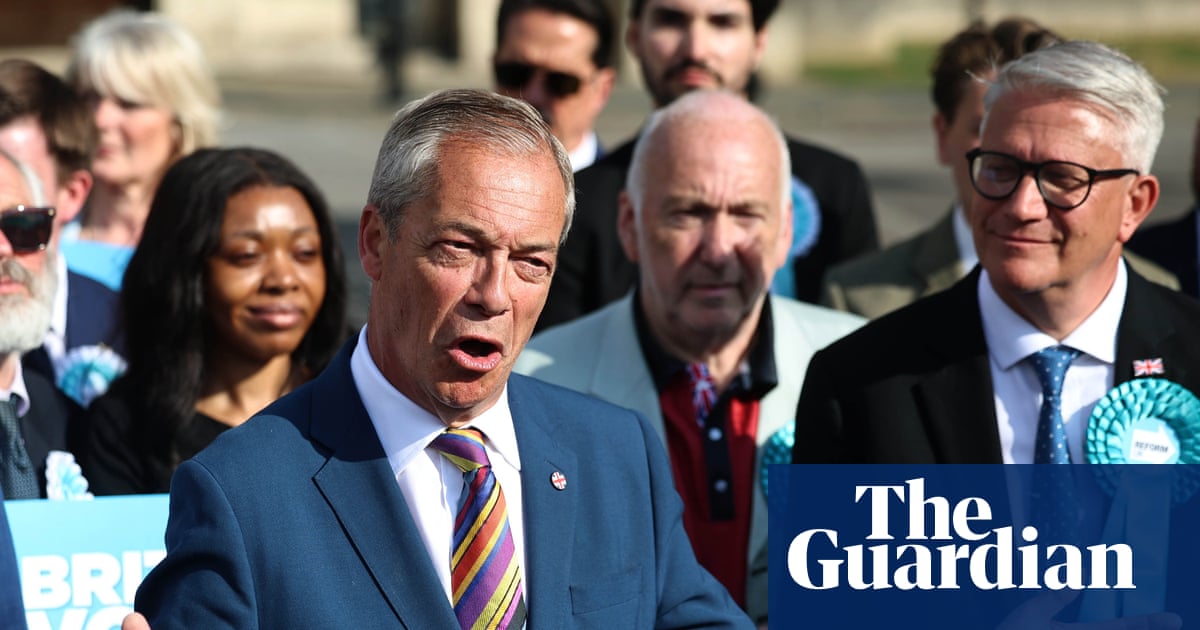
They did not anticipate a leftwing insurgency in the form of Zack Polanski’s Green party. In Gorton and Denton – where Labour secured half the vote in 2024 – the party is haemorrhaging support to Nigel Farage’s hard-right Reform UK and to the Greens. But it is the Green candidate, the charismatic local plumber Hannah Spencer, who is now the bookies’ firm favourite.
That should hardly make the Greens complacent. The party has shared with me its latest doorstep data, based on 1,899 conversations in the constituency, that puts them on 34%, behind Reform on 39%, with Labour languishing on 21%. This chimes with the claim from the Times’ Patrick Maguire that Reform’s internal polling places the Greens second. This is a complex, diverse constituency, making precise extrapolation difficult. But one thing is unmistakable: Labour’s left flank is bleeding heavily.
Green campaigners believe Labour has miscalculated by presenting itself as the only viable alternative to Reform. This was meant to be a safe seat, after all, and such frantic positioning only makes sense if loyal voters have already peeled away. “Everybody is so fed up with Labour’s only strategy being ‘vote Labour to keep the Tories out’, and now it’s ‘vote Labour to keep Reform out’,” Spencer tells me. “It’s like: how about you actually just do something to make people vote for you?”
But fear of Reform is all Labour has left, because offering concessions to the left is anathema to Starmerism. More than a decade ago, Tony Blair made clear that his hostility to a more progressive agenda was principled, not simply tactical. “I wouldn’t want to win on an old-fashioned leftist platform,” he said. “Even if I thought it was the route to victory, I wouldn’t take it.”
This mentality dominates today’s Labour. According to this worldview, demands to clamp down on migrants and refugees are “legitimate concerns” that must be heeded and acted upon. Those who do not prioritise them are dismissed as out of touch or contemptuous of ordinary voters. By contrast, support for increasing taxes on the rich or public ownership, or opposition to arming Israel’s genocide are afforded no such legitimacy. Instead, such views are branded fringe – even evidence of political extremism.
Last August, the pollsters Persuasion UK identified the key faultline in British politics. It found that 44% of voters blamed “the rich and wealthy business elites and the politicians who let them get away with things” for Britain’s problems, compared with 38% who blamed “immigrants and asylum seekers and the politicians who let them into the country”.
Given Labour was founded to represent workers, you might expect it to channel the former. Instead, Starmer’s faction is bitterly opposed to redistributing wealth and power. Recall when it courted wealthy businesspeople, such as former Tory donor John Caudwell, who approvingly declared that Starmer had “taken all the left out of the Labour party” and replaced it with values “in complete alignment with my views as a commercial capitalist”.
Many of Starmer’s allies are former business lobbyists. As the revolving door between Blair’s government and the private sector demonstrated, Labour ministers and aides will rationally understand that politics offers a springboard to lucrative careers in industries such as private healthcare or defence.
That is why Labour is so comfortable competing with Reform and the Tories over bashing migrants. It is not because Starmerites are instinctively xenophobic or racist. Most are urban middle-class professionals who find such sentiments distasteful. But if forced to choose, they would rather indulge anger directed at migrants and refugees than anger aimed at bankers and CEOs.
Hence Labour’s willingness to introduce one of Europe’s harshest asylum systems, while rejecting a wealth tax. It is why it will attack the benefits of people with multiple sclerosis or cancer, yet oppose a windfall tax on bank profits. “Tough decisions”, in this lexicon, mean stripping support from those already struggling – never confronting entrenched interests.
Whether the Greens can win Gorton and Denton will depend on their ability to mobilise enough campaigners in a seat where Labour can traditionally weigh the vote. Such a triumph would be Labour’s worst nightmare for a reason. It would expose its refusal to offer a genuine alternative to a broken economic order not as hard-headed pragmatism, but as a deliberate ideological choice.
-
Owen Jones is a Guardian columnist