3 months ago
132
3 months ago
132
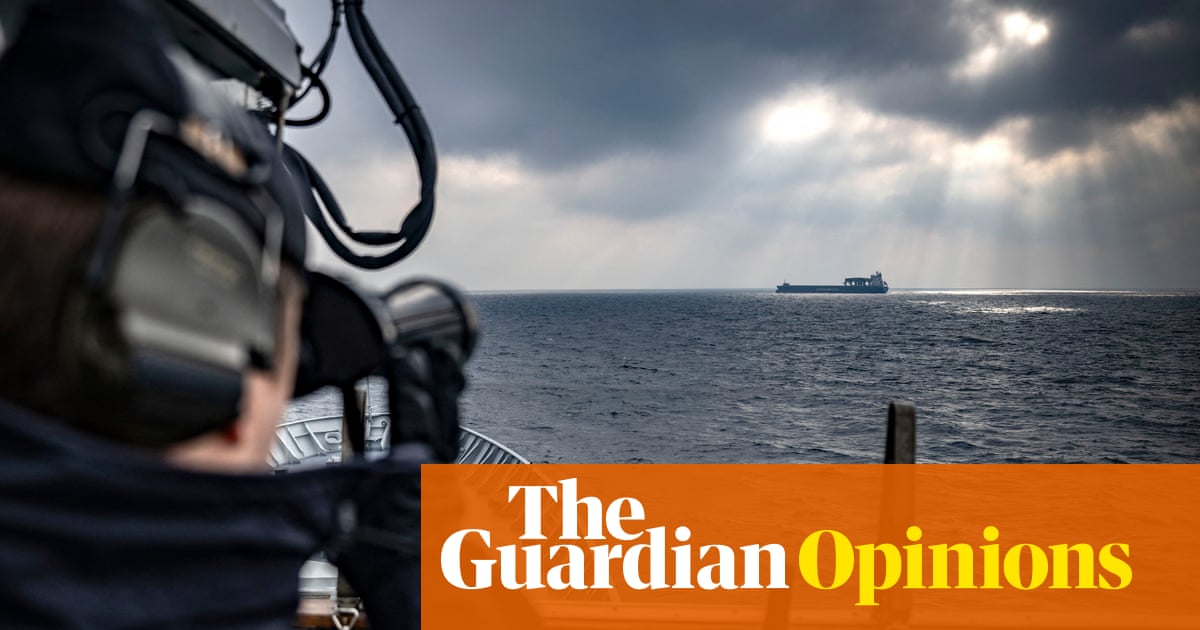
Piecing together what US and Israeli officials have said about the attack on Iran, its objectives appear to be to inflict maximum damage on the pillars of the country’s power, specifically its nuclear and missile programmes and the Islamic Revolutionary Guard Corps (IRGC).
The ultimate objective however, as repeatedly expressed by Donald Trump at least, is to pave the way for a popular uprising that would sweep away the cleric-led regime that has run the country for 47 years. Trump has presented the devastating assault as a once-in-a-lifetime chance for the people of Iran to “take back your government”.
Regime change appears to be an aspiration rather than a plan, leaving much to chance and factors that will be hard for any of the current protagonists to control or even predict.
These are four broad scenarios that experts say are possible outcomes of this new Middle East war. They are ranked not according to likelihood, but in descending order of their peacefulness, from an orderly, benign transition to bloody chaos.
The swift transition
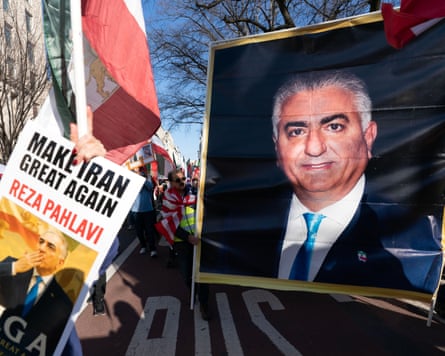
This is the dream scenario of the US and Israeli leaders who launched the surprise attack on Saturday morning. Iran’s armed forces and the IRGC lay down their arms, as demanded by Trump, the various opposition factions coalesce and agree to form an interim government, perhaps under Reza Pahlavi, the exiled son of the shah who ruled the country from 1941 until he was ousted by the Islamic revolution in 1979.
As preparations are made for elections, the interim government would hand over what is left of the Iranian nuclear programme to the US, in particular the outgoing regime’s centrifuges and hoard of 440kg of highly-enriched uranium (HEU), while forswearing long-range missiles. It would also grant US oil companies the lion’s share of access to the Iranian energy market.
This scenario is the least likely, analysts say. History suggests that when dictatorships collapse they tend to be replaced by a new authoritarian regime. When transitions are brought about by violence, the chances of a democratic outcome are even fewer, and when the tool of transition is bombs dropped from 50,000 feet (15,000 metres), the probability is minimal.
The IRGC is very unlikely to surrender its arms to a hostile populace or an incoming monarchist-led government, knowing its members, having dominated the country for so long, will be lucky to survive their surrender.
Pahlavi has broad name recognition and is the most popular single opposition figure, but many Iranians distrust him and doubt his democratic credentials, remembering the brutality of his father’s dictatorship. They would not willingly accept his leadership.
Any new secular interim government is likely to be held together by a shared nationalism, which would make it reluctant to give up the sinews of Iran’s geopolitical power.
The Maduro model
In the US attack on Venezuela at the beginning of January, the country’s defiant ruler, Nicolás Maduro, was swiftly removed, and his deputy took over promising to be far more cooperative with Washington. The regime stayed in place, but the US got a big share of the oil.
The same outcome in wake of Saturday’s assassination of Ayatollah Ali Khamenei is likely to be more than acceptable to Trump, who has declared himself willing to talk to the late supreme leader’s successors within the regime.
The Maduro scenario as applied to Iran would require the selection of a relative moderate to replace Khamenei, such as the former president Hassan Rouhani, or the emergence of a pragmatic hardliner in the clerical leadership or the IRGC.
After fresh negotiations, the newly cooperative leadership would capitulate, surrendering Iran’s nuclear programme and accepting strict constraints on its missiles. It would sign over broad oil and gas concessions to US companies. In exchange for capitulation to US and Israeli demands, the regime would be allowed to survive and given a free hand to continue its suppression of dissent.
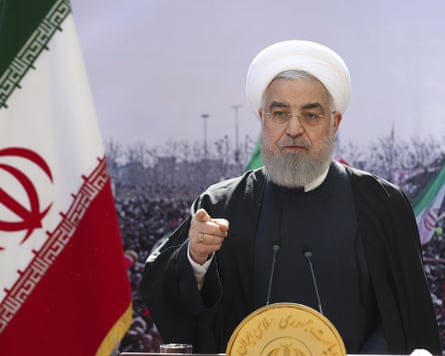
This is the other scenario that would bring a swift end to the war. It is not hard to imagine a new Iranian leadership offering fresh terms in the interest of regime survival, but it is more unlikely that a new leader could emerge on the promise of complete surrender.
New talks with the Trump administration might lead to a compromise, somewhere between defiance and capitulation, that both sides could live with in order to end the war. The US would pull back its forces and leave Israel as the enforcer of any agreement, with a free hand to bomb if it deems the new Iranian government to have strayed from its undertakings.
The regime weathers the storm
In this version, the survivors of the bombing campaign would hunker down, firing off missiles and drones whenever they can. A hardline cleric in Khamenei’s mould would be selected as supreme leader, or a political weakling would be chosen who easily controlled by the IRGC.
The remnants of the regime would be encouraged that Trump had been talking about a limited campaign of four or so weeks. They could reasonably expect the US president would eventually declare victory and withdraw his “armada”, leaving Israel to keep up the bombing campaign with diminishing resources. Many analysts see this scenario as one of the most likely, if not the most probable outcome.
In the worst variant, however, the nuclear and missile programmes are taken deep underground and further out of sight of the International Atomic Energy Agency (IAEA) inspectors. Khamenei’s fatwa against making a nuclear warhead is dropped, and there is a race to make a “bomb in the basement” using the 440kg of HEU, enough to make about ten warheads when further enriched.
After repeated attacks, the surviving leaders come to the conclusion that a bomb is the only guarantee of survival. The opposition is quashed with ever growing brutality as the survivor regime becomes increasingly similar to North Korea: isolated, paranoid and nuclear-armed.
Civil war and chaos
In this scenario, regime forces are progressively and severely drained by weeks of bombing by the US and Israel, who are determined that the Islamic republic should not be left standing.
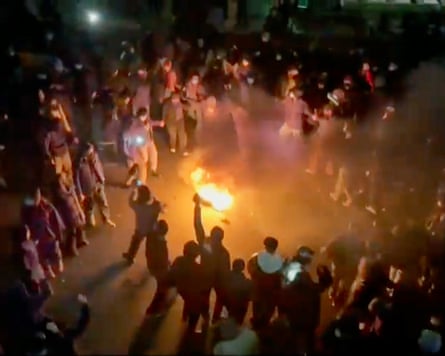
After defections by some in the IRCG leadership and rank-and-file, protesters would return en masse to city streets, sensing their moment had finally come. Separatist movements representing Iran’s minorities would funnel in arms across frontiers left open by the US-Israeli targeting of border posts.
Azeris are the country’s biggest minority, but the second-largest, the Kurds – who make up between 5% and 10% of the population – have historically been the most organised and militant. Ethno-nationalist groups have bases in the Kurdistan regional rovernment in northern Iraq.
There are also a range of small Baluchi separatist groups who have a long record of fighting the regime in the Sistan and Baluchestan province in the south-east.
As postwar Iran frays at the borders, instability would spread along ethnic lines, or neighbouring states would seek to take advantage of Iran’s weakness. In the centre, Pahlavi’s followers would stake the monarchist claim to power, but would be disrupted by other opposition groups who have resisted the regime for decades and refuse to give up their vision of Iran’s future for returning exiles.
In this increasingly chaotic scenario, the 440kg of HEU becomes a prize to be fought over, potentially with the intention of being sold abroad. This worst-case outcome is not generally seen as the most probable, but it is by no means impossible.