3 months ago
135
3 months ago
135
A regular complaint against reviewers and awards ceremonies is lack of recognition for the lighting team. But, in Peter Shaffer’s 1965 play, the “sparks” are the stars.
Inspired by a lamp gag the writer saw in Chinese theatre, a power cut in a south London flat is staged with blazing brightness representing total darkness and vice versa. When a match is struck, the lights dim; a light switch flicked on triggers instant blackout. This conceit requires the cast alternately to find their way unsighted around one of the UK’s tiniest stages and then lope and grope around as if they can’t see each other while we can.
Lighting designer Elliot Griggs perfectly delivers the counterintuitive illumination, better to show the work of John Nicholson, credited as “physical comedy consultant”. Standout slapstick includes one actor mistaking a crouching other for an armchair. Joe Bannister also, in a moment of nominal destiny, has to fall down a staircase.
He also perfectly paces the escalating sweaty breathlessness of sculptor Brindsley Miller, who must keep everyone in the dark to prevent visitors spotting that he has purloined the furniture of an antiques dealer neighbour in order to impress a visiting art dealer. Eventually, three people with whom Miller has been intimately involved are in the room, leading to misplaced whispers, touches and kisses.
Some may see an unintended modern resonance in the fragility of power supplies but Black Comedy is a period piece, dialogue stamped by people remembering “the bombs” (the second world war) but fearing “The bomb” (world war three). Elements that could have felt dated have become historical features, such as Directory Enquiries calls and antique fuse boxes. A more queasy historical detail – the presence of two comedy Germans – is offset by the employment of a Munich-born director Caroline Steinbeis, who achieves the necessary relentless, helpless laughter otherwise equalled in theatre only by Michael Frayn’s Noises Off.
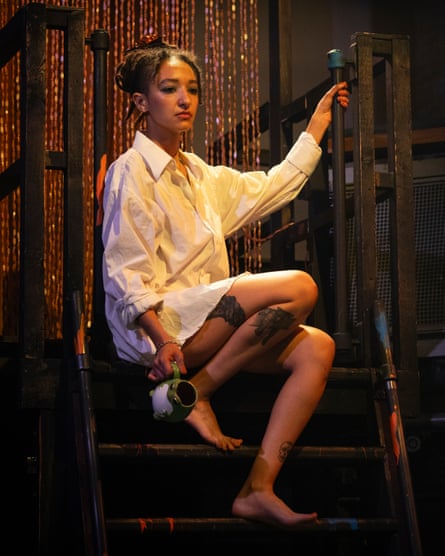
The coincidence of this Black Comedy with the Menier Chocolate Factory revival of Equus – both marking the playwright’s birth centenary – shows Shaffer’s unusual range from operatic-theological to farcical. A curious link is the use of comic catchphrases for both the father of a horse-blinder in the tragedy and a 60s debutante in the comedy, although, with a young woman who refers to lovemaking as “sexipoo” and her father as “Daddypoo”, Steinbeis has sensibly cut the faecal suffix. In another textual change, a cleaning lady routine, originally written for Maggie Smith’s comic mockney voice, is pleasingly rescored as Caribbean by Patricia Allison, who – proving the theatrical rule that, in plays about everything going wrong, an extra one will – coped admirably with a misbehaving teapot on press night.
With Equus showcasing the writer on his rhetorical high horse and Black Comedy proving its staying power over a shorter (75-minute) distance, this is a very happy 100th for Shaffer.