3 months ago
94
3 months ago
94
Stylish Finnish-American smart ring company Oura may be the darling of wearables, adorning the fingers of celebrities and sportspeople, but it is not resting on its laurels as it heads towards an IPO later this year. This week it launched the world’s smallest smart ring, the Ring 5, its latest evolution of the device that defined a whole category.
The Ring 5 is 40% smaller and with longer battery life than the highly popular Ring 4. It also promises to squeeze the health-tracking features of a smartwatch into a less techy piece of jewellery just 2.28mm thick, focused on sleep, stress, readiness and heart health.
“The [Ring 5] is the most capable wearable we’ve ever made – small enough to fit seamlessly into everyday life, and significant enough to set a new standard,” said Holly Shelton, Oura’s chief product officer.
Oura hopes this fifth-generation ring, which will cost from £399 (€399/$399/$A649) when it ships on 4 June and requires a £5.99 (€5.99/$5.99/A$9.99) a month subscription, will not only cement its dominant position in the exploding smart ring market but also attract a swath of new users that have been put off by bulkier editions or the look of other wearables.
Founded in 2013 in Oulu, Finland, Oura Health Oy has been a pioneering force for the smart ring, a market that saw 4m devices shipped in 2025, having more than doubled in each of the past two years, according to data from analysts FDM CCS Insight.
The smart ring is still a minnow compared with the 175m smartwatches shipped in 2025, but the rings appeal to smartwatch, dumb watch and non-watch wearers alike, with an almost equal gender split, according to FDM CSS Insight consumer research.
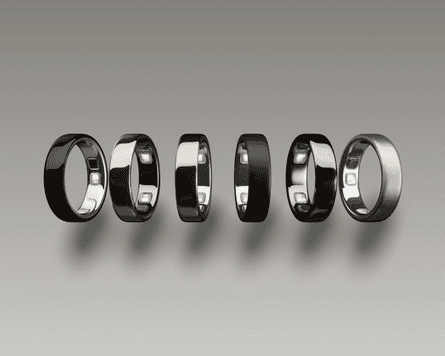
Since its first-generation ring was launched on the crowdfunding-platform Kickstarter in 2015, raising more than $650,000 (£480,000), the niche Finnish startup founded by former Nokia and Polar engineers Petteri Lahtela, Markku Koskela and Kari Kivela has sold 5.5m rings across four generations and 150 different countries. That has made it an increasingly visible marker on the fingers of high-profile and ordinary consumers alike.
Now with about 5 million paying subscribers and a fourfold growth in revenue over the past two years, culminating in $1bn in 2025, Oura is valued at $11bn ahead of its IPO expected later this year.
The company has grown far beyond Finland, with an American chief executive and more than 1,200 employees spread across offices in Helsinki, London, Los Angeles, San Diego and its twin headquarters in San Francisco and Oulu, where it still conducts the majority of its research and development. Oura has made more than 1,200 partnerships across health, wellness and commercial sectors, including with the Football Association, the Finnish Olympics team, US Soccer, the US Open and many other sports organisations.
Much of its original success can be put down to its focus on sleep as the foundation of health tracking, for which the ring form proved less invasive and more comfortable than many other wearables. Since then, its quality of experience has set it apart and allowed it to capitalise on gaps in the market left by larger companies such as Apple. It has been picked up by high-profile fans such as Jennifer Aniston, Gwyneth Paltrow, Kim Kardashian and Prince Harry, lending it some celebrity credibility.
Ben Wood, the chief marketing officer at FDM CCS Insight, said: “I think the secret to Oura’s success is a great product with broad appeal and a great experience in the app. Despite the quite significant subscription costs, it feels like you’re getting value with its constant enhancements, and useful and intelligible messages about sleep, your metrics and health.”
Oura’s statistics would agree, with 80% of members renewing after the first year and the rings worn on average for 23.5 hours a day, which demonstrates an “insane amount of engagement”, according to Wood.
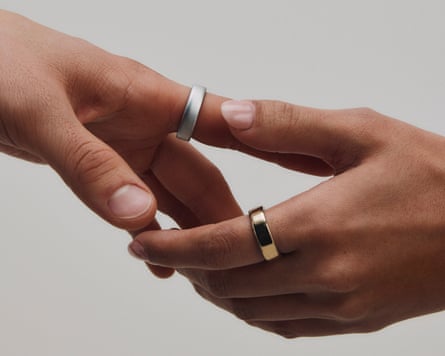
“It’s also one of the few wearables, other than very niche companies, where I feel there is a genuine attempt to reflect the needs of women. Whether it is core body temperature, menopause, cycle tracking or the fit, I think there is a kind of female-first mentality there,” said Wood.
Now Oura is expanding into proactive health care with new software features for existing and new rings, such as a health radar that warns about potential problems before they surface, including blood pressure and sleep breathing interruptions, and new GLP-1 weight loss jab insights to track dosage and effects over the long term.