4 hours ago
11
4 hours ago
11
The Eden Project’s National Wildflower Centre is opening entries for its Wildflower Photographer of the Year 2026 competition on 29 May. The contest showcases images of some of Britain and Ireland’s 1,600 wildflower species, and a selection of photos from last year’s competition will be on display at Eden Dock, Canary Wharf, London, during CWG’s Nature Week, from 13 July
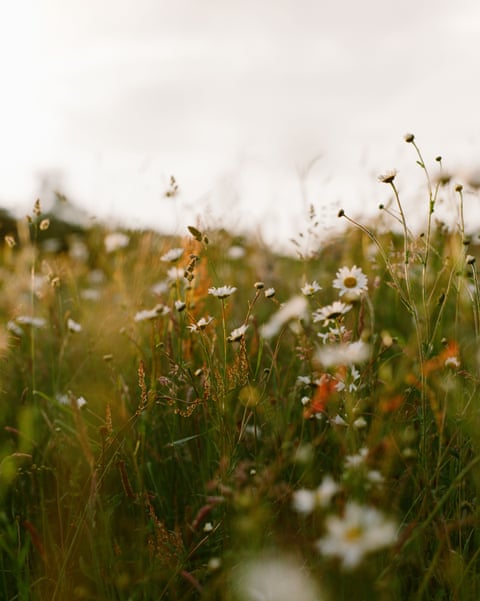
Golden hour by Juliet Klottrup
Common sorrel (Rumex acetosa) and oxeye daisies (Leucanthemum vulgare) at Tithe Green Natural Burial Site, Nottinghamshire.Mon 11 May 2026 09.00 CESTLast modified on Mon 11 May 2026 10.22 CEST
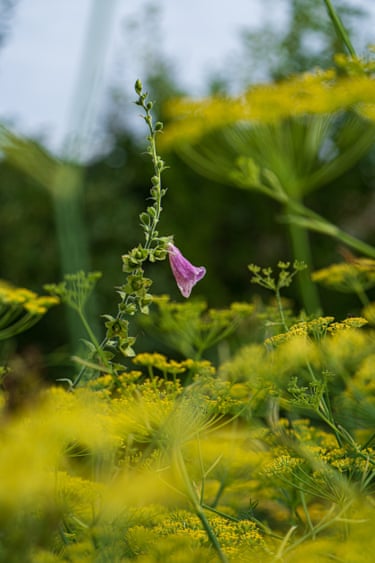
Singular foxglove by Reece Gibbins
Foxglove (digitalis purpurea), Colstoun, East Lothian. A native foxglove stands out among the non-native fennel. Feared for its poisonous nature, the humble foxglove is widely used to treat heart failure. It’s thought that the name has nothing to do with foxes but is actually a corruption of ‘folk’s glove’, a reference to the fairy folk.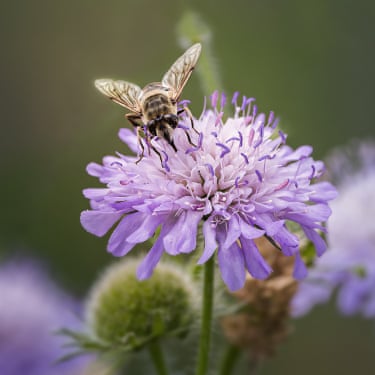
Scabious with hoverfly by Michelle Jackson
Field scabious (Knautia arvensis), Gallaber Park, Yorkshire Dales.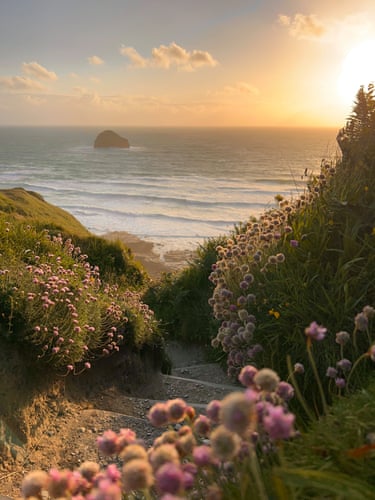
In the pinks by Emma Eccles
Sea thrift (Armeria maritima), Trebarwith Strand, Cornwall. Back-lit sea thrift in full bloom flanks the South West Coast Path as the sun goes down. An iron fist in a velvet glove, this plant looks dainty with its pink pom poms, but it’s extremely drought- and salt-tolerant. Come spring, long clumps of thrift add a textural trim to the Cornish coastal path. Amateur category – highly commended, 2025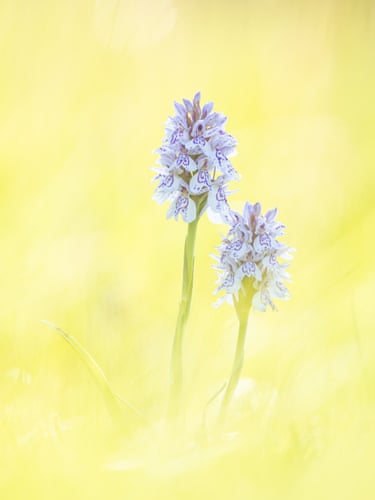
Heath spotted–orchid by Patrick O’Brien
Heath spotted–orchid (Dactylorhiza maculata), near Dorchester, Dorset. Often lost in background foliage, this photo of heath spotted-orchids was taken with a long lens to blur the background to a haze and bring out the beauty of the flower.
A moment of pause by Jess Shaw Marsh
Marsh thistle (Cirsium palustre), Grass Woods Nature Reserve, Grassington, North Yorkshire. Important for pollinators and popular with small birds, but its not just the flowers that are good for wildlife – the upright stems form great homes for hoverflies.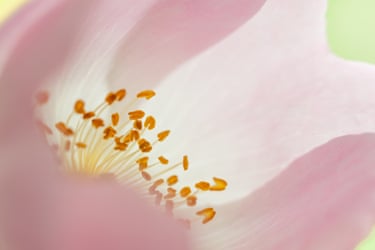
Dog rose by Justin Minns
Dog rose (Rosa canina), Sproughton, Suffolk. ‘A wild rose sprawls through our hedge and I love photographing the details of the flowers ... the delicate stamen highlighted against the soft pinks of the petals.’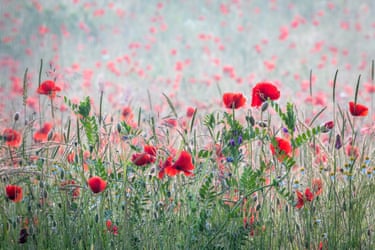
Cool light on the poppies by Damien Walmsley
Common poppy (Papaver rhoeas), Kinver, Staffordshire.‘The poppies were behind a fence and my telephoto lens provided a good view of the wildflowers. This was before sunrise and the poppies took on a magical look in the cool, dawn light.’ Amateur category – winner, 2025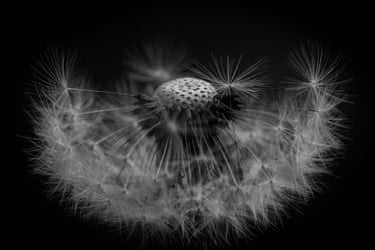
Make a wish by Emma Kenworthy
Common dandelion (Taraxacum officinale), Cinderford, Gloucestershire. A simple dandelion. Often classed as a weed but it holds so much importance in the natural world. It provides food for bees, heals soil and is one of the best survivors in the plant world.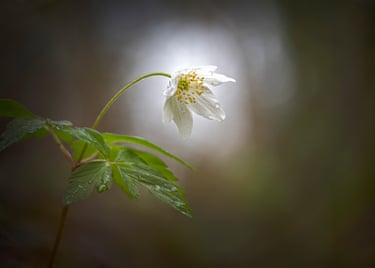
Wood anemone by Tony North
Wood anemone (Anemone nemorosa), Styal Woods, Cheshire. ‘This is a wood anemone, photographed with trees behind. I positioned myself so a spot of light coming though a gap in the trees formed a halo round the flower. I focus bracketed it for sharpness.’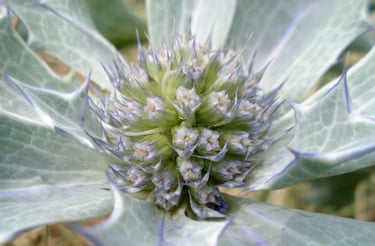
Wide Open by Martin Sheard
Sea-holly (Eryngium maritimum), Holywell Bay, Cornwall. This plant is hardworking in tough environments, providing nectar and stabilising shifting coastal habitats. Salt- and wind-tolerant, they can survive even if they get swamped by sand.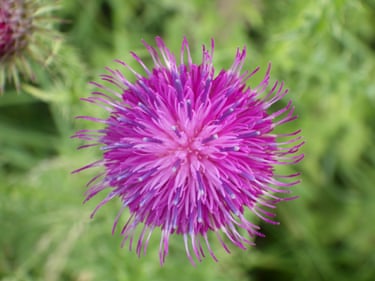
Top down by Jeff Jones
Marsh thistle (Cirsium palustre), St Albans, Hertfordshire. Important for pollinators and popular with small birds, but its not just the flowers that are good for wildlife; the upright stems form great homes for hoverflies.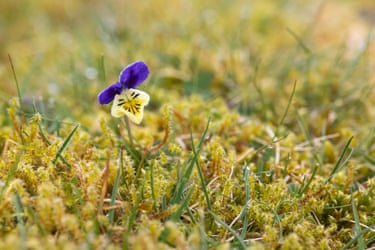
Princess Mountain Pansy by Gill Davidson
Field pansy (Viola arvensis), Widdybank Fell, Upper Teesdale. ‘The raindrops formed what looked like a tiara on the top petal. As it’s a dainty flower I was on the ground so the rain created bokeh in the background and drops on the blades of grass.’Photograph: Gill Davidson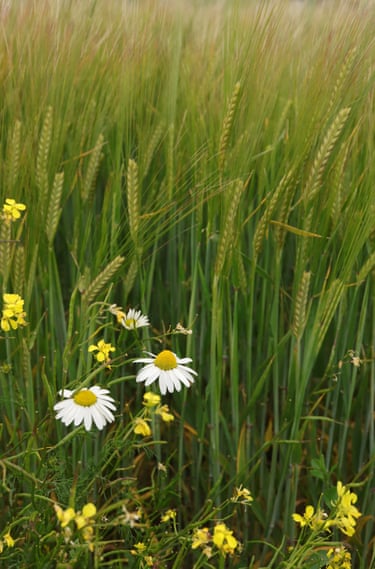
Chamomile and Barley by Amanda Dickson
Corn chamomile (Anthemis arvensis), Auchmithie, Angus. ‘Out for a coastal walk, the sunlight on the crops caught my eye first then I spotted the pretty white flowers along the edge of the field.’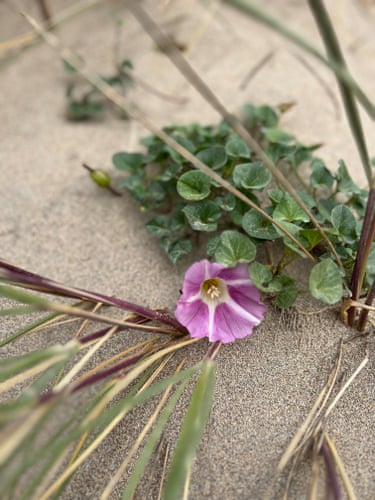
Oasis by Alex Iftode
Sea bindweed (Calystegia soldanella), Perran Sands, Cornwall. ‘On the quiet sandy beach near the holiday park, I found a bright pink flower blooming between the dunes. Its soft purple petals and green leaves looked like a secret treasure, bringing beauty and life to all the golden sand.’Young people category (ages 13-17) – highly commended, 2025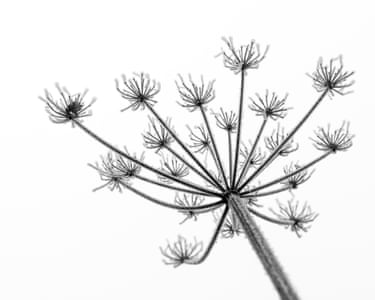
Anthriscus sylvestris by Louise Collier
Cow parsley (Anthriscus sylvestris), Churchdown, Gloucester. ‘Taken at a local nature reserve. I chose to shoot upwards, allowing for an uncluttered background, enabling me to focus on the close-up details of the frost-covered seed heads.’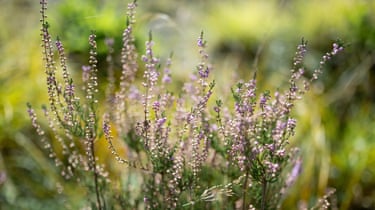
Wild in Purple by M Stanway
Purple heather (Calluna vulgaris), Eden Project, Cornwall. An important heathland plant can fix nitrogen and can grow in poor environments. Extremely valuable to bees, heather can help protect them from parasitic infections. Young people category (ages 13-17) – winner, 2025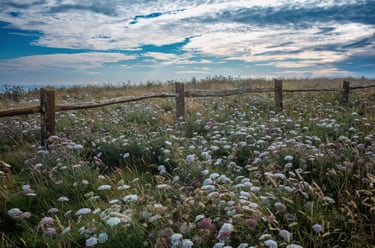
Wildflower patch by the sea by Guillaume Valli
Wild carrots (Daucus carota), knapweed (Centaurea nigra), yarrow (Achillea millefolium) and wild angelica (Angelica sylvestris), Seaford Head, Sussex. These special habitats provide long-lasting nectar for coastal pollinators. They are vital for helping to prevent beach erosion and feature rare species that can cope with the salt and high winds. Well-preserved places are biodiversity hotspots, often featuring 20-50 species.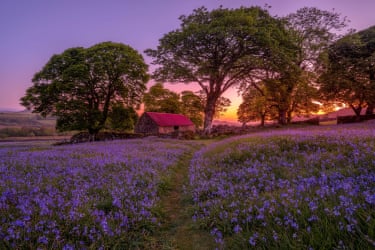
Bluebell Dawn on Dartmoor by Edyta Rice
English bluebells (Hyacinthoides non-scripta), Emsworthy, Dartmoor. Taken at Emsworthy Mire. Swathes of bluebells surrounded a barn that was part of a moorland farm abandoned in the 1870s. Bluebells are highly visible to pollinators but also vulnerable as they can take five to seven years from germination to flowering. The UK has 20% of the global population. Professional category – highly commended, 2025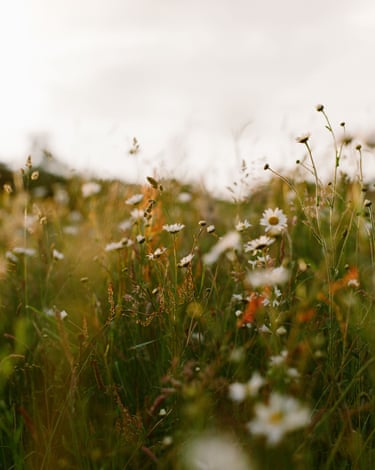
Golden hour by Juliet Klottrup
Common sorrel (Rumex acetosa) and oxeye daisies (Leucanthemum vulgare), Tithe Green Natural Burial Site, Nottinghamshire. Shot on Kodak medium format film, photographed at Tithe Green Natural Burial site, where wild flowers are planted to remember our loved ones.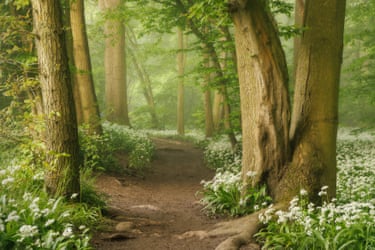
Misty Magic by Justin Minns
Wild garlic (Allium ursinum), Chalkney Woods, Essex. Chalkney woods puts on a wonderful display of bluebells and wild garlic in late spring. The wet spring in 2024 seemed to be perfect conditions for wild garlic and misty mornings. Professional category – winner, 2025Explore more on these topics