3 months ago
231
3 months ago
231
EU's Kallas criticises Putin's 'very cynical' ceasefire calls, rejects suggestion of Schröder as mediator on Ukraine
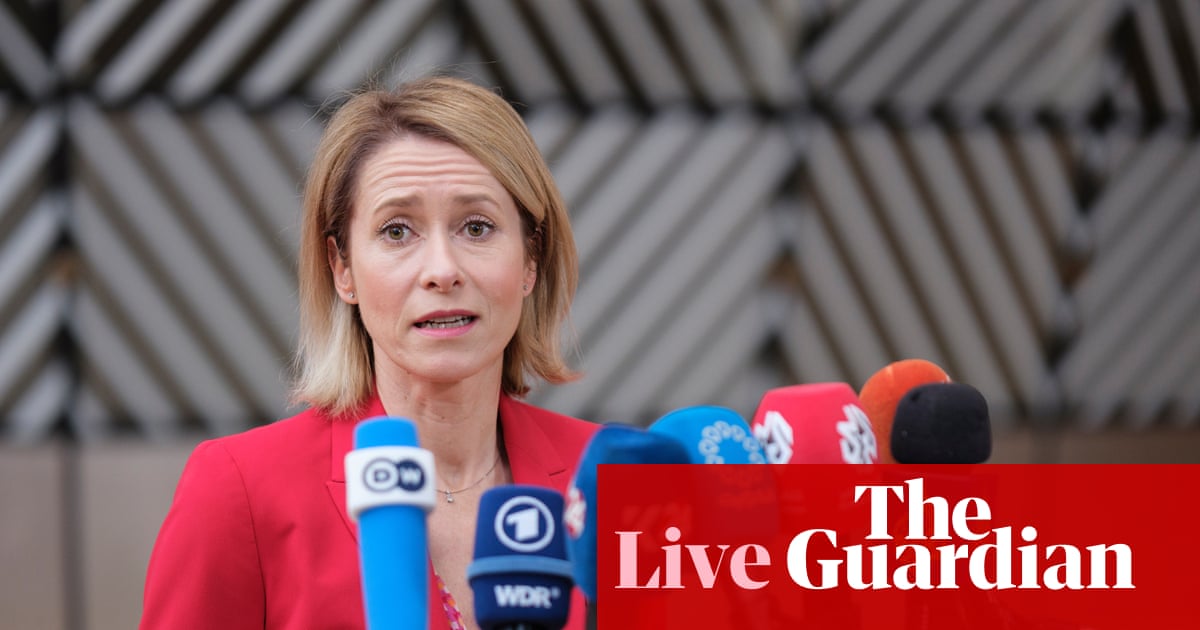
EU’s foreign policy chief Kaja Kallas earlier was also dismissive of Putin’s “very cynical” calls for a ceasefire “to protect his parade, whereas they were actually still attacking civilians in Ukraine.”
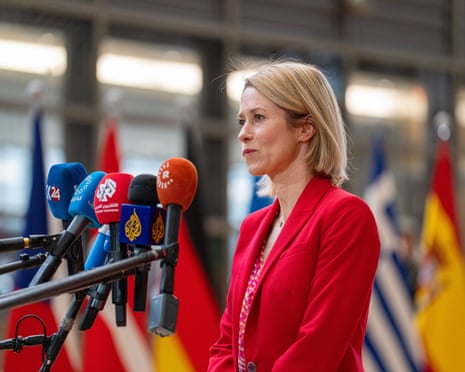
And the former Estonian prime minister, too, was not particularly keen on Schröder as a mediator on Ukraine.
“If we give the right to Russia to appoint a negotiator on our behalf, that would not be very wise.
And second, I think Gerhard Schröder has been the high-level lobbyist for Russian state-owned companies, so it’s clear why Putin wants him to be the person so that actually he would be sitting on both sides of the table.”
Kallas also warned against broader Russian operations in Europe, warning that “clearly, our adversaries are not sleeping; so clearly, they want to increase the influence in Europe.”
“We unfortunately already see this in sports organisations, where, you know, Russians are let to compete like nothing has happened. And there are discussions there. We also saw this Venice Biennale where they are there like nothing has happened. So clearly they are working all the time and we have to be vigilant as well.”
Key events Show key events only Please turn on JavaScript to use this feature
'Schröder won't be representing Europe,' Estonian foreign minister insists
Estonian foreign minister Margus Tsahkna also dismissed Putin’s suggestion that former German chancellor Gerhard Schröder could coordinate talks with the European Union to secure a peace deal in Ukraine.
“Gerhard Schröder is a Putin idea. I think they are very close. Gerhard Schröder won’t be representing Europe,” said Tsahkna, as he arrived for an EU meeting in Brussels.
EU's Kallas criticises Putin's 'very cynical' ceasefire calls, rejects suggestion of Schröder as mediator on Ukraine
EU’s foreign policy chief Kaja Kallas earlier was also dismissive of Putin’s “very cynical” calls for a ceasefire “to protect his parade, whereas they were actually still attacking civilians in Ukraine.”
And the former Estonian prime minister, too, was not particularly keen on Schröder as a mediator on Ukraine.
“If we give the right to Russia to appoint a negotiator on our behalf, that would not be very wise.
And second, I think Gerhard Schröder has been the high-level lobbyist for Russian state-owned companies, so it’s clear why Putin wants him to be the person so that actually he would be sitting on both sides of the table.”
Kallas also warned against broader Russian operations in Europe, warning that “clearly, our adversaries are not sleeping; so clearly, they want to increase the influence in Europe.”
“We unfortunately already see this in sports organisations, where, you know, Russians are let to compete like nothing has happened. And there are discussions there. We also saw this Venice Biennale where they are there like nothing has happened. So clearly they are working all the time and we have to be vigilant as well.”
Germany shots down idea of ex chancellor Schröder as Russia's mediator on Ukraine
German Europe minister Gunther Krichbaum has just shot down Vladimir Putin’s suggestion that former pro-Russian German chancellor Gerhard Schröder could act as a mediator on Ukraine.
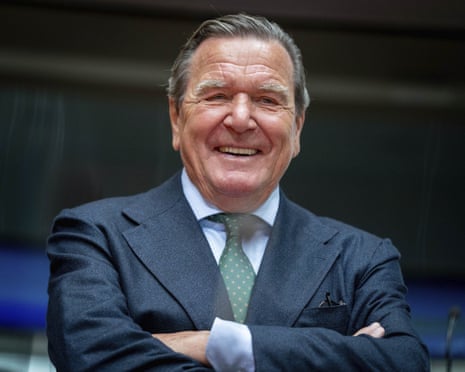
Schröder, 82, has remained close to Putin long after leaving office, standing apart from most western leaders since Russia invaded Ukraine in 2022.
He previously held key roles in Russian energy projects, including work on the Nord Stream gas pipelines and a seat on the board of Russian oil firm Rosneft, which he gave up in 2022.
On Saturday, Putin said he thinks the Ukraine war is winding down and suggested Schröder as a potential key negotiator to help end the conflict.
Speaking to reporters in Brussels, Krichbaum said:
“As you know, a mediator must be accepted by both sides, and this seems to be noticeably lacking here.”
He said that Schröder “has not necessarily demonstrated in the past that he could act as a neutral mediator, as an honest broker, so to speak,” as he was “heavily influenced” by Putin.
“Close friendships may be legitimate everywhere in the world, but they do not contribute to being perceived as an honest mediating partner.”
With the new government now formally in place in Hungary, the EU’s top diplomat Kaja Kallas also hopes to finally move on new sanctions on Israeli settlers, which had been stalled by former Hungarian prime minister Viktor Orbán.
“I expect political agreement on the sanctions on violent settlers, hopefully we will get there,” Kallas told reporters.
Morning opening: 'New momentum' gives Europe hope on Ukraine
Jakub Krupa
EU foreign ministers are meeting in Brussels this morning to discuss the latest on Ukraine, the Middle East, and the western Balkans.
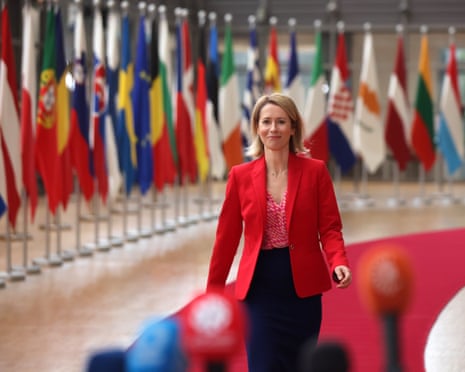
The talks will focus on the situation in Ukraine, with Kyiv’s foreign minister Andrii Sybiha hailing “a new feeling of momentum” as he arrived for discussions this morning.
“We have a new reality on the battlefield. Ukraine became stronger after the most difficult winter. … We stabilised the front and we are also in the position that we closed the sky … [can] shoot down up to 90% of aerial objects by which Russians attack us.”
Somewhat mysteriously, he also added:
“We noticed new some very interesting developments in Russia, not only in the economy. So we are following them.”
But there appears to be very little appetite to take seriously Putin’s claims that the war in Ukraine could be coming to an end, with several leaders saying it was probably the latest of his attempts to deceive European leaders about his intentions.
Latvia’s foreign minister Baiba Braže summed it up best:
“We believe that when we see it in action. For now, even during the so-called ceasefire that he begged for, we have not really seen the cessation of hostilities. So, it’s premature to, to really suggest something like that.”
Sweden’s Maria Malmer Stenergard also acknowledged the changing circumstances in Ukraine, saying it’s clear that Russia is getting weaker.
“It’s difficult for them to recruit soldiers, and we saw the[ir] ‘big victory parade’ that was a very small victory parade, and there was no military hardware display at all, because the Kremlin was afraid of Ukrainian drones.”
There is also lots of Ukraine-related meetings happening elsewhere, with Sybiha going to attend talks at Nato and a separate forum on Ukrainian children abducted by Russia. Germany’s defence minister Boris Pistorius is also expected in Kyiv.
Separately, the EU ministers will also talk about the situation in the Middle East and about the western Balkans.
Elsewhere, I will be also keeping an eye on the latest lines about the virus-hit cruise ship in Tenerife, and other developments across the continent.
I will bring you all the key lines here.
It’s Monday, 11 May 2026, it’s Jakub Krupa here, and this is Europe Live.
Good morning.