2 months ago
159
2 months ago
159
Cancer causes nearly one in six deaths worldwide every year, some 10 million all told. That is a stunning number, but it also masks the reality that some cancers are more deadly than others. We have become remarkably good at detecting and treating melanoma and prostate cancer, for example, and today five-year survival rates for those cancers are well over 90% in most rich countries. Others, such as pancreatic cancer, are more difficult. In the UK, just over one in 20 people with pancreatic cancer are still alive five years after diagnosis.
That is why a new drug for pancreatic cancer, called daraxonrasib and announced at the American Society of Clinical Oncology’s (Asco) annual meeting in Chicago at the weekend, has been met with such jubilation. The drug – taken as a pill once a day – doubled the survival time of those enrolled in a 500-person trial, with fewer side effects compared to traditional chemotherapy. The drug works by shutting down a protein, Kras, that causes cancer cells to grow and divide. One longtime cancer researcher reported that she cried reading the results. With so few effective treatments for this cancer available, the drug is likely to be a real game-changer.
But as with any news from cancer research, it can be hard to make sense of all of this; for those wondering if we’re making progress, and what it all means for their loved ones and themselves. Sometimes we hear overly optimistic talk about a potential “cure” or eradication. Other times that we will never have a successful “moonshot” for cancer. I’m going to try to unpick where we’re at – and give you the good, the bad and the ugly.
First, cancer is not one disease: it describes a broad group of conditions that have a similar basis – namely uncontrolled cell growth and the ability of these kinds of malignant cells to attack tissues and spread throughout the body. There are more than 200 different cancer types, each with distinct biological mechanisms, risk factors, symptoms and treatment options. Even taking one type of cancer – such as breast cancer – reveals that there are dozens of molecular subtypes, which are simplified into four groups for treatment decisions.
What this means is that we’re unlikely to have a singular “cure” for cancer – rather, we have to develop advances for specific cancers in terms of better prevention, diagnosis, treatment and survival.
But there is a lot of good news: we’re getting better at improving survival for most cancer types, both in the drugs being offered and in who gets offered them. Beyond the daraxonrasib advance, this weekend also saw news of a new vaccine (amivantamab) for head and neck cancer, which is the sixth-most-common cancer. It shrank the tumours of more than a third of patients enrolled in a 102-person trial. It works by activating the immune system to attack the tumour, and blocks two proteins that help tumours grow. An advance in treating one cancer doesn’t necessarily mean it will apply to all cancers, but sometimes that is the case. Both of these therapies are now being trialled for other cancer types.
We’re also getting better at precision medicine – that is, targeting certain drugs towards those most likely to respond. In a World Economic Forum meeting many years back, I was surprised to learn that blockbuster drugs – those seen as game-changers for treatment – often only work in a relatively small percentage of the population, depending on their genetics. Yet doctors often prescribe the same medications to all patients, not knowing who will respond or not. A new international study found that a DNA test can distinguish between patients likely to benefit from certain chemotherapy drugs for breast cancer, and those who wouldn’t – therefore sparing this group the side effects and stress of taking an unhelpful (and painful) treatment.
But there’s also bad news in almost every country: 100,000 people are diagnosed each day with cancer, and not enough medical staff are there to treat them. New research estimates that there will be a global shortfall of 100 million cancer care workers by 2050, including in nursing (65 million) and diagnostic staff (16 million). This is the same challenge for the NHS: there are simply not enough lab technicians, cancer specialists and nursing and support staff across the country.
Early diagnosis and rapid treatment, which depend on staff availability, are at the root of higher survival: currently one in three cancer cases are undiagnosed worldwide, and while much of this burden lies in Africa and poorer parts of the world, it’s also a challenge in G7 countries such as the UK, where about 50% of cancers are diagnosed at a late stage. Even after diagnosis, almost every hospital trust in England failed to meet the key NHS target of treatment within 62 days. In England, only 69% of patients started treatment within 62 days of urgent referral, with comparable figures of 71% for Scotland, 61% for Wales and 33% for Northern Ireland.
These delays matter for survival: in general, every four-week delay reduces patient survival by 10% – and this could be higher or lower, depending on cancer type. I was acutely aware of this myself when lab results from a smear to detect potential cervical cancer took months to come back and were positive (I was treated by the NHS and am now all clear).
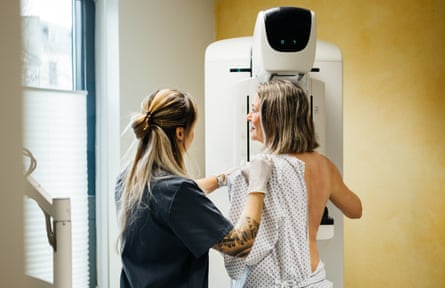
And now to the ugly. Unfortunately, we are seeing a rise in cancer in people under 50. It’s no longer just a disease linked to ageing. As I’ve written previously, cancer rates increased by 22% in the age group 25-29 in industrialised countries between 1990 and 2019. Researchers from Harvard University have argued that each cohort of people born at a later time, such as a decade, have a higher risk of developing cancer later in life.
The data indicates that you’re more likely to develop cancer at a younger age than your parents and grandparents, and your children/nephews/nieces are ultimately more likely to develop cancer than you are. This is the opposite of progress. Why? There’s no single explanation, but evidence increasingly suggests that a changing environment, such as the food we eat (including ultraprocessed foods), rising obesity and weight gain, alcohol, stress and increased insomnia, are all having an impact.
But don’t give up hope. In 2001, a month after I turned 17, my dad, an oncologist and lung cancer researcher, died of leukaemia and lymphoma at the age of 49. In the 25 years since his death, survival rates have increased dramatically, with a shift away from broad-spectrum chemotherapy to precise immunotherapy and targeted medications for his specific subtype of cancer.
In 2026, his survival chances would have been much higher due to the consistent and continued investment in scientific advances and healthcare, and the research teams behind them. While we may not be close to a singular “cure”, that’s something to be optimistic about and a trend that looks to continue in the months and years to come.
So if good, bad and ugly are the thoughts arising as we think about cancer now, hold on to the thought that there is more good than bad.
-
Prof Devi Sridhar is chair of global public health at the University of Edinburgh, and the author of How Not to Die (Too Soon)
-
Do you have an opinion on the issues raised in this article? If you would like to submit a response of up to 300 words by email to be considered for publication in our letters section, please click here.