2 months ago
66
2 months ago
66
On a sunny spring morning, the highway along the right bank of the Seine is packed with joggers, cyclists, families out for a stroll, roller skaters, dog walkers, picnickers and others taking the air.
In a few months, sand will be spread along a stretch to create the annual artificial Parisbeaches, enjoyed by all but especially city dwellers struggling to make ends meet and unable to afford the real thing.
It is hard to imagine that, just a decade ago, the Voie Georges-Pompidou was one of the French capital’s busiest expressways with up to 2,700 vehicles an hour roaring along it at peak times.
It is even harder to believe closing it was controversial, prompting petitions, lawsuits, police opposition, the fury of thousands of motorists and dire warnings – unfounded as it turned out – that it would bring Paris to a standstill.
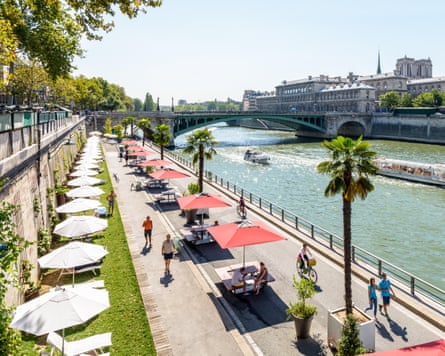
Today, Anne Hidalgo, who led the campaign to pedestrianise the riverside road, is packing up her mayoral office at city hall after 12 years guiding Paris through floods, terror attacks and the challenges of the climate crisis. And the Voie Georges-Pompidou remains closed to traffic.
“It was a tough battle. Very tough. But I strongly believed the roads had to be pedestrianised so that people could enjoy the riverbanks, and that once they were pedestrianised and people had that experience, they wouldn’t want to go back. And that’s what has happened,” Hidalgo says.
“Today there are generations of children who have not known cars there. People say ‘Wow!’ when you tell them.”
Mention Hidalgo’s name to any Parisian and the reaction is almost always extreme: they love or loathe her. For 25 years, first as deputy mayor and then, for the last 12, as mayor, she has slowly squeezed private cars out of central Paris.
Parking costs have been raised to encourage the population to use public transport, cars banned from swathes of the city – particularly around schools – and a network of 1,500km (932 miles) of cycle lanes created, resulting in bikes overtaking cars in popularity. As a result, air pollution has halved.
But although a polarising figure, Hidalgo has left Paris objectively greener and cleaner, certainly in terms of pollution. In 2024, Time and Forbes magazines recognised her as one of the world’s most influential figures in the fight against the climate crisis. She is also the recipient of the Urban Land Institute award for making Paris “a healthier, more inclusive and more livable city” and received the UN Global Climate Action award at Cop26.
Hidalgo is, however, reluctant to draw specific lessons from Paris for other cities. “Each city is different, but there are common issues,” she says. “It’s important to have a vision, to know where you want to go and to aim high.
“Mayors should not think they are just there to manage the little things of everyday life, but have big ideas. They need to take into account the greatest challenge of the century facing cities, which is the climate crisis.
“Changing a city is complicated, because even the most progressive people don’t want to alter their habits. To succeed, you have to have a strategy, be determined and, yes, accept being unpopular.”
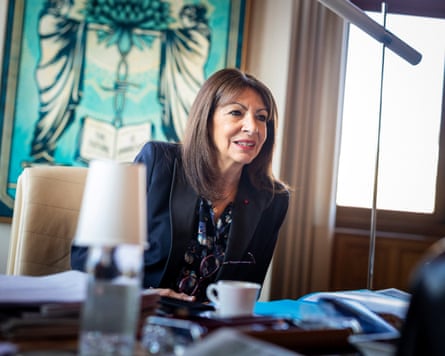
The challenges have also involved dealing with the aftermath of a series of terror attacks and suicide bombings that killed 161 people and injured 446. After seeing the unimaginable horror of the attack at the Bataclan concert hall, Hidalgo admits she struggled to find the words to tell Parisians what had happened.
“The attacks changed me deeply and changed the city. It caused the loss of a form of lightness of being. We are part of a generation that has not known war or scenes of war and suddenly we were confronted with both. But it made us stronger in our determination to defend our way of life and our freedom.”
She describes the campaign to host the 2024 Olympic and Paralympic Games as part of a long healing process. “We wanted something strong and federative that would generate enthusiasm and allow Parisians to look to the future,” she says.
The Games also allowed Hidalgo’s administration to speed up planned projects to improve the city. “It gave us the strength and the financial means to go faster and further, allowed us to better organise our actions, to be more focused and more concerned about achieving and delivering promises.”
She adds: “The fact that we can now swim in the Seine, that’s huge. It was unimaginable, everyone laughed when we said that we were going to be able to swim in the Seine for the Olympics.”
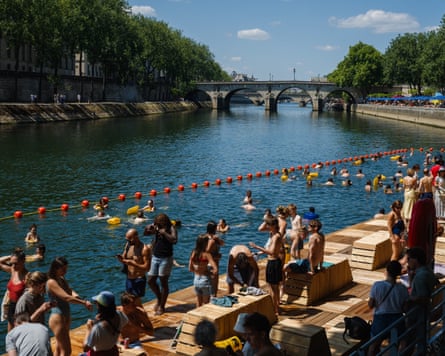
Under her stewardship, city hall says, 155,000 trees have been planted and just under 63,000 hectares (156,000 acres) of new green spaces created, making the capital greener and the air more breathable. The amount of affordable social housing has risen to 25% – up from 13% in 2001 – in an effort to keep young families from leaving.
On the other hand, critics accuse her of overseeing an increasingly dirty, debt-ridden Paris – city debt has risen from €4.18bn (£3.6bn) in 2014 to reach a predicted €9.7bn by the end of this year – and lambast her as authoritarian and autocratic. Motorists on the whole, loathe her.
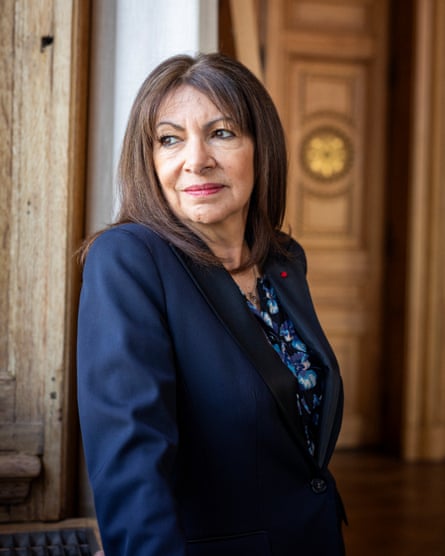
On Sunday evening, there were chants of “Merci, Anne” as she welcomed a victorious Emmanuel Grégoire, who won the election , to city hall. She believes her successor will be spared what she describes as the “French misogyny and machismo” she says she has encountered over the last 25 years.
“I’m not going to claim to be a victim, because I’m not. But there’s been a lot of misogyny, which is not fair and not acceptable. It is frustrating, hurtful, hard and violent, and there are times when I’d had enough of the permanent harassment, but I just said, well I’m here to do something.
“I’m not going to give up, because if I give up it will be a disaster for other girls and young women with political ambitions.”
She is especially stung by the latest accusations of profligacy after she spent her official mayor’s allowance on haute couture dresses – including from Christian Dior – for the Olympic ceremonies.
“I wanted to represent my city with dignity and represent a major French fashion house. I didn’t want to borrow the clothing or accept it as a gift from the private sector,” she says. “Would a man face the same criticism? I think not. My predecessor dressed very well and bought suits from Paul Smith. Nobody even asked to see justification of his expenses.”
Paris is far from perfect. Despite daily rubbish collections and a free service to take away bulkier household items, the city has a problem with littering – which Hidalgo blames on “undisciplined” local people and tourists – as well as graffiti and homelessness.
She is clear about her legacy. “I believed the city should be more peaceful, with less noise, more space for pedestrians, more parks and more gardens,” she says.
“Beyond all the harshness of life in politics and the spotlight, the luck of a mayor is that what they do is seen and lived. And that’s the goal … to do things that improve people’s lives.
“I feel I have done my job. People can see through the lies because they see, live and breathe it and they see things are better for them.”