2 months ago
86
2 months ago
86
Charles Dickens’s female characters have often been criticised as being too meek, compliant and dutiful, or depicted as figures of fun as the novelist reinforced patriarchal Victorian stereotypes.
From the loyal Emma Micawber to the innocent Little Nell, Dickens drew on many extraordinary real women for his novels, but they never truly made it on to the page, appearing only in diluted form.
“It had a lot to do with giving the readers what they wanted,” said Kirsty Parsons, curator of a new exhibition, Extra/Ordinary Women, at the Charles Dickens Museum in London, which will bring together the women in the author’s life and the literary characters they inspired. “He represented and reinforced, to an extent, those sorts of Victorian stereotypes.”
“And we want to shine the light back on to these real-life women, and highlight the differences between these extraordinary women that he did know and respect in his life and the idealised women he portrayed in his novels.”
Take Mrs Micawber in Dickens’s most autobiographical novel, David Copperfield. She was in the same predicament at Dickens’s mother, Elizabeth. Married to a navy clerk, John Dickens, “who liked the finer things in life and spent way beyond his means and so continuously plunged his family into debt”, she pawned possessions and endured moonlit flits with her brood of children to avoid debt collectors, said Parsons.
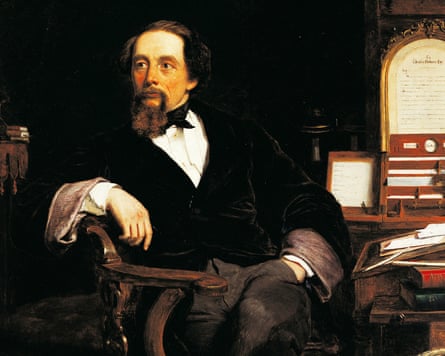
Mrs Micawber is depicted as a doting mother who runs a dysfunctional household. Yet when Dickens wrote the character he was still very angry at his own mother for sending him out to work in a blacking factory, aged 12, to pay family debts while his sister Fanny was allowed to stay on at the Royal Academy of Music because her fees had been paid in advance.
Both Mrs Micawber’s and Elizabeth’s money-making schemes included setting up unsuccessful schools for young ladies. He ridicules this attempt, writing with contempt in the novel: “I never found that any young lady had even been to school there; or that any young lady ever came, or proposed to come; or that the last preparation was ever made to receive any young lady.
“The only visitors I ever saw, or heard of, were creditors,” he wrote of the Mrs Micawber Boarding Establishment for Young Ladies, in a thinly veiled description of his mother’s own efforts.
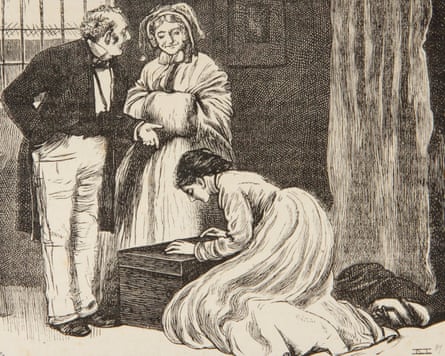
“Yet Elizabeth did set him on his path to his writing career. She taught him to read and write and basic Latin. She got him his first writing job as a parliamentary reporter for the Mirror of Parliament, a paper run by her brother,” said Parsons.
The saintly Little Nell, from The Old Curiosity Shop, is modelled on Mary Hogarth, the sister of Dickens’s wife, Catherine, who came to live with them at 48 Doughty Street in London – the site of the museum – where she died, aged 17, probably from a stroke. A devastated Dickens missed two publication deadlines, for The Pickwick Papers and Oliver Twist, and later channelled his grief into the character Nell Trent.
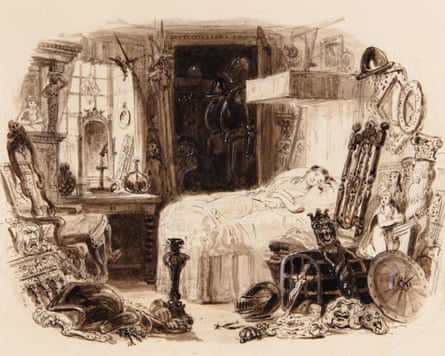
“He kind of creates an angel out of her,” said Parsons. In immortalising his version of Mary, he instructs that the illustration of Nell for The Old Curiosity Shop should “make her look more childish and her surroundings grimmer so she would look more frightened and helpless”.
Yet research shows Hogarth to be a lively Victorian teenager with an interest in the world around her, whose intellect Dickens “very much respected”. She was far more than the “meek, mild and virtuous kind of womanly qualities that he was bringing through in Little Nell”, said Parsons.
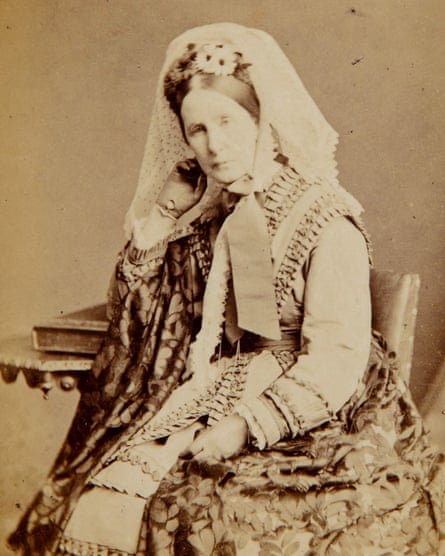
In Agnes Wickfield, the wise, shy, loyal friend in David Copperfield, researchers draw parallels with Dickens’s influential friend Angela Burdett-Coutts, a banking heiress and philanthropist with whom he set up Urania Cottage in Shepherd’s Bush, west London, a rehabilitation home for women released from prison, including sex workers, to equip them for new lives.
Dickens’s representation of downtrodden women in his novels evolved significantly following his conversations with the women of Urania Cottage. While in Oliver Twist, pre-Urania Cottage, Nancy was desperately emotional, by the time of Little Dorrit the similarly discarded character Tattycoram was far more powerful and resourceful. The inspiration for Tattycoram was a hot-tempered Urania resident Rhena Pollard, who was 16 when she moved there after serving time in a workhouse and in prison.
Despite this progression in his writing, Dickens still believed his readers would be unforgiving of unrepentant “imperfect” female characters; so just as he had ensured Nancy made amends by attempting to save Oliver, in David Copperfield Little Em’ly and Martha Endell turned away from “sin” and were rewarded with a new life, emigrating at the end of the novel, just like Urania Cottage residents.
The exhibition, from 11 February to 6 September 2026, will also explore influential women beyond the page, including Catherine Dickens and the actor Ellen (Nelly) Ternan, best known today for having had a long relationship with Dickens – although the nature of that relationship is still the subject of debate.