3 months ago
147
3 months ago
147
A church warden who was jailed for life for the murder of a university lecturer has had his conviction quashed at the court of appeal and a retrial has been ordered.
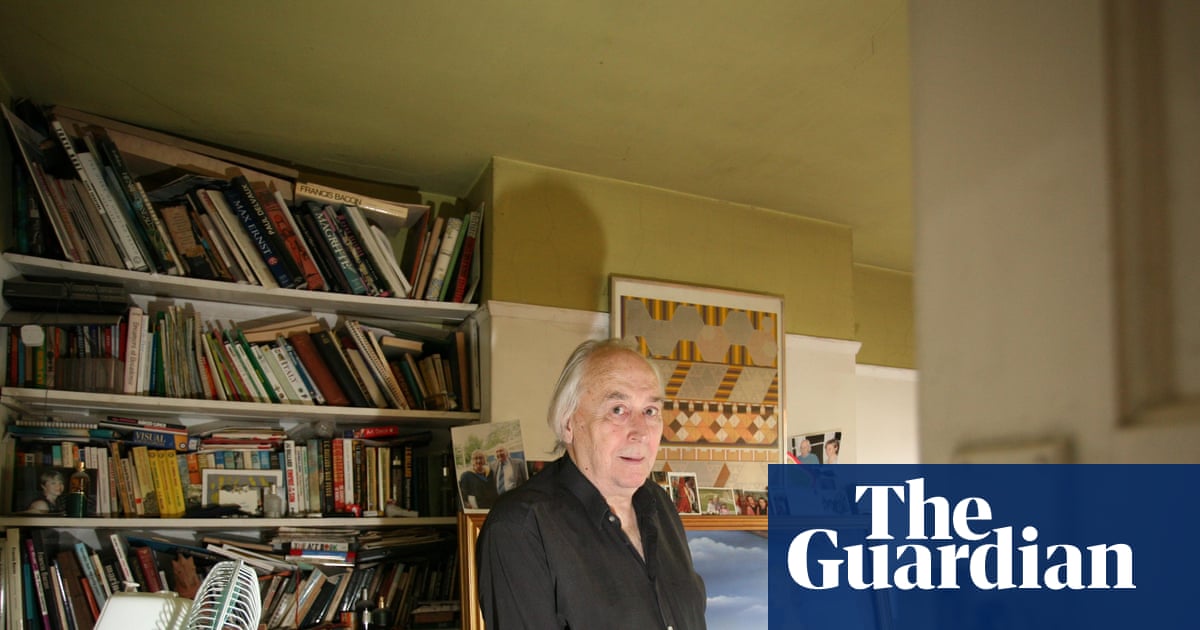
Benjamin Field was jailed for at least 36 years in 2019 after being found guilty of murdering 69-year-old Peter Farquhar in Maids Moreton, Buckinghamshire.
The prosecution case was that Field, 34, manipulated Farquhar into changing his will and then killed him by giving him tranquillisers, spiking his whisky and encouraging him to down it so it would look as though he had drunk himself to death.
A 2021 appeal was rejected by the court of appeal but the Criminal Cases Review Commission (CCRC) referred the matter back to the court last year, with Field’s lawyers telling a hearing in March there was “no evidence” that Farquhar was “forced or deceived” into taking the whisky or medication.
On Thursday, Lord Justice Edis, sitting with Mr Justice Goose and Mr Justice Butcher, quashed the conviction and ordered a retrial.
Reading a summary of their ruling, Edis said the jurors at the trial had “not been properly directed” and the directions given to them on how to reach a verdict were “defective”.
He said: “The directions effectively withdrew from the jury the question of whether Mr Farquhar’s decision to drink the whisky had been voluntary.”
Edis said the Crown Prosecution Service could take the “unusual case” to the supreme court before any retrial and that Field would remain in prison pending any such appeal.
In the written judgment, Edis said there was no evidence that Field administered the whisky, adding: “There is no evidence in this case that the appellant deceived Mr Farquhar with the result that he drank the whisky. He certainly did deceive him, and ruthlessly preyed upon him with the intention that he should die and that he would benefit financially from that death.
“That deception was the context in which the whisky was drunk, but the jury was not directed that it should decide whether a direct causal link between it and the decision to drink that whisky was made out.”
The directions also left it open for the jury to convict on the basis that Farquhar had been killed by smothering, without requiring a finding that this had occurred and in circumstances where there was insufficient evidence to support such a conclusion, said Edis.
Before his murder trial at Oxford crown court, Field admitted two counts of burglary and three of fraud after entering into relationships with both Farquhar and his 83-year-old neighbour, Ann Moore-Martin, as part of a plan to get them to change their wills.
Field underwent a “betrothal” ceremony with Farquhar while also having a string of girlfriends and a relationship with Moore-Martin.
The trial was told that the Baptist minister’s son had manipulated the deeply religious retired headteacher, who died from natural causes in May 2017, by writing messages on her mirrors purporting to be from God.
Field accepted he had “psychologically manipulated” the pair but denied any involvement in their deaths. He was cleared of conspiring or attempting to murder Moore-Martin, and found not guilty of possession of an article for use in fraud.
Alongside his life sentence, he was given a concurrent 16-year jail term for the fraud and burglary offences.
The case was later turned into a BBC drama, The Sixth Commandment, starring Timothy Spall and Eanna Hardwicke, which was screened in 2023.
Field lost an attempt to appeal against his conviction in 2021, but his lawyers told a hearing in London last month that the previous court of appeal decision wrongly applied the law due to “moral disapproval”.
David Jeremy KC, for Field, told the court that his client would have had to have caused Farquhar to ingest the whisky or medication, as well as it being “less than fully voluntary”, to have caused the death.
He said that Farquhar “knew what he was being given and knew who he was being given it by” and that the situation was akin to “causing him to drive his car by handing him his car keys”.
Prosecutors opposed the appeal, with David Perry KC claiming Field was “not a mere bystander or a mere spectator of Mr Farquhar’s death at his own hands”.
“He was, at all times, playing his part in causing the death both as a matter of common sense and as a matter of law,” the barrister said.
Although arguments as to causation had been heard at trial and the first appeal, which would usually preclude the CCRC referring the case to the court of appeal on that basis, it did so under the “exceptional circumstances” rule. It also said there was a new argument concerning consent procured by deception in the law of sexual offences.