3 months ago
139
3 months ago
139
January might seem a bit too early to propose a word of the year, but I know mine already: multilateralism – the principle that common problems should have common solutions. It rests on the idea that all countries and people have a stake in the future of the planet we share, and that their rights should be respected. That cooperation beats competition, or going it alone.
Multilateralism is what has kept the UN process of climate diplomacy going, but now the principle is under threat as never before, amid a rising tide of populism and conflict. The US, under Donald Trump, explicitly rejects multilateralism, in favour of carve-ups between great powers. But if we are to stave off climate breakdown, only multilateralism will work.
Take the Cop30 UN climate summit last November. The Belém deal was not a disaster, but it satisfied nobody – it was too weak to cut greenhouse gas emissions to the extent needed, and shunted the discussion of roadmaps to phase out fossil fuels into a voluntary side agreement. At times, however, it looked as if countries could leave Brazil without a deal at all, and the compromise at least demonstrated that nations can still make some progress and find common ground in multilateral climate diplomacy, despite dire and dangerous geopolitics.
Yet there was one dog that didn’t bark at Cop30, which may bite back this year.
First, this week’s most important reads.
Essential reads
-
‘Cities need nature to be happy’: David Attenborough seeks out London’s hidden wildlife
-
EU’s new ‘green tariff’ rules on high-carbon goods come into force
-
Renewable energy project approvals hit record high in GB in 2025, data shows
In focus
Ahead of the fortnight-long meeting in Belém, and the leaders’ summit that preceded it, one of the chief worries had been about the behaviour of the US. Trump began the process of withdrawal from the Paris agreement as one of the first acts of his second presidential term, in January, and sent no delegation to this year’s Cop. (A few high-ranking US politicians attended anyway, including California’s governor Gavin Newsom.)
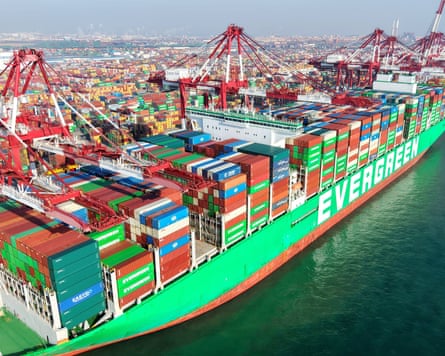
But delegates were uneasily aware that the US president could, if he wanted, make his presence felt from a distance. At a crunch meeting of the International Maritime Organisation (IMO) in October, which was meant to rubber-stamp a new carbon levy on shipping agreed at a previous meeting, delegates from poor countries were shocked at the tactics the US state department used against them.
Phone calls and angry emails from US officials were reported, threatening visa revocations, trade sanctions, revenge on individual officials and outright bullying. Andrew Forrest, the Australian billionaire campaigning for cleaner shipping, told the Guardian it was “thuggery”.
There was no repeat of these tactics at Cop30, but the threat remains. The IMO talks all but broke down – the carbon levy was delayed for a year. So, when they resume in a few months, countries are braced for a fresh onslaught.
Multilateralism will also be tested at Cop31 in Turkey in 2026, where governments must hammer out a response to the fact that their current national plans on cutting emissions are inadequate and would lead to 2.5C of global heating. The first test will be how the governments of Australia and Turkey make sense of their joint presidency, the result of a bizarre hybrid deal struck at the last minute at Cop30. This will mean the summit takes place in Turkey but mostly under Australian control.
This month, after more than a decade of talking about it, the EU will put into effect the world’s first real green tariff. The carbon border adjustment mechanism (CBAM) will penalise high-carbon imports, such as steel, from countries that have inadequate controls on their greenhouse gas emissions. The aim is to level the playing field for more highly regulated European countries and encourage other countries to step up their climate efforts.
Is a CBAM compatible with multilateralism? The EU says yes, it is meant to encourage cooperation. “The best CBAM is one you don’t have to use,” Europe’s climate chief, Wopke Hoekstra, said, meaning that exporting countries should put in place their own carbon regulations to avoid being caught by it.
But many developing countries, led by China, are annoyed at the CBAM, viewing it as a unilateral and unfair trade measure, and attempted, mostly unsuccessfully, at Cop30 to have it censured.
More than 80 countries at Cop30 supported an attempt to include in the final outcome a legally binding resolution to start drawing up roadmaps for the “transition away from fossil fuels”. They failed, but plan B – for countries that are willing to create their own forum for drawing up roadmaps – is now in full swing. Colombia will host a key conference on the fossil fuel phaseout this April, which will be closely watched.
Such “coalitions of the willing” may not have the universality of the UN process, but they are still examples of multilateralism in action. If enough countries take part, the onus will be on the countries that fail to join to justify their refusal.
With 2026 likely to follow the last three years into the record books as one of the hottest, multilateralism may seem a slim reed to cling to. But without it, we are left to the vagaries of individual governments – many of them opaque autocracies – and the capital markets. A decade after the Paris agreement was signed, multilateralism remains the crucial word.
Read more: