3 months ago
139
3 months ago
139
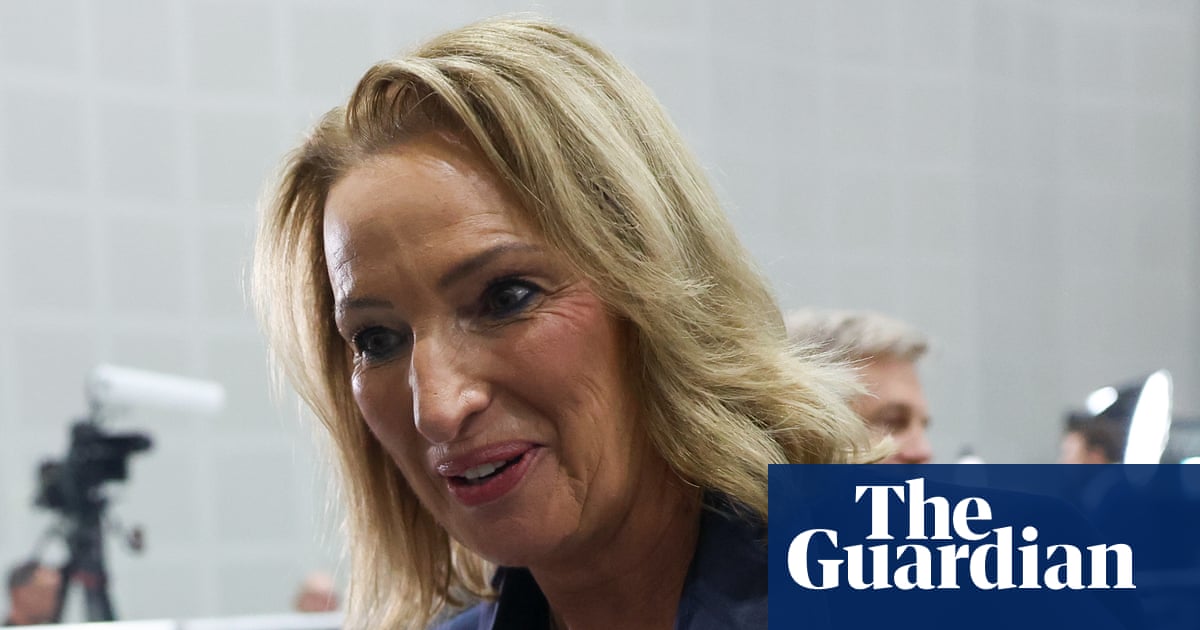
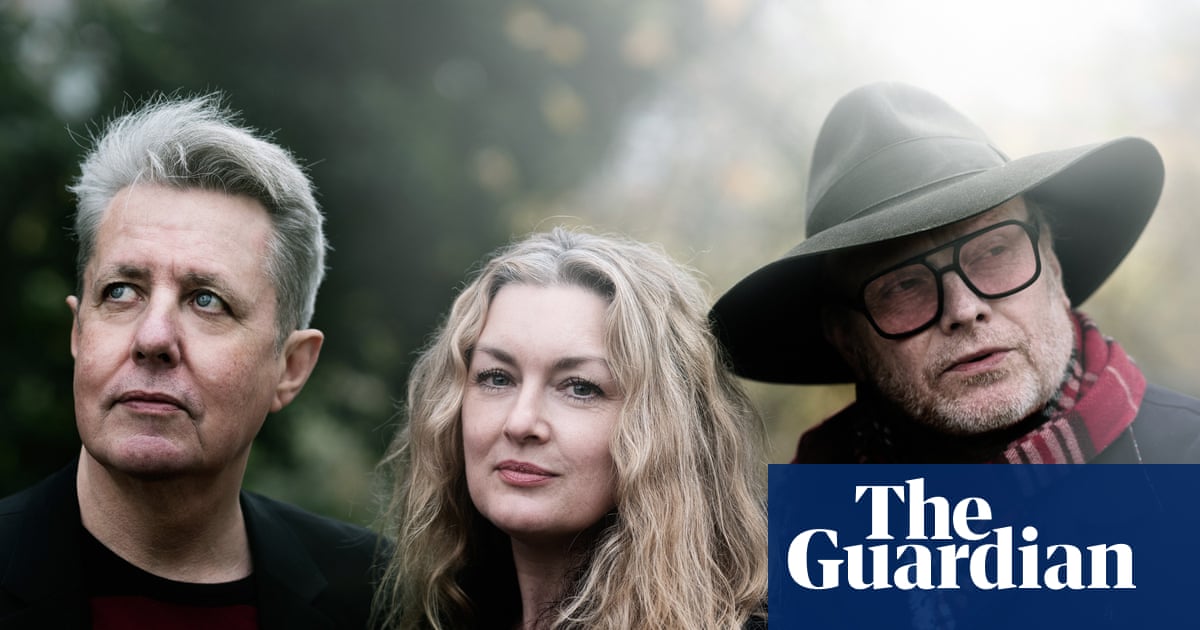
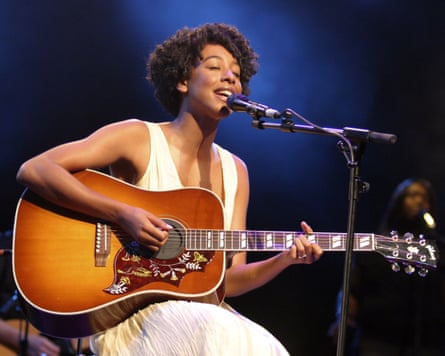
Twenty years ago, Corinne Bailey Rae had her first huge hit single, and her only one. Put Your Records On was one of the great feelgood anthems of 2006. A warm, breezy hymn to authenticity, its key message was keep playing those songs you love, and don’t give a toss about what others tell you is cool. The single was accompanied by her first self-titled album, which topped the charts in the UK and reached number four in the US.
If there was one thing Bailey Rae seemed assured of, it was longevity. She wrote or co-wrote her own songs, had a voice that was compared to that of Billie Holiday and Minnie Riperton, there was a timelessness to her music and she was super smart (four As at A-level, if you must know). Then she was hit by a tragedy that derailed her. In 2008, her husband of seven years and fellow musician Jason Rae died of an accidental drug overdose.
She was close to finishing her second album The Sea at the time, but it took another two years for it to come out. Since then, she has only released two more albums. They may not have been as successful as the first, but all have made a mark in their own way – The Sea was nominated for the Mercury prize in 2010, the song Green Aphrodisiac (from her third album The Heart Speaks in Whispers) was one of Billboard’s top 10 R&B songs in 2016, and 2024’s Black Rainbow was again Mercury-nominated.
Now she is celebrating the 20th anniversary of Put Your Records On with a beautifully illustrated children’s book of the same name. The protagonist, a young girl called Bea, is introduced to the wonders of music by her great-aunt Portia, who keeps her prized collection of records hidden in the attic. Portia tells Bea that there is a song for every human emotion, and shows her how music fast-tracks us to our most profound memories.
We meet at a cafe in York; she lives nearby in Leeds. Even if you didn’t have a clue who she was, you’d guess she is a star – purple velvet jacket, African-print jumpsuit and a quiet presence.
It wasn’t always this way. Put Your Records On was more of a resolution to believe in herself than an assertion of self-confidence. As a girl growing up in Leeds, she loved so much of her life (school, studying, music, family life), yet she felt like an outsider. “We didn’t have that much money, but we were in a middle-class area. My dad was black, my mum was white. My parents got divorced. I was really underweight as a kid. I was a Christian. I rode my bicycle to school with my violin in one hand and my hockey kit in the other hand. I wasn’t cool. I felt really weird growing up.”
It was only at church that she began to feel she belonged. Sure, she learned about Christianity, but there was so much more to it than that. She got an education in Led Zeppelin and Nirvana, poverty and social injustice. The teenage Corinne worked with homeless people, wrote letters to the government about the East Timor genocide and apartheid, and wore Dr Martens when trainers were trendy. She formed a girl punk group at 15 called Helen (Kurt Cobain was a huge influence on her singing back then) and played in nightclubs. “In church, I was very cool because I was at the centre of things. I played music and I got to realise how subjective those perceptions were. I was still the same person.”
It was at a club, where she worked as a cloakroom attendant, that she met Jason. He was a brilliant saxophonist, two years older than her. She was an aspiring punk studying English at Leeds University. So much has been written about how they were chalk and cheese, she says, but it’s simply not true. Again, it’s about perspective. His life is refracted through the lens of his death: Jason liked a drink and, on the night he died, he had been out boozing with a friend who was fighting an addiction to heroin with methadone. When his friend was asleep, Jason tried the methadone. Bailey Rae will never know why. That, combined with the alcohol, killed the 31-year-old. From then on, he was portrayed as the reckless jazz musician with a death wish; she the conservative soul singer.
Actually, she says, they were similar in so many ways. Both had been religious, were academic and hugely driven by their music. “He was brought up in a Mormon church and moved away from it. He got a first in jazz studies at Leeds College of Music. He was brilliant. Everybody knew that. He was super bright but really funny.” The strange thing, she says, is that he was so sensible in his everyday life. “Jason was very cautious when he wasn’t drunk. He wouldn’t take a paracetamol. He was very together.”
She says she couldn’t recognise the man the newspapers wrote about after he died. “I wouldn’t have described Jason as wild. I would have said he was really free. And his playing was really free. But we were free in the same way. We wanted to be at every party – we were in our 20s and in a city, and there’s loads of exciting things happening. There’s plays and poetry and dances.”
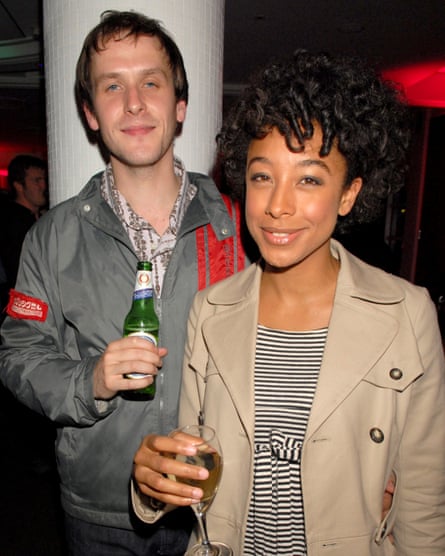
Bailey Rae was 27 when her career took off. She’d already been gigging for 12 years by then. Suddenly there were phone calls from Stevie Wonder asking her to sing live down the phone for his radio show, and Prince was turning up at her gigs. Yet the largely white male music press dismissed her as dull. Bailey Rae is convinced this is because she refused to play the game. After all, the 00s was the era of ladettes, when young women were expected to strip off for magazines such as Nuts and FHM, get wrecked in public and provide an unseemly spectacle for the public to gorge on. Bailey Rae wasn’t having any of it. “If you deliberately avoided the tits-out-for-the-lads angle, that meant you were positioned as middle of the road or naive. They wanted you to be messy and sexually available. And if you weren’t, they didn’t like it. So you got painted as boring, and I was like: ‘I’ll take it. Prince just came to my show, I’ll take it!’”
By the time Bailey Rae became successful, she and Jason had already been married for five years. The biggest change in their life was that she was often away touring. She did her best to make sure, whenever possible, he could travel with her; he and two friends made up the horn section of her band. “We got them to the US, to South Africa. I said, I have to have the horn section. I remember being told ‘It’s a mime on Italian TV, Corinne’, and I’d be like ‘Well we have to have the horns’. So I included him as much as I could.” Jason began to enjoy success in his own right with the funk band Haggis Horns, touring with Mark Ronson and Amy Winehouse.
Then, in March 2008, he died. It was front-page news. Sickeningly, the music press now found Bailey Rae more interesting because he had died in such a messy “rock’n’roll” way. Not that she would have noticed at the time. She was out of it; music no longer mattered. Nothing did. For the next couple of years, she struggled to make sense of his death and her life.
“The initial feeling was shock and disbelief, and then just feeling like that’s the end of my life. I was only 29, but I felt, well I’ve had a good run and I’ve had all these great things happen. We’d been together nine years, we were married, we’d lived together, travelled together, done everything together. So it just felt like this was the end of everything. I was so incapacitated. I didn’t do anything. I didn’t really leave the house. I didn’t work.”
Sixteen years on, the emotion is still so raw. “It was incredibly painful. There was nothing else. I was just thinking how will I survive the rest of my life, because I was in such a massive amount of pain. I thought: ‘How can I continue to feel this, going on and on and on?’ It felt like this wasteland. It felt as if I wouldn’t be able to get past it. I thought my life would be nothing. Just nothing.”
How did she get through it? “I was nursed by my mum and my sisters and a few really close friends, and I was just at home. Days would roll into weeks. I remember reflecting a year on and thinking: ‘Oh I feel so much better and more healed,’ and then two years on I’d be: ‘I’m so much further on than I was then.’ And after five years, I’m like, ‘This thing that happened …’ She trails off.
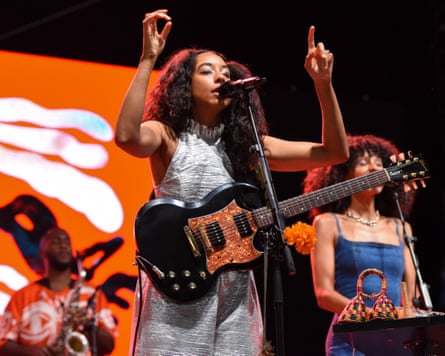
Her perspective on life changed. Everything seemed so much more dazzling and intense. “I was more aware of the present. I began to think, isn’t life just beautiful and terrible, all at the same time? Anything could happen, the hugest loss or the most beautiful thing, and you have no control over it. And I haven’t gone back. I’ve stayed in that awareness. It’s like a weird, beautiful painfulness.”
Rather than thinking about what she had lost, she focused on what they had achieved together. “I saw marriage to Jason as a really beautiful thing. Also, it’s the way all marriages are going to end.” She corrects herself. “Well the ones that work. You say til death do us part. So I would feel, well we made it! Obviously, it wasn’t the right time, but it’s not like we broke up because it was too hard. We were there! We did it!”
Gradually, Bailey Rae rebuilt her life. She completed her second album, The Sea, produced by Steve Brown, a musician who had played with Jason. Brown hadn’t been one of her closest friends, but he played a huge part in her recovery. Gradually their professional relationship and friendship evolved into something more. “It felt like the volume had been turned up on our friendship,” she says. “Suddenly I saw him in a different way.” He became her first boyfriend after Jason, and in 2013 they married.
At the age of 38, Bailey Rae became a mother, and they now have two daughters, aged eight and six. “I didn’t expect to get married again or have children. That’s been a real bonus.” Do the kids know about Jason? “Yes, they know Philip, Jason’s brother, pretty well. So they unravel it. And I say: ‘Well before I was married to Daddy, I was married to Jason.’”
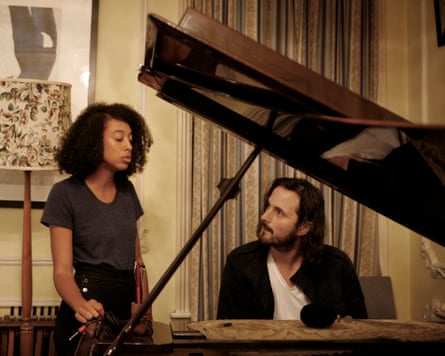
When she returned to live performance, she found she had a new audience. “I wasn’t prepared for how much people would bring their grief to me or to a show. It was a totally different crowd. If you’ve been through a loss, you’re tuned into stuff that is about loss because you’re trying to make sense of it. I had people stop me in the street or come to my show and say: ‘This thing happened to me.’” Was that hard? “It didn’t feel hard, but I felt I was underqualified in certain cases. I felt I can’t counsel this person, but I did think ‘Wow, life and death really are folded up among each other. This is it. This is all there is.’ And it felt like there was a need for music to talk into that space.”
She and Brown continue to work as a team, co-producing her last two albums. Black Rainbows, released in 2023, was greeted as a radical rebirth. And in a way it was – a fantastic pottage of punk, avant garde jazz, soul and black history. But it was also a return to the uninhibited teenager who was fusing any number of unlikely genres and writing about the world’s wrongs.
The album was inspired by a visit to the Stony Island Arts Bank in Chicago, a museum founded by Theaster Gates which features “negrobilia” – racist memorabilia depicting black people in grotesque ways. The song Erasure is a magnificent howl of rage that you might expect more from early PJ Harvey or Hole. It addresses the way the white establishment tried to obliterate black lives (“They Tipp-Exed all the black kids out of the picture/So when they pictured that scene, they wouldn’t be seen”) while commemorating them in these savage caricatures. It’s also a celebration of resilience: “I was so happy these tiny objects existed. The song says they tried to erase you, but here we are making a song about it, and now I’m going to talk at Yale about it, and now this song is going to be on the radio.”
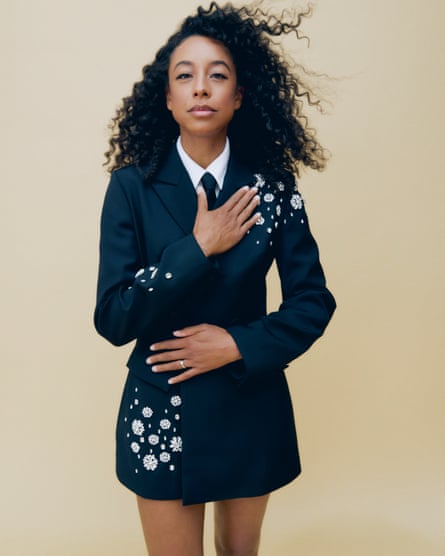
In fact, she’s given lectures at Yale and the prestigious Spelman College in the US about Black Rainbows and the inspiration behind it. Bailey Rae may not be enjoying the commercial success of yesteryear, but it is amazing how life has opened up for her – author, historian, Cheltenham jazz festival curator and, of course, musician. Next, she says, she’d like to make a documentary about how her two music heroes, Holiday and Cobain, are cut from the same cloth. “They’ve both got this heroin addiction and early childhood trauma. They’ve also got all this texture in their voice and they’re using it to tell songs in this honest way.”
And now she’s heading off to meet a lecturer in post-colonial studies and critical fabulation at York University. “D’you know what that is? I’m sure you do,” she says generously. Of course I don’t. “It’s a research method where you use storytelling to speak into gaps in history,” she explains.
Well, professor Bailey Rae, I say, it’s been lovely meeting you. She laughs. “Aw, no, no. Honestly I’m just getting to learn a load of stuff. But I learn to love things.”
Look, she says as she’s leaving, please don’t make me into a victim or a heroic survivor. “I hope they don’t make this piece ‘Rae of sunshine – Bailey Rae’s pulling herself out of her grief pit’.”
Well there’s too much going on for that, I say, but it is a huge part of your life. “I agree. It’s a revelation. That’s the other thing. You can’t be like: ‘It took me nine months and I did some pilates.’ I want to be honest for people who are grieving.”