3 months ago
93
3 months ago
93
At this point in the year, when the growing season seems so far away, last summer’s hay harvest is most remembered, sometimes rued. The hottest summer followed the driest spring in over 100 years in southern England. And although making hay while the sun shines is genuinely crucial, rain is critical to growth. Last year produced a very poor harvest, and hay is now running out.
Traditionally, two cuts are made, in late spring and summer, doubling the yield. It’s an ancient, ingenious and hopeful system, and in the case of meadow hay (rather than single-species ryegrass) it benefits nature, removing nutrient‑laden grass and encouraging biodiversity. But long-term studies show that as our weather patterns change, grass-growing potential has declined greatly over the last 80 years.
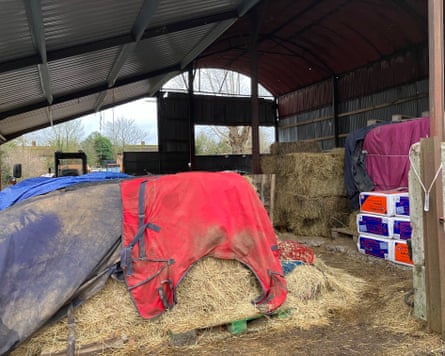
Last year, many farms could only make one cut of a thin, drought-stricken sward. It didn’t grow back. To compound the issue, many began using hay as feed in summer. Olly Morris, a hay merchant in nearby Thatcham, warned early that yields were down 60%. Prices for small bales, usually £4-£5, have doubled to £8-£10, reflecting the haulage costs from further afield.
I open another bale to feed our chestnut mare. I’ve lost my bale cutter knife, so I pick up the orange twine from the previous bale, find the knot in it, tuck it under the strings of the new one and seesaw it till the string breaks, and the bale bursts open in sweet-smelling summer goodness. A quick sniff tells me there’s no trace of mould. The dog attends. Once, a tennis ball rolled out from a sprung bale, and she’s remained ever hopeful.
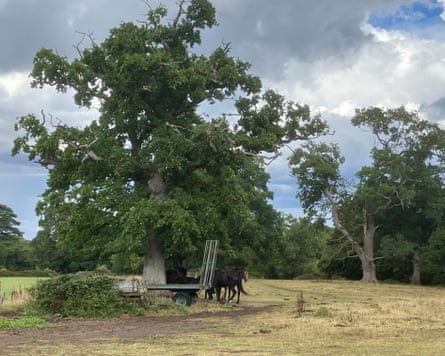
The horse munches her hay rhythmically, pulling it from a stuffed hay net, which makes it last longer, mimicking grazing and preventing wastage and trampling. Stems and seedheads fall to the floor inside her stable: there’s timothy grass, cocksfoot and the dried, still-fragrant petals of bedstraws that she’ll lip up later.
It is 5.02pm and still light. Outside, a mistle thrush carols into the wind and rain. It’s been such a wet January, but perhaps there’ll be early warmth, the muddy fields will recover, and the grass will grow again.