2 months ago
79
2 months ago
79
As the working year draws to a close, many of us only have one hope for the season, and that’s a decent night’s sleep. While not every family visit or post-Christmas getaway is going to be a trip to Rancho Relaxo, a few things can help us catch holiday kip. Pre-departure apps can be useful, so can pillow mists and thermoregulation, but when it comes to maximising rest on the road, some say less is more.
Don’t fear the first night
Our sleeping-while-travelling woes often begin before we leave home. Between frantic last minute packing, finishing up work and early departures “you’re [likely] already a bit sleep deprived,” Dr Sutapa Mukherjee, a respiratory and sleep physician and professor at Flinders University in Adelaide, says.
Compound that with the logistics of actually getting to your final destination and even a relatively short travel time can put sleep hygiene off kilter.
As we lay our heads down that first night, Dr Moira Junge, a health psychologist and the CEO of the Sleep Health Foundation, says not to freak out if we toss and turn. “In sleep science there is a well known phenomenon called ‘the first night effect’. It’s really common – your senses are adjusting to different sounds and smells, the mattress pressure and level of darkness … but you will adapt, quickly.”
Take your rituals with you
Sleep scientists agree that developing a bedtime routine is good for sleep year round, and it can be particularly helpful to keep it up away from home. Mukherjee says most parents recognise the importance of sleep rituals for their children: bathing, a warm drink, some reading, but too often overlook how helpful they are for adults too.

For Sharlene Loo, an 11-year veteran of Emirates’ lauded cabin crew who has visited more than 100 countries, that routine includes showering and skin care before lying in an L-shape with her feet in the air “for 10 to 20 minutes”. Loo says this helps with circulation and has become a daily habit and mental trigger for drowsiness, wherever she is. She also carries a small book of quotes for a screen-free wind down and uses a lavender pillow mist. “I don’t know if it’s a placebo, but it works for me,” she says.
Junge says that if she is driving she will usually take her own doona and pillow because “it adds another layer of familiarity”.
While winding down is helpful, Junge says that waking well is just as important. She uses the acronym RISE UP, coined in a 2018 study which looked at ways to combat sleep inertia. It stands for Resisting the snooze button, Increasing your physical activity, Showering, Exposing yourself to sunlight, playing Upbeat music and Phoning (or talking to) a friend. All of which the study found helps us shake off sluggishness if we’ve had a rough night.
Keep it light
If you’re travelling through different timezones or into a different climate, Mukherjee says daylight is particularly important and “essential for resetting the body clock”. She suggests resisting the urge to crash on arrival and instead get into the daylight if the sun is still out, no matter how exhausted you are.
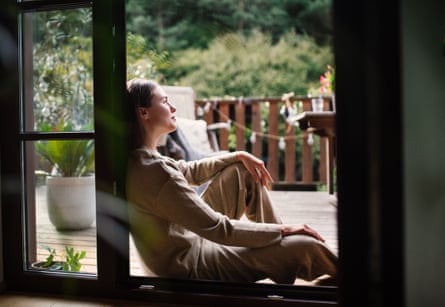
Horrifyingly, Mukherjee says that it takes a full day to adjust for every hour of time difference, meaning it will take your body clock 11 days to adjust to the difference between Melbourne and London in December. Apps like Timeshifter can help by incrementally winding your body clock closer to that of your destination.
Stay cool
The scientific consensus is that the optimum ambient temperature for sleep is around 17 to 19C. Mukherjee says that as the brain figures out it’s time for bed, a surge in melatonin naturally lowers our body temperature to help initiate and maintain sleep. But stuffy tents or drafty annexes can interrupt that process and with it, our sleep.
Sadly, not every holiday includes climate control, so Mukherjee suggests bringing a few sleepwear options to balance things out. When it comes to your pre-slumber ablutions she says it pays to adjust your temperature to the sleeping environment; if it’s going to be a hot one, have a tepid shower, if the room is freezing, have a nice warm one. “It’s all about bringing your temperature into the range where you can facilitate sleep.”
Block the world out
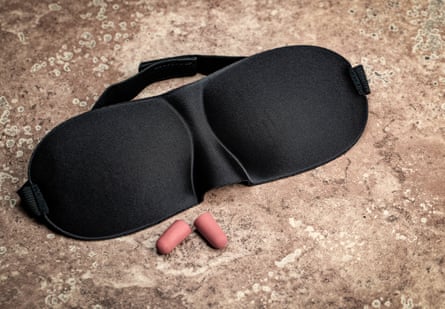
Sleep tends to become more sensitive with age, Junge says. She now carries ear plugs, and an eye mask because “a couple of bucks spent online, or even just pocketing the complimentary ones from the plane, can make a real difference”.
Turn your lullabies off
Your screens should go to sleep at least an hour before you do, but Mukherjee doesn’t see a problem with using audio to drift off – as long as there’s a sleep timer. She suggests about one hour, as our natural sleep cycles mean every 90 minutes or so we are more susceptible to being woken. If that music, podcast or rainstorm is still going, the chances are your sleep will suffer.
Nap if you need it
One of the best things we can do to get the best rest possible while we are away from home is to take the pressure off, Junge says. “Don’t catastrophise! Don’t look at the clock too much and fret.”
Junge sees many insomnia patients in her practice and studies people who have naturally good sleep hygiene. She says the best sleepers are people who barely think about it. “The bottom line is to not overthink sleep.”
She reminds us that we don’t – or at least shouldn’t – count every calorie or worry about every glass of wine while on holiday. The same should go for sleep.
After all, Junge says, “holidays are for relaxing” so leave the optimisation obsession at home, enjoy that extra serve of pasta, that one more drink. And if you’ve had a poor sleep, don’t start spiralling, “just have a nap, have a couple of coffees and try to enjoy the day”.