2 months ago
91
2 months ago
91
Born in Carmarthen in 1991, Dr Alex George is a former NHS doctor, an author and a mental health campaigner. After studying medicine at the Peninsula College of Medicine and Dentistry, he worked as an A&E doctor in London before joining the cast of 2018’s Love Island. In 2021, he was appointed the UK government’s youth mental health ambassador. He is the author of five books; his latest, Happy Habits, is out now, with Am I Normal? published on 15 January.
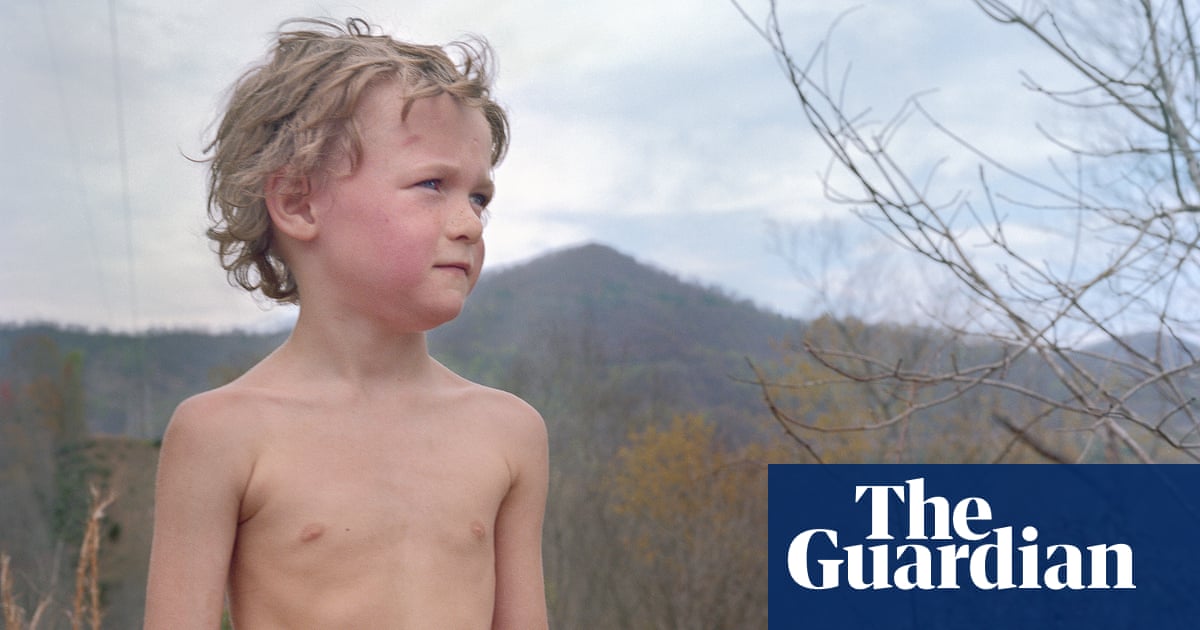
Mum loved to make outfits for special occasions, and Christmas was no exception. It was an important time of year for our family; she was determined for us to experience the magic of tradition. It would have been a small, intimate day in Capel Dewi in Carmarthenshire – just me, my parents, my two brothers and my grandmother.
I was a happy, sensitive boy, with a very vivid imagination. But a few years after this was taken, I started to have friction with the school system. Rejection sensitivity dysphoria is not yet part of the framework of diagnosis for ADHD, but a lot of us find it the hardest part. It meant that criticism from teachers and friends – even when they weren’t actually rejecting me – would cripple me. I was constantly living with the feeling of not being good enough and not fitting in. I struggled to concentrate in class. Once, I remember asking absent-mindedly if Santa was a man or woman, and the teacher went so ballistic that the teacher next door heard and came to comfort me.
Eventually I got put into a separate classroom, one for kids who were struggling with varying levels of disability. Mum had to come in and say: “I know Alex is pretty bright, so what’s going on here?” In front of me, the teacher replied: “I just think we need to lower our expectations of Alex in life.”
While I will never forget that moment, it gave me the determination to prove them wrong. All I needed was an incentive. In fact, when it came to my GCSEs, Dad said he’d give me £100 towards a car for every A I got. Money was tight at the time, and Mum was cross with him for making that promise. But it worked. I got straight As.
I watched a lot of 24 Hours in A&E growing up. After I graduated in 2015, I went to work in King’s College London – the same hospital featured in the show. It was intense, but it was my dream job, and I was content. One day, I got a message through a dating app from a TV producer who said: “We’d love to talk to you about coming on Love Island.” I declined, and laughed it off. But they were persistent. Around the same time, my friend Freya Barlow, a fellow medical student, got acute myeloid leukaemia. She had multiple rounds of chemo and a bone transplant. She didn’t have long to live and said: “Alex, you’re so capable. I want you to throw yourself into things more. I can’t continue my life so please live yours.” I don’t think she meant Love Island, but it was the thing that came into my mind. I went for an interview and was offered a place in 2018. I said yes. At the very least, I thought it could be a holiday for a few weeks.
Being put into the spotlight was overwhelming. But it was nothing compared with the pandemic. I was working in A&E at University Hospital Lewisham at the time. Much of what I witnessed can’t be repeated; it’s too horrific for most people to handle. The number of people dying was huge, and constant, but I also had to tell families: “You can’t come in to say goodbye to your dying wife, who is 30. Here’s an iPhone so you can talk to her instead.” I had that conversation hundreds of times. That is not a normal way of looking after grieving people. We couldn’t provide the level of care necessary and it made me feel like the devil.
Because I was working in the pandemic, I hadn’t seen my family for a long time, but I was due to go to Wales to visit them in the summer. A week before, I got a phone call from my dad, and my whole life changed. My 19-year-old brother, Llŷr, had killed himself.
During those first days of shock, I had to grab our family in freefall. If I hadn’t, my parents would have ended up dead or sectioned. They were like children, unable to function. I was minus 100 in terms of my stability, but I had to take the lead. I spoke at the funeral. I took my mum out in the car for three hours a day so she was out of the house. She needed time away from Dad so they wouldn’t make each other worse.
Two days after Llŷr died, I wrote to my manager and said: “I’m going to carry on writing my book.” She wrote back: “You’re insane, you’ve just lost your brother.” I wasn’t doing it in a callous way; I was in a black hole and trying to cling on to things that would make me feel normal. What I really needed was to accept that nothing would be the same ever again. Now I know that the only relief I’ll get from grief is death. It sounds crazy, and I really do want to live, but when I look at my parents, I feel jealous that they are closer to that relief than I am.
Three years ago, I sat down in my hairdresser’s and looked in the mirror. I realised I had completely lost myself. I was 20st but mostly what shocked me was my eyes. I thought: “I don’t even know where Alex is any more.” I was campaigning and working too hard and drinking a lot more than usual. I was trying to numb myself. So I needed to change something. I put down the bottle, and went for a walk each day, which is how my podcast The Stompcast started.
As well as sobriety I realised I needed exercise and therapy. Since then, I’ve had ups and downs – I was diagnosed with OCD recently and am being treated for that. I wouldn’t say my mental health is perfect, and it never will be, but I am much more functional.
Being in nature with my dog Rolo is the most beneficial thing. I also ride my motorcycle, take antidepressants, listen to classical music, and am careful about who I spend my time with. I don’t watch the news too much because it can be triggering.
I have realised that while I can’t bring my brother back, I can try to help others. Mum does, too – she has put her amazing costume skills to good use and raised lots of money knitting for charity.
The day after my brother died, my friend drove me to Llansteffan beach. It was a busy summer’s afternoon. As soon as I arrived, it felt as if the crowds parted. Everyone seemed to fall silent; they all knew what had happened. I walked through them, and when I turned back, life had resumed. The kids were playing, waves kept rolling in and out, the birds kept tweeting. And in that moment, I realised that life goes on. The sun will always shine on Llansteffan beach, and we are all just grains of sand.