3 months ago
105
3 months ago
105
Since medieval monks started draining and managing the Somerset Levels, humans have struggled to live and work alongside water.
“At the moment it feels like a losing battle,” said Mike Stanton, the chair of the Somerset Rivers Authority. “Intense rainfall is hitting us more often because of climate change. It may be that in the next 50 years, perhaps in the next 20, some homes around here will have to be abandoned.”
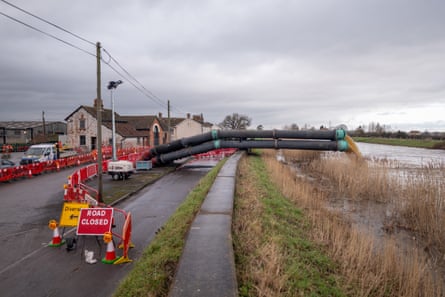
Stanton spoke to the Guardian at Northmoor pumping station near Bridgwater as six giant temporary pumps fired six tons of flood water a second off the saturated moors into the River Parrett.
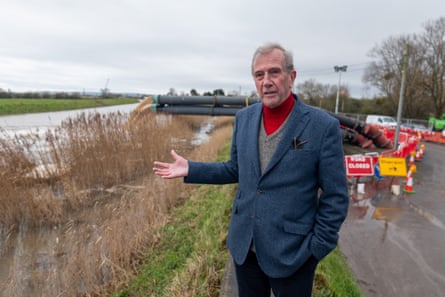
The emergency pumps had been craned into position to back up the permanent ones after Storm Chandra, in a desperate attempt to stop homes in nearby villages such as Moorland and Fordgate from flooding.
The two communities hit the headlines around the world when they were inundated in 2014. Millions of pounds was invested in trying to keep water at bay, but by mid-afternoon on Thursday the level at a nearby monitoring point was at 7.76 metres (nearly 25ft 6in). Flooding of property is possible when it goes above 6.6 metres.
With yet another severe Met Office weather warning for rain in force on Thursday afternoon and evening, the fear was growing that water would once again reach homes.
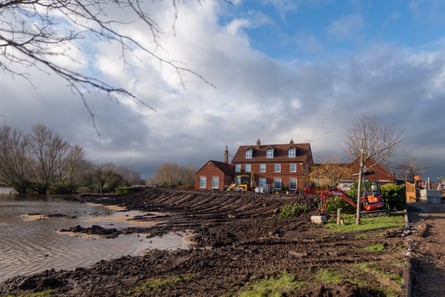
Julian Taylor, who lives in Fordgate, had moved many of his belongings upstairs. “I suspect we’re going to have to evacuate,” he said. “The water is advancing even faster than in 2014. I don’t know where we’ll go. We’ve been pressing them for weeks to get more pumps in.”
On the edge of Moorland, the Notaro family, who are well-known local builders, were busy moving earth and bringing in stone to build a bund – an embankment – around their home. They did the same in 2014 to keep the water away.
The Moorland village hall was turned into something of an emergency meeting point. An Environment Agency (EA) incident command unit and a mobile police station were parked outside.
Throughout the day on Thursday villagers visited, spoke to EA staff and comforted one another. Some were in tears. “I’ve stopped looking at the media and at the EA readings on the website,” said one Moorland resident, who asked not to be named. “It’s just too stressful for me. I’m just keeping my head down and hoping.”
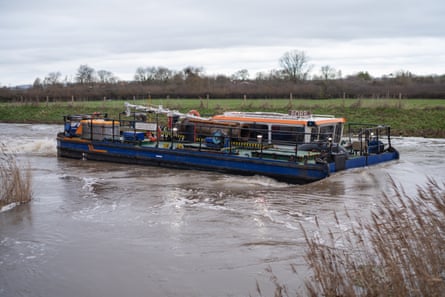
Local people praise the individual EA staff who work the pumps trying to keep their homes clear of water. They are also grateful that the Parrett is being cleared of silt – on Thursday, a small Dutch dredger was engaged in a routine chug up and down the river. But they criticise the body’s chief and the UK government for not doing more.
The Flooding on the Levels Action Group (Flag) warned on Thursday that residents faced another “catastrophic” flood. It accused the EA of not being “agile” enough as Chandra headed towards the south-west of England, arguing the temporary pumps should have been moved in sooner.
The group also called for Northmoor pumping station to be upgraded so it was not necessary to bring in extra pumps every time there was a serious storm.
Jim Flory, the EA environment manager for Wessex, denied the reaction had been slow. “We think that our response has been ahead of the curve,” he said. Additional pumps had been put in even before agreed “trigger points” for them had been reached.
Three storms – Goretti, Ingrid and now Chandra – have battered the south-west of England this year. Extreme rainfall is becoming more common and more intense in many parts of the world because of human-caused climate breakdown.
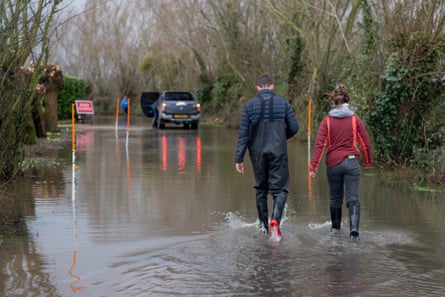
Flory said parts of south-west England were seeing record-breaking rainfall. At a rain gauge in nearby Taunton last week, the wettest seven-day period (20-26 January) was recorded for at least 30 years. The catchment area for the Parrett and Tone rivers has received 207% of the long-term average January rainfall.
The EA and UK government say many millions has been invested into raising roads, improving drainage and boosting pumping capacity.
The floods minister, Emma Hardy, said: “Flooding is devastating and my thoughts are with the people affected. I am in regular contact with the Environment Agency on their response to the ongoing flooding who, alongside local authorities and the emergency services, are already taking action to keep communities safe. I urge residents to follow local advice over the next few days to ensure they stay safe.”