3 months ago
90
3 months ago
90
If the first casualty of war is the truth, the environment can’t come far behind.
The black rain that fell across Tehran two weekends ago was perhaps the most symbolic symptom of a litany of environmental devastation being wrought on Iran by the US-Israeli war machine since the start of the month. As I reported last week, we already know the conflict will have major long-term environmental repercussions.
More on the climate cost of the war, after this week’s headlines.
Essential reads
-
Revealed: the world’s worst mega-leaks of methane driving global heating
-
‘Drinking from a fetid pond’: superbug-creating genes found in UK’s largest lake
In focus
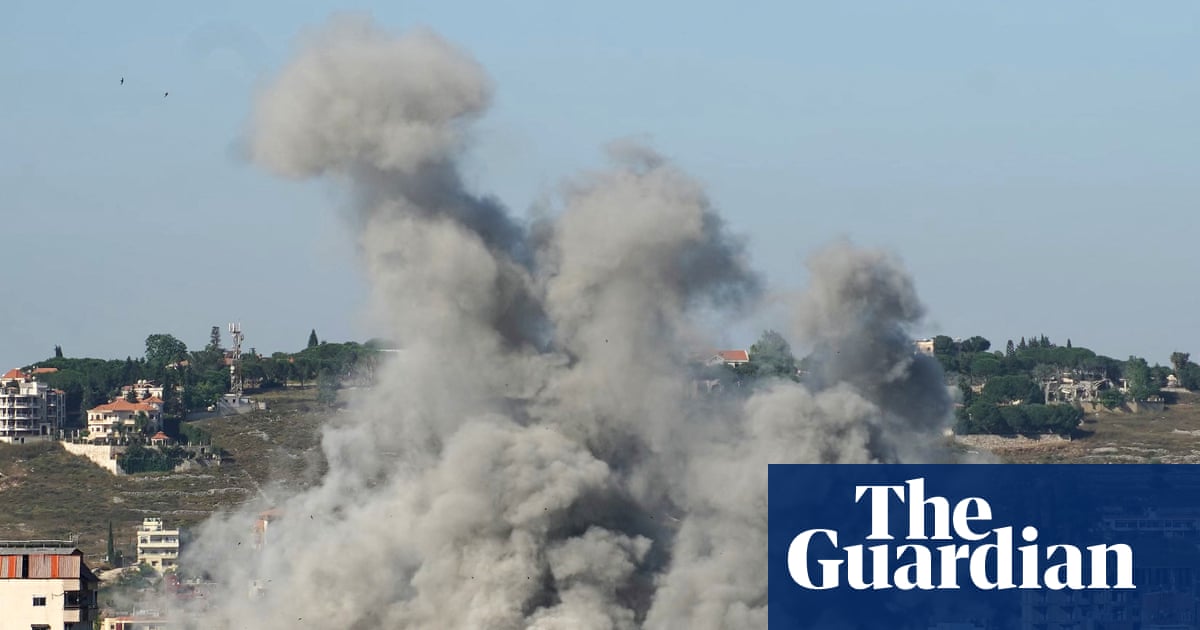
Since the beginning of March, thousands of Israeli American bombs and missiles have fallen on Iran’s oil refineries, military bases, industrial areas and nuclear facilities. Iran, in exchange, has launched retaliatory suicide drones and ballistic missiles at similar targets inside Israel and across Gulf states including the UAE, Qatar and Bahrain.
Every impact is a human and environmental catastrophe, which together will add up to a toxic legacy that will blight the whole region – but especially Iran – for decades to come.
With attacks coming thick and fast, environmental monitors have struggled to keep up with incidents. Wim Zwijnenburg, a remote sensing specialist with the Dutch peace advocacy organisation Pax, told me on Wednesday that he has already compiled a database of more than 500 incidents of environmental harm inside Iran and a further 100 outside. Remote sensing is the process of analysing the Earth’s surface from a distance using data such as satellite imagery and aerial photography.
Zwijnenburg said: “What I’m looking at now are high-visibility impacts, like oil depot strikes and marine pollution.” Thousands of targets, mainly military, have been attacked, but there is little public information about what may be in them.
When Tehran’s fuel depots were bombed two weeks ago, authorities and the Iranian Red Crescent Society warned residents of the city to stay at home. Scientists said the fires would have released soot, smoke, oil particles and sulphur compounds, which dissolved in a low-pressure system brewing over the city and fell as black acid rain.
While any uncontrolled destruction is environmentally harmful, attacks on military sites are likely to pose a host of additional hazards, the UK-based Conflict and Environment Observatory said. According to an analysis it published online, likely contaminants would “include fuels, oils, heavy metals, energetic compounds and Pfas, while fires can release dioxins and furans”.
Beyond speculation, however, the impact is more difficult to discern. The Iranian state has not shared environmental data. Normally, Zwijnenburg would gather more data on what is happening on the ground from local observers, often environmental campaigners.
But, he said: “Those are fairly nonexistent in Iran, because of the pushback against any environmental activism, [which was] traditionally associated with espionage.”
With barely protected oil and gas facilities ringing the Gulf, in range of Iran’s missiles, the region is on an ecological knife-edge. Were the conflict to turn seriously towards attacks on fossil-fuel infrastructure in the region – through which one-fifth of the world’s oil and gas supplies pass, via the strait of Hormuz – the consequences for the local environment, and the climate, could be disastrous.
Iran has consistently warned that attacks on its infrastructure would be met with retaliation in kind. But, so far, strategic restraint appears to have won the day. Then, on Wednesday, Israeli warplanes bombed Iran’s South Pars gas field. What happens next, no one knows. But we will be watching and reporting on the fallout for as long as this war continues.
Read more: