2 months ago
137
2 months ago
137
Few would describe him as a dramatic man, but Keir Starmer’s political career has been almost Shakespearean in its trajectory: a mere 11 years to enter parliament, lead Labour to an election win many assumed was impossible and then, inside the final two years, throw it all away.
His demise is, of course, a reflection of an unprecedented era, one in which voter loyalties were atomised, a two-party hegemony fractured into five, and for the first time ever Labour faced a coherent threat on its left as well as its right.
Perhaps no one could have steered the party through all this. But even Starmer’s closest allies and supporters will accept that he was very much at fault. No modern prime minister has looked so well-suited to the job on paper and been so fundamentally inept in practice.
“Starmer didn’t know what he was doing in three ways,” said Anthony Seldon, the historian who has written biographies of every PM from John Major to Rishi Sunak.
“Firstly, he never worked out what the job was – what does the prime minister do? Secondly, he never knew what he wanted to do, above all not on economic policy. And thirdly, he didn’t know who to appoint.
“Once you’ve got those three things happening it’s never going to work. It’s just a question of how quickly the wheels come off.”
As a precis this might sound harsh. But it is difficult to counter the wider sense of a politician adept at winning the Labour leadership and then guiding the party to victory, before becoming frozen by the endless choices of power, hiding behind an ever-expanding lexicon of missions, goals and plans for change.
This chasm between campaigning and governing was noticed, with alarm, by some working directly with Starmer in the final days before Labour’s election triumph of July 2024, a landslide in seats if not the popular vote.
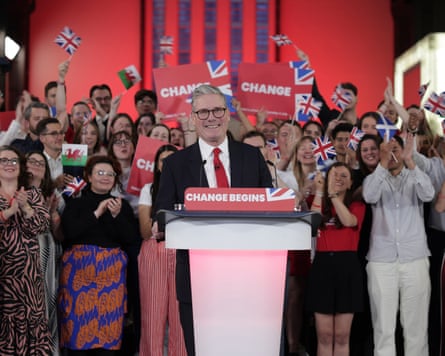
One staffer recounted asking why they had not yet seen a plan to govern, to be told that there did not appear to be one. “After the win we expected some sort of blitz of major policies. Instead, we just had the PM going round meeting mayors on a UK tour. There were a lot of people saying: ‘This can’t be it. This isn’t how you do politics.’”
Some put at least part of the blame for this botched beginning on Sue Gray, the veteran civil servant who was Starmer’s chief of staff, another example of a highly capable person in the wrong job for their talents.
Others say the fault was more Starmer’s for failing to adapt his approach from an opposition leader trying to rebuild a party after the disastrous 2019 election to inevitable prime minister-in-waiting, which meant he arrived in No 10 without a plan.
David Runciman, the political scientist and author, said: “Starmer thought he faced an uphill struggle, and the real task was discipline and just maximising what could be extracted out of the next election.
“But in fact, from about halfway through that parliament – basically from the moment Liz Truss appointed Kwasi Kwarteng as chancellor – Labour were going to win the next election, whatever happened. They had two years to prepare, and did not prepare.”
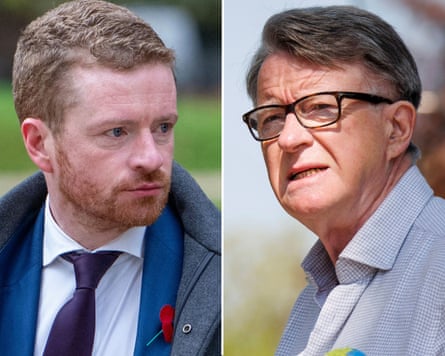
Gray was soon replaced by Morgan McSweeney, who had masterminded Labour’s unexpectedly rapid post-Jeremy Corbyn renaissance, but was equally unsuited to the role, and whose primary legacy was the disastrous appointment of Peter Mandelson as ambassador to Washington.
While Starmer is very obviously a different politician to Boris Johnson, the two share similarities, notably the repeated and fruitless changes to their top teams, followed by a creeping realisation that the problem was actually not the aides, but the man at the centre.
In another echo of the Johnson era, paper trails from the appointment of Mandelson showed Starmer as almost more of a figurehead than a boss, the decisions made elsewhere, with the PM acting as chief rubber-stamper.
One Labour official says Starmer has always been keen to devolve considerable authority and leeway to trusted aides, a tendency that served him well when leading the Crown Prosecution Service (CPS) and then as opposition leader.
They added: “But government is different, and that system has not worked. It becomes very hard to get consistency, because you end up with different people with different views, with quite a lot of power and no real reason for them to align around one vision.”
Others disagree. One ally who worked very closely with Starmer as prime minister described him as not just hard-working but effective.
They said: “He’s not Obama in his presentational skills, but then almost no one is. But he did have a lot of other talents for the job, most of which the public never saw. If you want a presentational genius mixed with all that, you might be waiting a long time.”
Much of Starmer’s work, the ally said, was based on his central belief in fairness. Others, however, argue that a key reason for his failure was the lack of an obvious political belief system.
“A core philosophy is the thing that holds you together when it’s falling apart,” Runciman said. “Margaret Thatcher was the exemplar of this. But with Starmer, I couldn’t see it, and it never emerged.
“If your reason for being in government is ‘We’re more competent than the other people’, that doesn’t work when the shit hits the fan.”
In one key way, Starmer is quite different to the four post-Brexit occupants of No 10 under the Tories. Theresa May, Johnson, Truss and Rishi Sunak were all somewhat unusual characters, whether awkward, borderline misanthropic, tunnel-visioned to the point of crankery, or detached and peevish.
In contrast, everyone who knows Starmer speaks about his fundamental normality – with his lower middle-class suburban background and fondness for football and the pub, he could have been created for a focus group – as well as his sociability and rich network of friends, many of them outside politics.
It is to the intense frustration of virtually everyone who has worked with Starmer that, despite all this, his public reputation is of someone not just boring and robotic but also out of touch and – thanks to the knighthood conferred for his CPS work – very possibly quite posh as well.
Friends and colleagues regularly express bafflement that the person they know as open, thoughtful and often funny in private, seems to freeze up whenever a microphone or camera emerges, despite years of hopeful coaching.
Starmer has always been a slightly curious politician. He was already 52 when he entered parliament, but with such a glittering career he was immediately tipped as a future leader. It took a few months to reach the frontbench, the shadow cabinet soon after.
This was, of course, under Corbyn, a bruising experience Starmer later recalled as like playing for a football team doomed to relegation: you tried your best, but the reality was impossible to escape. He considered resigning several times but felt his Brexit brief was too important to abandon.
When Corbyn resigned after the catastrophic 2019 election loss, Starmer was initially not the favourite, with observers assuming Labour members would stick to the left and pick Rebecca Long-Bailey.
But a combination of a highly organised campaign and Starmer’s now infamous 10 policy pledges, taking in left-leaning ideas such as public ownership of utilities and ending student tuition fees, helped him win with ease. And here began what some would see as the golden phase of his political career, albeit one where the seeds of his downfall were already visible.
Most people in Labour assumed Starmer was a Neil Kinnock or John Smith, someone who would do the hard yards of turning around a moribund and toxic party, but never make it into power. And for a while that looked highly possible.
Little more than a year after becoming leader, Starmer briefly considered quitting after Johnson’s Conservative party, buoyed up by a Covid “vaccine bounce”, took the ultra-safe Labour seat of Hartlepool in a byelection. A national polling gap Starmer had painstakingly pulled back suddenly expanded again to a near-20 point Tory lead.
But fortune was to be on Starmer’s side. Johnson combusted, before Truss wrecked the Conservative brand beyond the limited repair efforts of Sunak. Much as the circumstances of the 2019 election could have been designed to benefit Johnson, so it was in 2024 for Labour.
Starmer had nonetheless prepared his party with a ruthlessness well-known to some, including former colleagues on the receiving end, but surprising to others, most publicly as he sought to rid Labour of antisemitism and a public sense that this had been tolerated under Corbyn.
Within weeks of becoming leader he sacked Long-Bailey from his shadow cabinet over a reposted tweet. A few months later, Corbyn lost the party whip. Hundreds of members were suspended or expelled.
Under the guidance of McSweeney, who moved from the controversial Labour Together thinktank to the helm of Starmer’s leadership campaign and then charged with planning for an election, the party was firmly shunted away from Corbyn’s leftwing populism, the 10 pledges largely forgotten.
As a way to reshape a party, it was undeniably effective. But the zeal with which McSweeney and his allies purged, demoted, sidelined or otherwise demeaned those on Labour’s left – “punching hippies” as the parlance has it – arguably left Starmer with a sometimes shallower authority.
This relentless campaigning focus also, as it turned out, helped the process of creating a party hellbent on winning power but not especially clear about what to do with it.
This is a slight oversimplification. Starmer’s Labour has delivered some quite radical, and pre-planned, policy ideas, for example the improvements to workers’ and renters’ rights, plus some advances decided on in office, such as the scrapping of the two-child benefit cap.
But from almost the first week, the government was plagued by own goals, beginning with a damaging row over election freebies and followed by a series of policy missteps and U-turns, notably on welfare changes and cutting pensioners’ winter fuel allowances.
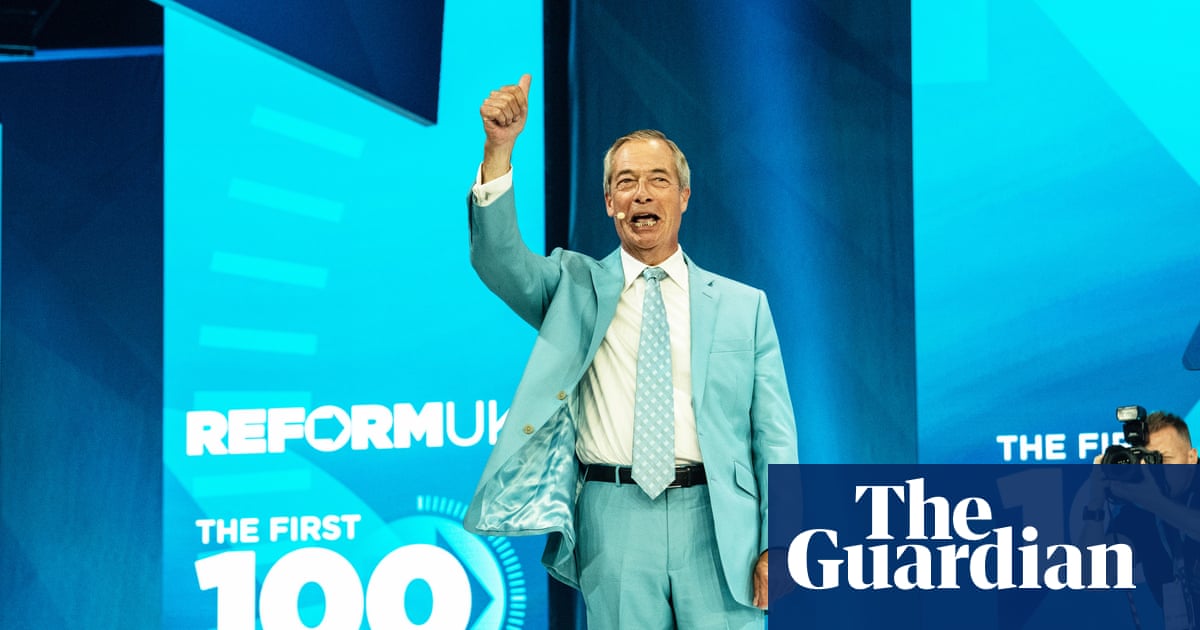
There were also failings in the efforts to counter Reform UK, with tough language on migration culminating with Starmer’s reference to an “island of strangers”, an apparently accidental echo of Enoch Powell. While this did little to slow down Nigel Farage’s party, increasing numbers of voters shifted to the Greens, feeling they were actively unwanted by Labour.
If Hartlepool was a signpost of Starmer’s early struggles, another byelection, in February this year, showed how far his party had fallen again, with the Greens overturning a 13,000 Labour majority in Gorton and Denton, Greater Manchester.
Some things were not Starmer’s fault. He would not have chosen the re-election of Donald Trump, let alone the US-Israeli attack on Iran delivering an unexpected blow to an economy showing signs of life.
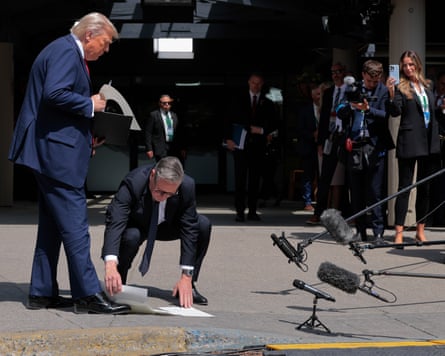
At the same time, handling Trump and the delicate global situation is one of the few areas where Starmer has obviously performed well and won credit. He first gained Trump’s affection – how he did so, Starmer admitted in private, was a mystery even to himself – before weathering the insults with dignity.
But for all that Labour MPs could point to such successes, or to Starmer’s decency and diligence, the numbers became stark. Labour polled as low as 17%, sometimes in fourth place. Starmer’s personal ratings were so dire that only Truss saved him from being the most unpopular PM in modern polling history. Focus group descriptions included a “jellyfish” and a “doormat”.
It is less than two years since the relaxed, energised prime minister gave his first Downing Street press conference after the election, joking that he was still getting lost in his new workplace and promising a mass of policies.
Labour had been planning for months, he promised, using the phrase “hit the ground running” three times within a minute.
If there ever was, in fact, a cohesive plan for government, it fell apart at virtually the first contact with reality.
The deeply bruised party so carefully rebuilt will have to start all over again. Starmerism, if it ever existed, will be buried, swiftly and decisively.
With his project at an end and Andy Burnham waiting in the wings, Starmer seems likely to be remembered, Runciman argues, as someone weighed down with the burden of a huge majority he never quite knew how to use, and who never properly made the transition from being a good opposition leader into No 10.
Runciman said: “I think the thing that will really stand out, the thing that makes his premiership different from all the others, is the mismatch between what looks like the scale of authority and legitimacy that ought to be conferred by a thumping majority parliament, and the complete absence of actual authority and legitimacy in practice.
“The majority was almost a curse for him. I think he would have had a more successful premiership with a smaller majority.”
According to Seldon, Starmer will be remembered as the fourth Labour PM after Attlee, Wilson and Blair to win a landslide election, but the first to do pretty much nothing with it.
He said: “He is this decent, hard-working, serious-minded figure, who could have made it – but critically, fatally, didn’t have the ability to learn how to do the job.”