2 months ago
118
2 months ago
118
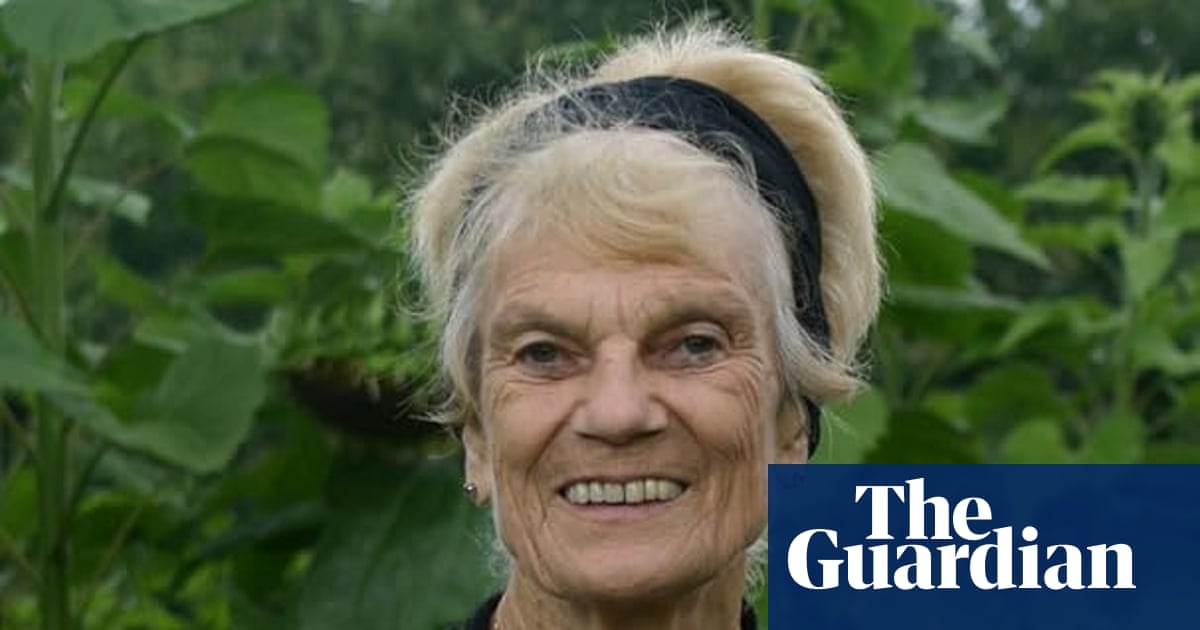
It was only late in life that the mathematician Gladys West, who has died aged 95, was recognised for her role in the development of today’s global positioning system, or GPS. She came to be thought of as another “hidden figure” – a reference to the 2016 book and subsequent film about three black women who worked at Nasa during the space race.
While West’s story may have been less dramatic – it took decades of painstaking work at the US Naval Weapons Laboratory for her to come up with the geodesic systems that would allow the precise measurements and mapping needed for the technology – her work nevertheless transformed modern life.
Yet the woman who helped to develop global mapping, which provides pinpoint locations everywhere on the planet, preferred to use traditional paper maps herself. “I’m a doer, a hands-on person,” she told the Guardian in 2020. “If I can see the road and see where it turns and see where it went, I am more sure.” It was this straightforward approach that helped West rise from a poor upbringing in the segregated American south to running a generation-length project incorporating the most complicated new technology as it developed.
It was in the wake of President Dwight Eisenhower’s banning of racial discrimination in federal hiring that West became the second black woman and one of four African Americans working at the navy’s weapons facility in Dahlgren, Virginia, in 1956.
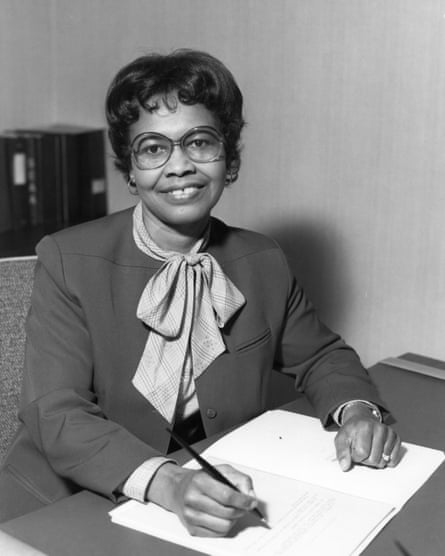
She began as a computer programmer, and became key to a 1960s project to study the regularity of Pluto’s motion relative to Neptune. Her systems analysis allowed her computers to make more than 5bn calculations in the days of flow-charts drawn using templates and fed into the machine with punch cards.
After receiving a commendation for her work on the project in 1979, she was made project manager of the Seasat radar altimetric program, using data from the first Earth-orbiting satellite that could monitor the oceans.
With the development of the IBM 7030 “Stretch” computer, West was able to precisely measure the undulating surface of the Earth, allowing for the effects of gravity and tides. In 1986, her 51-page paper, Data Processing System Specifications for the Geosat Satellite Radar Altimeter, provided the calculations for an accurate geodetic Earth model that would be used as the basis of GPS.
Gladys was born in Sutherland, a small town in rural Virginia dominated by tobacco sharecropping. Although her parents owned their own farm, they both also had other jobs; her father, Nolan Brown, on the railroad and her mother, Macy (nee Scott), in a tobacco factory.
Gladys’s education was exclusively segregated, starting in a one-room schoolhouse a three-mile walk from home. Even then, she saw that her way out could only be through the education her family could not afford. When she finished as valedictorian of her high school, she won a scholarship to the all-black Virginia State College (now University), where she joined the Alpha Kappa Alpha sorority and graduated with a degree in mathematics in 1952.
After two years of teaching at a high school to save money for graduate work, she earned her master’s degree, and taught for another year before applying for a job at the US Naval Proving Ground in Dahlgren, named after John Dahlgren, who established the naval ordnance department and invented the Dahlgren cannon.
One of the two black men working at the site was Ira West, who was instantly taken with Gladys. It took her some time to respond. “I was a serious woman,” she recalled. “I didn’t have time to play around.” They married in 1957.
If the working environment at Dahlgren lacked the physical reminders of segregation that brought drama to the Hidden Figures film, she had no doubts about her challenges. “Not just as a woman, but as a black woman, that’s another level where you have to prove [yourself] to a society that hasn’t accepted you.”
West retired in 1998, and in 2000, despite suffering a stroke, received her PhD in public administration from Virginia Tech. Her recognition came unexpectedly, after she filled in a request for a brief biography for a sorority reunion in 2017.
She had never told friends or family what it was she actually did for the government: most of the work was top secret. One of her sorority sisters was so impressed she contacted a newspaper in Fredericksburg, Virginia, and their story went nationwide.
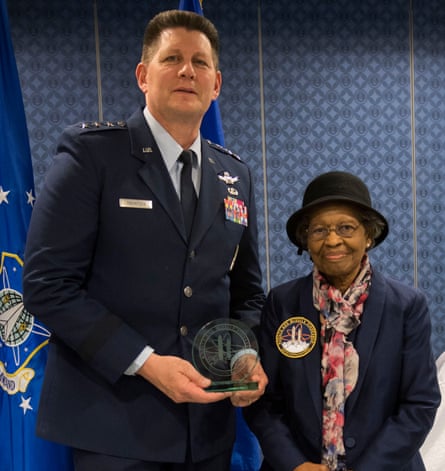
Within a year, West had been enshrined in the US Air Force Space and Missiles Pioneers Hall of Fame, where the hidden figures comparison was given its traction. She accepted the award with typical modesty. “When you’re working every day, you’re not thinking: ‘What impact is this going to have on the world?’ You’re thinking: ‘I’ve got to get this right.’”
In the same year she was chosen as one of the BBC’s 100 Women project, and in 2021 she received the Royal Academy of Engineering’s top award, the Prince Philip Medal. Her biography, It Began With a Dream, was published in 2020. In an interview with Virginia Public Media, she explained her goals: “Do your best work, work hard … and be a real good person.” She concluded: “I’m pretty satisfied that I used myself up.”
Ira died in 2024. West is survived by a daughter, Carolyn, two sons, David and Michael, and seven grandchildren.