3 months ago
123
3 months ago
123
Dave Mullins can’t quite believe he devoted 10 years of his life to a lie.
Idealistic and open-minded, he was 19 when he saw an advertisement for a free workshop on out-of-body experiences in Sydney. There he met a captivating, charismatic teacher who was thought to be able to read minds.
As a leader in gnosticism, the man believed thoughts and feelings smothered true consciousness and, as such, were sinful. His followers were prohibited from taking drugs and drinking – nightclubs were full of “astral larvae” that poisoned spiritual development – or from reaching orgasm during sex.
Before long, Mullins was all in. Every waking moment he monitored his thoughts and urges, trying to destroy his sin. By night he meditated and, wearing a cloak, embarked on rituals and attempts at group astral projection. Lying together, 10 to 15 core followers would intentionally cycle in and out of sleep with the hope of entering higher dimensions and connecting with eternal beings.
When the “master” announced that a massive wave was going to destroy Sydney, the entire group moved to Melbourne. Later, followers laboured on a new meditation centre, only to be told, when the building was finished, that they had done a poor job – so the building would be used not as a community space but as a home for the master and his wife.
Mullins became accustomed to being racked by guilt and self-criticism, set against a backdrop of urgency: these were end times and this was their last shot at redemption. On occasions, he remembers feeling almost supernatural.
“I went through some pretty weird stuff,” Mullins, who went on to move to Canada with his wife and baby to establish the sect in Toronto, says from his home in Sydney. “Now that I’m saying it out loud, I’m like, ‘What is wrong with me? How did I believe that?’”
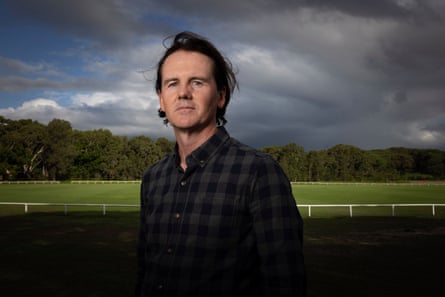
Now 48 and a psychologist, Mullins has just launched a podcast about his and others’ experiences of sects and the occult. Guests include the musician Sarah Blasko, Ben Shenton, who was part of an infamous Australian cult, the Family, and Craig Hoyle, a former member of the Exclusive Brethren. By Mullins’ measure, what cults have in common is charismatic leadership, the threat of some form of apocalypse, exclusivity, control and the promise of an afterlife that dwarfs earthly experience.
Part of his own reckoning includes apologising to the students he recruited – and opening up about the immense shame and embarrassment that followed being in the cult’s thrall.
When he eventually left the group after being demoted by its leader, he oscillated between “accepting that everything I had done had been completely pointless, and then swinging violently to, ‘Oh no, I’m going to hell because I’ve left the group,’” he tells Guardian Australia.
“I gave up my 20s for him … I was angry that they had manipulated me and fooled me and lied.”
Still, he questioned what he had to complain about – the movement was a spiritual school, no one physically assaulted him and he wasn’t sexually abused, as is the case in some cults. But the more he talked to other former cult members for the series, the more he realised his experience was “not harmless at all”.
“That’s the insidious nature of cult dogmas – they’re subtle, they creep up on you and all of a sudden you don’t trust yourself at all. You take on the attitudes of the masters, and lose your free will.”
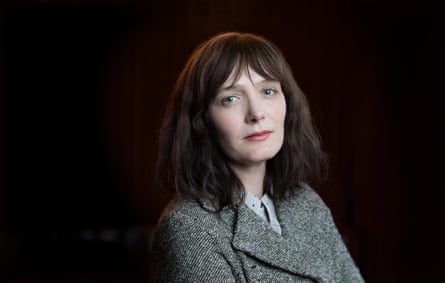
For Blasko, the scales fell off during a trip to France when she was 16. From about the age of eight, the singer-songwriter had church-hopped with her family, eventually settling on Sydney’s Pentecostal Christian Life Centre, a forerunner to the Hillsong church founded by Frank Houston, who was later identified as a serial paedophile.
Blasko considers the CLC a “cultish” experience, she tells Mullins in the podcast. As a teenager, she was emotional and sensitive – susceptible, perhaps, to the church’s dynamic, powerful leaders and the fear they instilled. One of those was a man whose sexually charged praise of the 13-year-old was often accompanied by criticism.
“When I think back to it, I’m horrified … I should have hated him, really, but I actually was sort of attracted to him, not sexually, but emotionally,” she tells Mullins.
She, too, was told she was living in end times and wouldn’t live to see the age of 30, so why care about an education – but somewhere deep down the messages didn’t ring true, she guesses, because she never tried to proselytise or tell her school friends about life in the church.
“That really fucked me up – I did definitely feel like I was leading this kind of double life at the time,” she tells Guardian Australia.
Twenty years on, she and Mullins still feel the long reach of their high-control experiences. When things go wrong, they wonder if it’s because they left. Blasko echoes Mullins’ lingering sense of embarrassment.
They both struggled to adjust to life outside the group, having for years been told how to think, feel and act. Blasko began drinking too much, experimented with relationships, suffered from depression and considered ending her life before finding a music community that she credits with saving her.
Mullins wound up performing “terrible” standup comedy in Toronto after leaving the sect. People had become a social obstacle, another pathway to sin that made him self-judgmental – and he’d largely forgotten how to hang out. Standup was the antithesis of all that.
“I remember at some point feeling, ‘I just want to make up for all the time I wasted,’” he says. “Being social, getting out drinking, feeling like I was allowed to be proud of myself and attracted to people – ‘I’m gonna fucking do as much of this as I can.’”
-
In Australia, the crisis support service Lifeline is 13 11 14. Other international helplines can be found at befrienders.org
-
Dan Mullins’ Aftercult podcast is available on streaming platforms