2 months ago
30
2 months ago
30
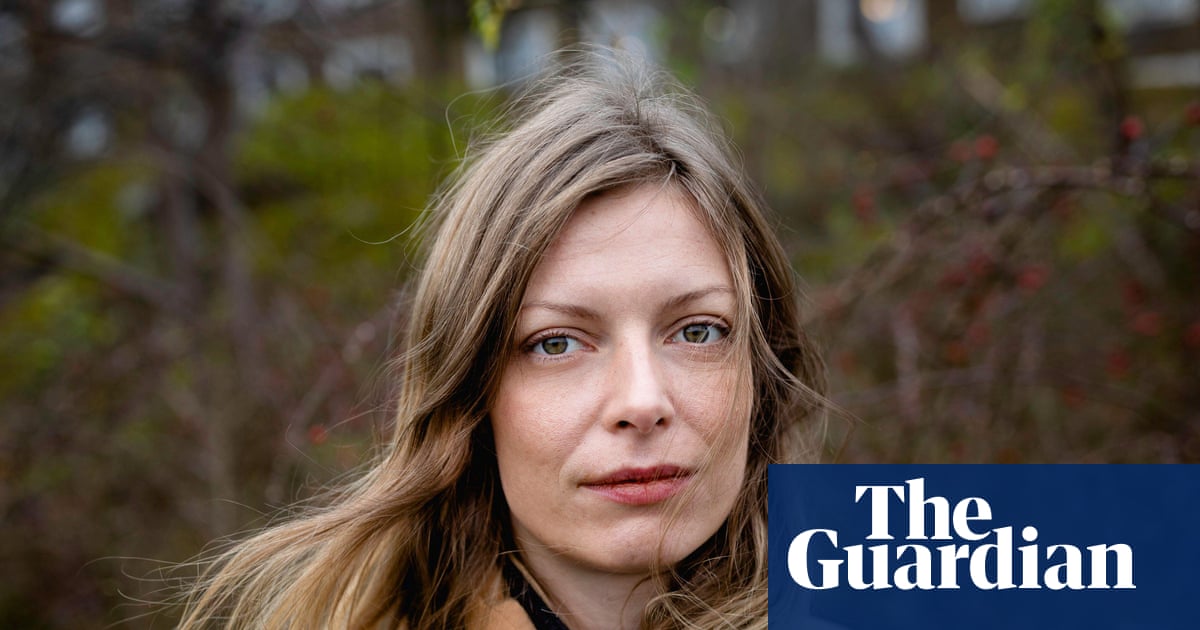
Somerset House in London used to be known as the “national beehive”, says artist and film-maker Onyeka Igwe, as she leads the way through corridors and down stone steps to her studio in the building’s inner reaches. As the former home of the Inland Revenue, and the General Register Office responsible for recording births, deaths and marriages, Somerset House once held all the information necessary to tax and manage the population. “There were so many workers here,” Igwe says.
Archives are the prosaic raw materials of her films – stories of resistance, dispossession and the power of communal activism for which she and fellow London-born and -based artist, writer and musician Morgan Quaintance have been made joint recipients of the 2025 Film London Jarman award.
Like Igwe, Quaintance is fascinated by history, which surfaces and recedes in his films in the random, apparently illogical way that it does in our individual and collective consciousness. In Repetitions, one of two films commended by the jury of art and film world experts, Quaintance gathers the flotsam and jetsam of 30 years of personal history – a scan of his injured knee, feet on a staircase, a crouching boy – mixing them with footage of Black feminist activists from a century ago, and the voice of a campaigner for workers’ rights during the Covid pandemic.
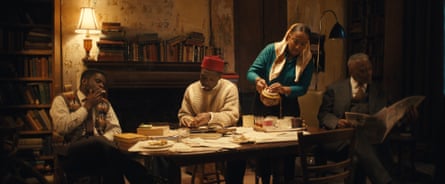
In A Radical Duet, Igwe finds the gaps in the history of the burgeoning anticolonial movement in 1940s London, to imagine the meeting of two Black female activists who might have crossed paths. In the spaces left blank by archives, books and blue plaques, Igwe places a speculative past, in a film that draws the threads of history through to the here and now.
When we meet, a few days before the announcement, neither Igwe nor Quaintance knows that they have won, but as they have been previously shortlisted, the pair maintain the cool demeanour of old hands.
Presented annually, and inspired by the late Derek Jarman, the award, which includes a £10,000 cash prize, recognises and supports artists working with moving images. This is the first time since its inception in 2008 that the award has been presented jointly, with the prize money split between the two winners.
Both artists work across different media, but are equally convinced of the unique power of film: “It’s thriving, it’s vibrant, and some of the best work is happening in this country,” says Quaintance. Igwe, whose current Tate Britain exhibition, Our Generous Mother, includes sculpture, film and projected slides, enjoys film’s capacity to accommodate different forms, but says: “It’s important to know why something is a film, as opposed to an article or a poem.”
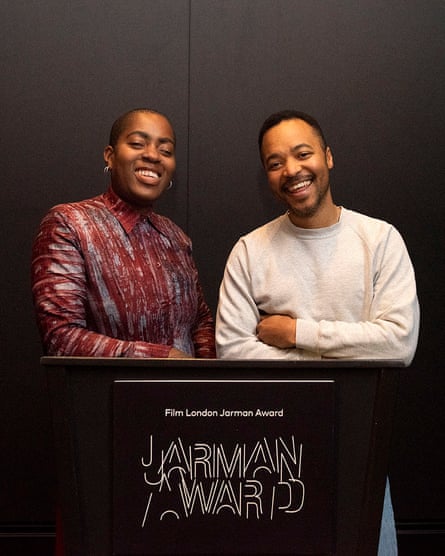
While for Igwe, history is an anchor in the present, for Quaintance, it’s a point of friction on which an individual is snagged and forced into an encounter with a much bigger picture. “There’s this new idea that you have to be collectively conscious. You have to be thinking, ‘Where do I stand in relation to world events?’” he says. “We’re all supposed to be on a world vigil, you know? I’m not lamenting it, I’m just fascinated by it. It’s a contemporary condition.”
As a medium that perhaps more than any other commands the full and unmediated attention of an audience, and at a time when viewers are more visually sophisticated than ever, film is the ideal way to assess our ability to affect others beyond our immediate circle.
Repetitions, a film that stutters and loops like a VHS held on pause, is a testing experience for viewers presented with a deconstructed film in which sound, time and image are separated and distorted. “From a formal perspective, I was interested in how far you can loop something, and what that does to a viewer,” Quaintance says. “Maybe I can push you into a hypnotic state. I can frustrate you, or make you have a sense of expectation, or push you towards boredom. These are all things that are going to actively manipulate you as you’re watching something.”
Asked about future plans that might be brought into being with the prize money, Quaintance points to his exhibition Available Light, at Chelsea Space in London, in which a film serves as the central point of a bigger touring project about the difficulties of modern urban living. For Igwe, an adaptation of a Doris Lessing novel, and the next chapter of A Radical Duet are calling her.
But it’s their interest in grassroots activism that’s at the root of their shared passion for the English civil war. For Igwe, it began at school, when she realised that “people had these proto-communist ideas, they were thinking about alternative, radical ways of living that people are still thinking about today. That sparked an interest in thinking about the present through history.”
“I would love to direct a drama on the English civil war,” says Quaintance. “I’d like to do something like Steve McQueen’s Small Axe tracking from the civil war to today.” It might be the ideal way to invest their shared winnings.
-
Onyeka Igwe: Our Generous Mother is at Tate Britain, London, until 17 May. Morgan Quaintance: Available Light is at Chelsea Space, London, until 12 December.