3 months ago
118
3 months ago
118
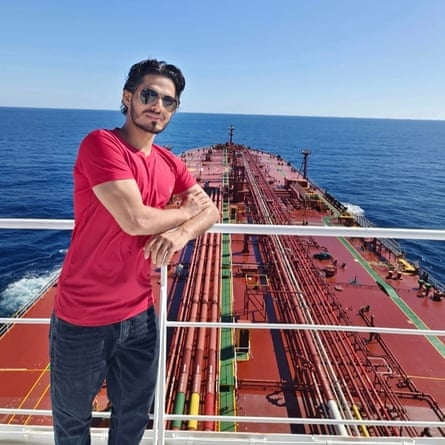
On the night of 16 July last year, Gaurav Joshi, one of the crew working on a cargo ship stranded at a port in southern Ukraine, was on patrol. The crew of the MT Nathan had found themselves abandoned in a war zone for the past three months after a dispute between the ship’s owners.
It had been a rough few months for Joshi and the 14 other crew, who came from India, Egypt and Turkey. They often spent sleepless nights listening to the distant sounds of explosions caused by Russian bombing and the Ukrainian air defence. “Some nights we could even see the lights and fire in the sky,” says Joshi.
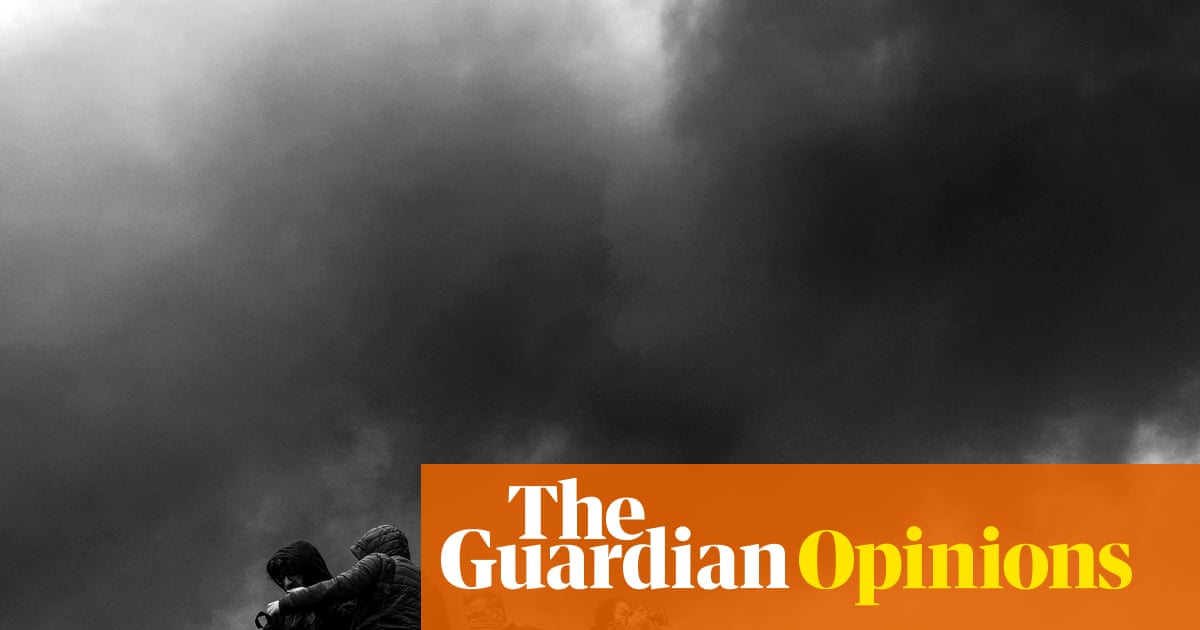
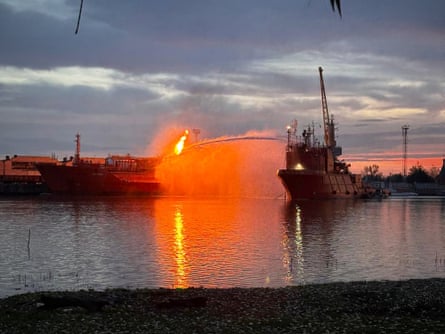
On that summer night, however, the sounds of explosions grew closer, and the flames of drones exploding when they landed or were hit by the Ukrainian air defence systems were visible from the deck of the vessel, which had doubled as their home and shelter in the preceding months.
“At about 1.30am, I came downstairs to get some coffee, and that’s when I felt it – like intense air pressure,” says Joshi. A Russian drone had exploded very close to their vessel.
“I heard the sounds first,” he says, describing the noise of an approaching drone, akin to the buzzing of a large motor. “And then a loud and heavy explosion with the pressure of a vacuum … and then I saw the light.” Joshi says the impact of the explosion threw him backwards.
As he scrambled back to his feet, he was joined by the rest of the crew, who had been jolted awake by the impact. The initial explosion was quickly followed by several louder booms as the Russians launched a massive drone attack on the port of Izmail in the Odesa region.
Video footage from the ship’s deck that night, shared with the Guardian, shows explosions and large flames close to the vessel. Sounds of prayers in multiple languages can be heard in some of the clips, punctuated by loud explosions, as the ship’s crew braced for every drone that detonated close to them.
“There was really nowhere we could go,” says Joshi. “The explosions were happening all around us.”
Their ship is not the only merchant vessel to have come under Russian attack in Ukraine. In the last week of December, Emmakris III and Captain Karam, both bulk carriers transporting wheat, were attacked by Russian drones in the Black Sea as they approached Odesa. Earlier in the month, a Russian drone hit a Turkish vessel carrying sunflower oil.
However, unlike these ships, the MT Nathan was abandoned in a war zone. It was sold on arrival in Ukraine, but a dispute between the new and previous owners left the crew stranded, with neither willing to take responsibility for them. Without authorisation from the port or immigration authorities, the crew members were not allowed to leave the ship.
What was supposed to be a short delivery of cargo turned into a months-long nightmare, as Joshi and his fellow seafarers found themselves in a diplomatic limbo. Their situation worsened when the owners of the ship refused to provide any support for them or pay their wages.
Video calls and messages, recordings of which were shared with the Guardian by Nathan Smith, a trade union inspector with the International Transport Workers’ Federation (ITF), documents the conditions the crew members were living in, which became “increasingly unsafe”.
Joshi says: “There were days we didn’t have fuel to run the generators, so we couldn’t prepare food and survived on fruits provided by locals.”
A record 410 ships and their crew were abandoned last year as owners looked to save money on wages and costs, according to an International Marine Organisation database, with a large number stranded in waters close to conflict zones or unstable regions, such as Iran, Israel, Sudan, Somalia, Russia and Ukraine. Most of the 6,223 abandoned crew members were Indian or Filipino.
ITF inspectors say crew members abandoned in conflict zones quickly find themselves in life-threatening situations, lacking support and security. Smith says this is particularly the case with “shadow vessels”, where ships’ ownership is ambiguous – a tactic used by countries including Russia to circumvent international sanctions.
One such vessel, the MV Anka, which had been detained by Ukrainian forces as a suspected Russian shadow fleet ship, was damaged during a Russian attack on a port in Odesa, in which a crew member was injured.
Joshi has nearly 15 years of experience in the merchant navy, sailing rough seas and facing hostile environments such as pirates. But he says he has never experienced something as intense as the Russian attacks during the summer nights docked in Ukrainian waters.
“Yes, we are aware of the risks we take when we sign up for work on ships that go into dangerous waters,” he says. “But there is often a plan in place to mitigate the risks. For example, we travel with armed security when we cruise through pirate-infested waters. But here, we felt truly abandoned. We felt doomed.”
The morning after the attack, Joshi contacted the ITF in an effort to find a way back home for the crew. But as the ITF negotiated their repatriation, they had to make hard decisions. “We had not been paid since the day we departed Turkey, and if we left, there was a risk that we would lose our wages,” says Joshi.
Being in a precarious position, such as being abandoned in a war zone, can become a decisive factor in how the crew negotiates, says Smith. “It fundamentally alters the risk profile for seafarers, and fear for personal safety means that crews accept delayed wages, partial settlements or unsafe arrangements simply to leave a dangerous area.”
Joshi and his colleagues eventually accepted their transfer to a hotel in the relatively safer port of Odesa, but it took until November for all the crew to be paid and repatriated to their home countries.
“Even during our stay in the city [Odesa], several times bombs fell very close to the hotel. It is a miracle we survived this ordeal,” says Joshi.