3 months ago
106
3 months ago
106
Watching Iran in flames, I can’t help wondering whether history is coming a grotesque full circle 47 years after the fall of the US-backed Pahlavi dynasty, or whether western powers are simply repeating past errors by attempting violent regime change from outside.
As a young reporter, I had a ringside seat for part of the 1979 revolution that overthrew Shah Mohammad Reza Pahlavi and installed an austere Islamic republic headed by a Shia Muslim cleric with the titles of “leader of the revolution” and “guardian jurist” (vali-e faqih).
Barely two years out of university, with a history degree specialised in the French Revolution, I was catapulted into covering a live revolution as epochal – and bloody – as the French and Russian convulsions. As a trainee correspondent for Reuters in Paris, I befriended exiled Iranian revolutionaries hanging out in the Latin Quarter in the months before Ayatollah Ruhollah Khomeini was expelled from Iraq in 1978 and granted temporary asylum in France.
Through those contacts, I was the first foreign journalist to interview Khomeini, a few days after he arrived in France and was installed in a modest suburban bungalow in Neauphle-le-Château, near Versailles. It took some haggling to see the “imam”. Aides tried to fob me off with written answers to my questions. Eventually, I was granted a 10-minute audience that I managed to stretch to 20. Abolhassan Banisadr, a Paris-based academic who went on to be elected Iran’s first president before being ousted and escaping back into exile in 1981, acted as an interpreter.
As I sat cross-legged on the floor opposite him, Khomeini barely acknowledged my presence, staring at the wall behind me as he spoke in a husky monotone. There would be no compromise with the shah, he said. Iran would become an Islamic republic. The US could do nothing to stop that. Bearing in mind Reuters’ business clients, I asked how foreign oil companies would be treated if the revolution triumphed. His answer was translated as: “We will cut off the hand of the foreigner.” I felt my own hand instinctively withdraw up my sleeve.
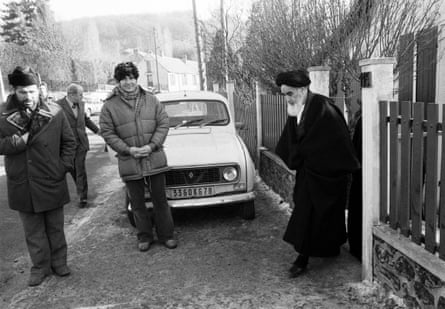
After we left the room, Khomeini’s western-based spin doctors rushed to explain that, of course, the ayatollah didn’t mean they would chop off hands, but was using a metaphor. In hindsight, we young leftish reporters who covered Camp Khomeini were too influenced by the urbane exiles around him who spoke our languages and sought to convince us that “the old man” was a father figure for a socially progressive movement fighting to topple a torturing tyrant, whose troops had opened fire on the masses.
The real balance of power in revolutionary Iran became apparent over the following year, after a liberal interlude during which the first free elections took place and western-trained technocrats tried to run a government amid a strange jumble of republican and revolutionary institutions. In revolutionary Russia, this phase of what Lenin called “dual power”, until Communist rule was entrenched, lasted a few months. In Iran, it has now lasted for 47 years.
I was in Tehran from November 1979, days after the seizure of the US embassy by Islamist militant students – a turning point that radicalised the revolution and forced the liberals out of government – until July 1980, weeks before Iraq invaded Iran with western backing. I covered the first presidential election – won by my erstwhile interpreter, Banisadr – and witnessed the failed US raid to free more than 50 diplomats held hostage in the occupied embassy, the election of the first parliament and the suppression of student protests.
Khomeini’s masterstroke was to create parallel security forces that prevented a military coup by giving most power to the newly created Revolutionary Guards – while keeping regular armed forces – and to the feared Basij militia, alongside the regular police. Revolutionary tribunals headed by mullahs coexisted with ordinary courts. An elected president and parliament coexisted with the supreme leader’s office and a guardian council of hardline clerics that held the real power.
Iran’s equivalent of the Jacobins or Bolsheviks – the organised core of revolutionaries – turned out to be neither the communist Tudeh party nor the Islamic leftist People’s Mujahedin, but the Shia clerics, who had a national network of mosques and seminaries, a charismatic leader in Khomeini and a patronage system lubricated by oil revenues. In due course, they created a political force – the Islamic Republican party – although it did not long survive a Mujahedin bombing that killed 72 of its leaders in 1981. Khomeini did not need a party that might have become an alternative power centre.
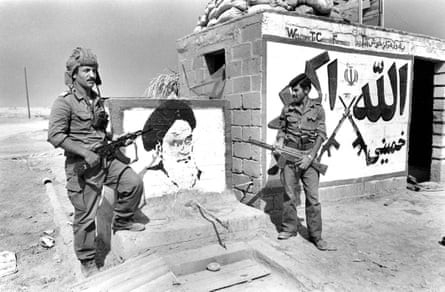
As with the French and Russian revolutions, foreign powers desperate to prevent contagion launched a war against the revolutionary state, convinced it would rapidly collapse amid the internal turmoil. As in France and Russia, foreign aggression served to rally the country behind the revolution in a patriotic reflex, leading to a bloody but ultimately successful defence that halted Saddam Hussein’s Iraq, despite support for Baghdad from the US and France. At home, it hastened a reign of revolutionary terror.
The “imposed war” provided grounds for mass arrests, kangaroo-court trials and summary executions. As in the French and Russian cases, entire categories of people became suspects, not for anything they had done, but merely for who they were – the “taghoutis” (devils) were treated with the same vindictive class hatred as former French nobles and priests.
Should we journalists have known better from the outset? Was this revolution qualitatively different because it was prosecuted in the name of a religion, Shia Islam, with its gloomy cult of martyrdom? Should we not have denounced sooner the imposition of compulsory hijab, the erosion of women’s rights and the enforcement of a strict morality code?
It wasn’t that simple. Many Iranian women had more opportunities, including access to higher education, than in all surrounding Middle Eastern countries except Turkey. I knew communist intellectuals who donned chadors or headscarves voluntarily in those heady early months. “I dress like the people to march with the people,” Homa, a university lecturer, told me at a demonstration outside the occupied US embassy in November 1979. Six months later, she was fired from her teaching post after Islamist thugs attacked student dorms and fought pitched battles with leftists, giving authorities the pretext to close the universities, purge their staff and impose new Islamic curriculums.
It did not seem inevitable in February 1979 that the forces of repressive fundamentalism would triumph in this sophisticated, educated society. Khomeini also bore a promise of social justice.
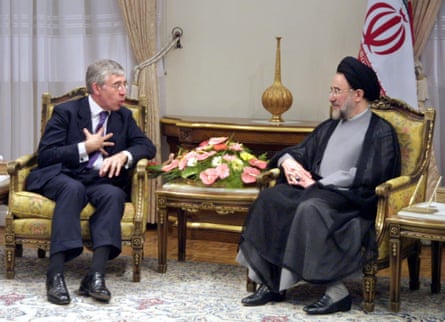
I returned to Iran several times on reporting trips, notably during the period between 1997 and 2005 when the reformist president, Mohammad Khatami, tried to ease repression and launched talks with the Europeans on curbing Iran’s nuclear programme. He was outfoxed by Khomeini’s successor, Ali Khamenei, an anti-American hardliner who used the clerical levers of power to block liberal reforms.
I cannot rejoice nor summon optimism at the assassination of Khamenei by US-Israeli bombing. The rapid choice of his hardline son Mojtaba as the new supreme leader offers little hope of reform. Neither Donald Trump nor Benjamin Netanyahu wants a genuinely free, prosperous Iran. They want its destruction as a threat and its perhaps ethnic dismemberment. Their war may even serve to perpetuate a regime that unflinchingly slaughtered thousands and possibly tens of thousands of demonstrators in January.
I fear we are not witnessing the liberation of Iran or Iranians, but a repetition of the cycle of foreign interference that has blighted Iranian history since the British were granted trade monopolies in the 19th century. The last shah was reinstalled on his peacock throne in 1953 by a US-UK inspired coup that ousted the elected prime minister, Mohammad Mossadegh, who had the temerity to nationalise the Anglo-Iranian Oil Company – today’s BP. Khomeini, for his part, made his name by leading 1963 protests against US dominance in Iran.
Once again, foreigners are seeking to shape the destiny of a nation that deserves better, but is likely to get worse.
-
Paul Taylor is a senior visiting fellow at the European Policy Centre