2 hours ago
8
2 hours ago
8
“Carefree,” says Ryan Caldwell when I ask him what word is tattooed across his fingers. He looks up from his hands on a rainy morning in Belfast. The former Ireland international, who played the role of enforcer for Ulster, Bath and Exeter, then laughs softly in acknowledgment of that incongruous word.
We have spoken for almost two hours about a wide range of dark and heavy subjects – from his addiction issues and imprisonment to his injury-riddled rugby career and the last big concussion that ended his playing days and sent him plunging into a deeper spiral of suicidal depression.
Caldwell has also explained how he slowly healed himself, after he went into the Amazon jungle and took the first of multiple doses of ayahuasca, the plant-based hallucinogenic, and how he now helps others as he listens to people’s problems while teaching breathwork and meditation.
“I know, I know,” Caldwell says wryly after I suggest that “carefree” is not the most obvious word when considering his troubling, if ultimately uplifting, story.
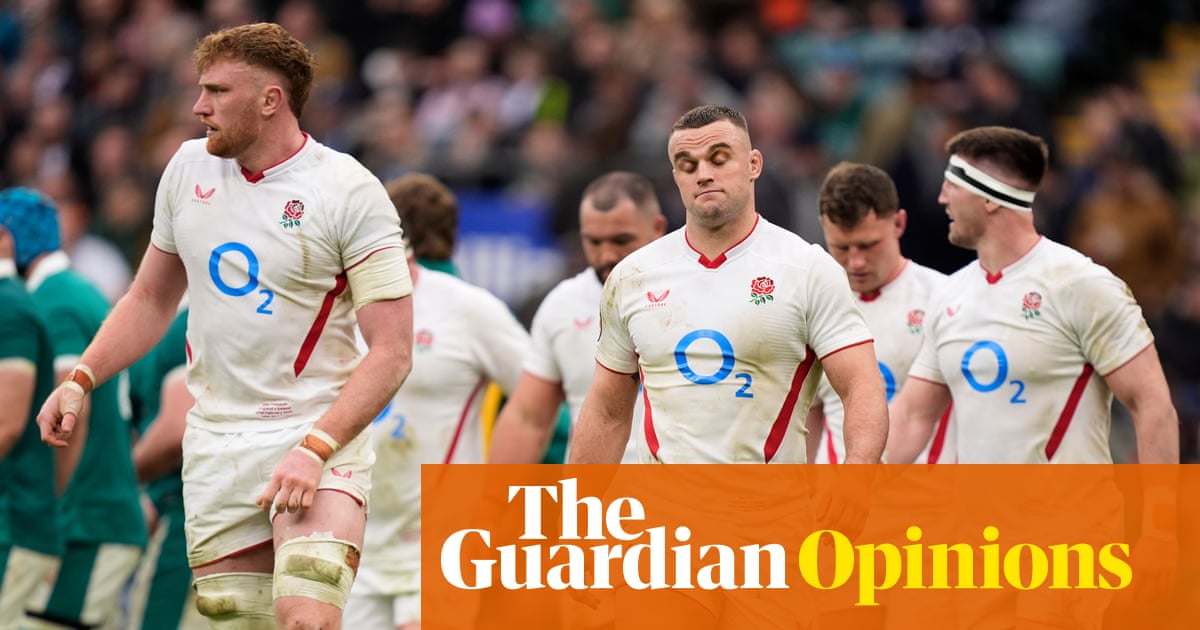
Caldwell is 6ft 7in and covered in tattoos but the big man, who turns 42 on Tuesday, is gentle and often amusing company. The former second-row is also about to publish a book, White Lines: a Rugby Life Broken and Rebuilt, which might just be the sporting autobiography of the year. It’s a gripping read, full of sobering insights into professional rugby and life.
But, near the end of an engrossing interview, I want to hear more about the blue ink that covers so much of his face and body. “The first tattoo came when I was 18,” Caldwell remembers. “It was Sanskrit for ‘strength’. My mum cried and I was like: ‘Och, Mummy, it’s only skin deep.’”
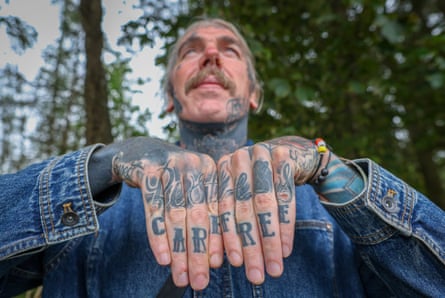
How many tattoos does he have? “They’re pretty much the one thing. A few wee gaps, here and there, but most of me is tattooed. I now don’t want to get more tattoos and haven’t in a few years. But they’re just part of me.”
The words “no love” are tattooed above one eyebrow which seems strange because Caldwell’s life has been full of love from his family. “When I did that tattoo I felt very low and had no love for myself. In that state, it’s hard to see the love other people have for you.”
As a boy, Caldwell fell for rugby union because it “felt wild and alive, and so did I”. He loved the game’s intense physicality and the freedom it gave him to smash into other players.
But during his rise as a schoolboy prodigy, and then while playing professionally for Ulster, rugby made Caldwell believe it was wrong to show any insecurity or vulnerability. He was a hard man who only lost his shyness when getting up to all kinds of drunken and ridiculous antics where trying to be loud and funny with his teammates was more important than being authentic and truthful.
Caldwell writes that, “despite the hard-man exterior, I was a sensitive soul. I felt things really deeply. Only looking back do I see that I had no language for feelings.”
He earned just two full international caps: not the shedload predicted when he was a powerful force in junior rugby. Caldwell is perhaps best known for the incident when, at a training session in the buildup to the 2007 World Cup, he upset Paul O’Connell and the future Ireland and Lions captain punched him so hard that, as he claims in his book, “I nearly died … I was out cold. The punch had burst my cheek open – one of my back teeth punctured straight through it. I was swallowing blood, gurgling, and then started fitting on the pitch. I stopped breathing. Almost gone. They had to resuscitate me right there on the grass. Gary O’Driscoll, the team doc, sprinted over and cut the jersey open. I remember flashes of his face – panic in his eyes – his hands pressing on my chest as I came around. Someone roared for an ambulance. It was carnage.”
Caldwell bears no ill-will towards O’Connell, who was horrified by what he had done, and described it years later as his worst moment in rugby. Yet, at the time, Caldwell tried to pretend it was no big deal.
The psychological impact of other hurtful experiences with the national team are also detailed in his book. He writes of his joy when the head coach Declan Kidney told him he was in the squad to play New Zealand in November 2008. Caldwell scrunches up his face now as he claims that, two days later, Kidney called him to confess his name had been announced by mistake. He was out of the squad.
Caldwell was crushed but says: “I was still wet behind the ears, so I didn’t challenge him on it.”
He moved from Ulster to Bath in 2011 and displayed such storming form that Kidney called Caldwell to say he was back in contention. A few days later, according to Caldwell, Kidney phoned again to say that, actually, he could not be selected as he was playing outside Ireland.
Caldwell, “with a massive chip on my shoulder”, was voted Bath’s forward of the season – but injury struck. It was not long before, while struggling with the break-up of his marriage and injuries, “the whole unravelling started in Bath”. Caldwell began taking cocaine and he soon used the drug so often that he had his own dealer.
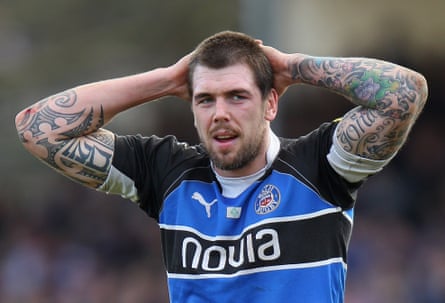
If injury had not derailed him might he have avoided the darkness that consumed him? “I don’t know,” he says. “To be honest, I was on borrowed time. By the time I went to Bath, my hips were chronically sore. In my second season I had an operation and the surgeon said: ‘I don’t know how you’re playing professional sport.’ In the last couple of years I couldn’t even put my socks on in the morning. And I was running around on the Saturday, tackling, hitting rucks.”
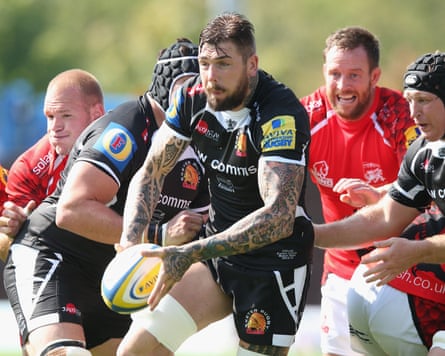
At Bath and then Exeter he hobbled on and injections enabled him to play. “I always wanted to play – and it was rugby culture. I remember a medic from my early days. I said: ‘Doc, I’m really struggling. My knee’s killing me.’ He said: ‘Here’s some harden-up pills.’”
He matched his escalating injury struggles with soaring amounts of cocaine and other drugs. A mortified Caldwell tells me how Rob Baxter, his Exeter coach, may have caught a glimpse of him snorting coke in a toilet cubicle. “I was like: ‘God, did he cotton on? He must have.’ I remember flushing the chain and Rob was standing there. I was like: ‘All right, Rob?’ And he goes: ‘All right?’ I just walked out.”
after newsletter promotion
Baxter was sympathetic and kind when Caldwell finally retired in 2014, aged 30, after a concussion he could not shake. Caldwell pauses when I ask him how many concussions he suffered? “It’s hard to say. There were the occasions where I was completely knocked out cold, but there were loads of head bangs. The last concussion when I retired was different. A heavy depression set in. I went to a specialist in Belfast and he did different tests and told me: ‘You shouldn’t be playing rugby.’ I knew it was over.”
How long did the effects of that concussion last? “I had that fogginess for months. Even now my memory is not the best.”
Caldwell is aware of the legal action that many players have taken against the rugby authorities but “I’m focused on the positive stuff I’m doing now. It takes so much mental energy looking for compensation and it’s a wee bit out of alignment with my life now.”
He has come a long way from the days when he would tell his long-suffering mum, as the tears rolled down his face, “I wish I’d never been a rugby player. I should have had an ordinary life.”
Caldwell doesn’t blame rugby for the fact that he ended up with “hips wrecked, brain rattled from too many bangs to the head” and twice being sent to Maghaberry prison near Lisburn. He came close to taking his life, for a second time, in his cell and was only saved by a prison warder coming to check on him. If the man had stuck to his usual routine Caldwell would have been dead by the time he arrived.
Paddy Johns, the former Ireland international whom Caldwell revered as a kid, was the prison dentist who helped him. But it was only when an addict tried to introduce him to heroin that Caldwell decided “enough was enough”. He took the radical step of heading for the Amazon jungle and confronting all he had become through ayahuasca.
It has taken him years but finally, Caldwell found peace and a new purpose in his work. “Over the last few months, for example, I’ve worked with women going through menopause, people dealing with grief, depression and anxiety. I help people with natural medicine and breathwork, meditation and give them a place where they feel safe enough to talk. But the main core of what I do is running three- and four-day retreats where they disconnect from their daily life, and their phone, and we speak about all the things that we’re talking about here.”
Caldwell has also repaired his relationship with his parents. They recently came over for dinner with him and his partner, Tara, and their two children. He gave each of them a copy of his book and, as Caldwell says now, “When he was leaving my dad said: ‘Love you!’ He would never have said that growing up. He and my mum are so much more relaxed because they worried about me constantly.”
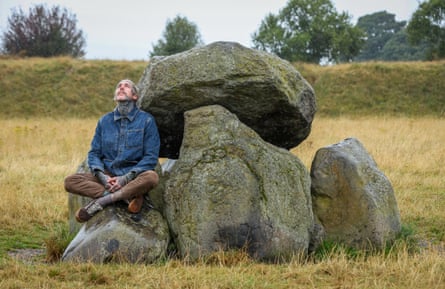
He smiles wryly. “My dad is 73 and my mum’s 70. We were on holiday in Portugal and I had brought some magic mushrooms. I’m very open with them and when my mum said: ‘What would it do to me if I took one?’ I told her: ‘It would slow down your thoughts, allow you to be more relaxed.’ She was like: ‘I might take one. Let’s ask your daddy.’ And she goes: ‘Cyril!’ My dad comes in and she’s like: ‘Will we take one of these?’”
Caldwell rocks in amusement. His parents have always been conservative and hard-working and so he only gave them “a mere microdose. They were just lying there, my dad watching Formula One and my mum gave me two thumbs-up on the bed upstairs. I’d never seen them so chilled out. Our relationship now is better than it’s ever been.”
His relationship with rugby has also begun to heal. Last December he went to watch Ulster play Racing at Ravenhill and discovered that “I’m still part of this. And it’s still part of me. Aye. The love remains.”
Caldwell may once have felt traumatised but he says now, sounding almost carefree: “I have this underlying peace even when there are challenges in life. I don’t have a lot of material things but I’ve never felt as rich as I do now. I can see that the whole experience I went through completely humbled me. It had to happen for me to be able to find the life I have now.”
In the UK and Ireland, Samaritans can be contacted on freephone 116 123. In the US, you can call or text the National Suicide Prevention Lifeline on 988, chat on 988lifeline.org, or text HOME to 741741 to connect with a crisis counselor. In Australia, the crisis support service Lifeline is 13 11 14. Other international helplines can be found at befrienders.org