2 months ago
88
2 months ago
88
When Rachael Reign finally left her relationship and called the police, she came with a litany of allegations.
She felt parts of her life had been controlled, she told the call handler. She said she had been given instructions about what to wear, which included a ban on certain shades of nail varnish. She felt pressured to give up a portion of her income. She had been told that bad things would happen if she left.
But Rachael’s relationship wasn’t with a partner – it was with a religious group, the Universal Church of the Kingdom of God (UCKG). And there wasn’t much the police could do. “If my boyfriend did what my pastor did, I believe police could have investigated it,” Rachael says now. A Met spokesperson told the Guardian that it had received allegations of “harassment and controlling behaviour related to fraudulent activity by a church based in Croydon” between 2004 and 2018, but “after further enquiries … it was determined that the allegations were not criminal offences”.
The UCKG itself “categorically rejects” these allegations, saying that it “does not control members’ personal lives” and that it is untrue that “individuals are instructed on what to wear or how to manage their finances”. It also “rejects claims that individuals are threatened or told that harm will come to them if they leave”. (An investigation by the Fundraising Regulator found that in a separate case the UCKG, which is a charity, had breached the code on vulnerable donors, but that “the amount and frequency” of donations were “voluntary”.)
In 2015, England and Wales were the first countries in the world to criminalise coercive control, with Scotland and Northern Ireland following suit. This was a pioneering change that codified that abuse within relationships is often a pattern of behaviour, and is not always physical: it can include psychological abuse, isolating victims from friends and family, monitoring their time, or controlling their finances. But these laws only apply in intimate relationships (and, in England, Wales and Northern Ireland, other close family relationships). That means that those who allege they have been controlled in other settings, such as religious groups, political groups or gangs, are still living in a pre-2015 world.
Rachael says her experience with the police brought the gap in the law on coercive control into sharp relief. She is now part of a campaign – led by the Family Survival Trust (FST), which supports those affected by coercive control and cultic behaviour – to broaden the law to include groups and organisations. Alexandra Stein, a psychologist who sits on the FST’s board, says that on multiple occasions she has sat in police stations with survivors and “the police were very sympathetic and said, ‘We’re so sorry, it’s terrible what’s happened to you, but there’s no law that we can call upon to do anything.’” Victims are usually only able to go to the police if they have proof of crimes such as fraud, human trafficking, or physical or sexual abuse.

The most extreme, controlling examples of these groups are cults, usually defined by strict hierarchies and the cutting off of members from the outside world. They are often thought of as a fringe concern, a problem of the 1960s or 70s rather than today. But in reality, experts estimate that 2,000 cults are operating in the UK – whether as yoga studios, churches, life-coaching groups or political movements.
It’s worth noting that since 2015, only a small proportion of coercive control cases have made it to trial, and securing convictions has proven difficult. But the law’s existence sends the signal that this type of abuse exists and is deeply serious, a message that seems to be slowly sinking in: the number of cases recorded by police increased tenfold between 2017 and 2023.
Laura Richards, who worked at New Scotland Yard for a decade and founded the anti-stalking charity Paladin, was instrumental in introducing the coercive control law in England and Wales. She tells me that at the time it was clear to her that these dynamics played out in groups just as much as they did in domestic relationships, “But Theresa May’s adviser said that trying to include it would mean the law would get delayed. That was the reality. And my view was that we should go ahead with what we had, and then look to review the law later.”
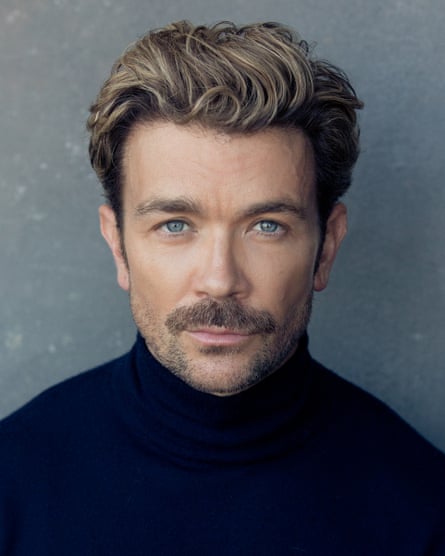
Part of the momentum for the change came from domestic homicide reviews, also pioneered by Richards, which showed that coercive control was present in more than 90% of these cases. Criminalise coercive control, the logic goes, and you can deal with perpetrators before they commit even worse crimes. Emrhys Cooper, an actor who is working with the FST on its campaign, tells me that when his parents were taken in by a so-called “healer” who conducted medical experiments on his mother, the police wouldn’t get involved. “Had there been a law, we might have been able to protect her,” he says.
There is slow but growing momentum in parliament around this issue, including talk of forming an all-party parliamentary group to look at spiritual, ritual and cultic abuse. A recent documentary about the Jesus Army, a British religious cult, will be screened in parliament next month. But a change in the law may prove an uphill battle. Home Office minister Sarah Jones recently said that the law on coercive control was “explicitly designed” to address patterns in personal relationships, and that the government does “not intend to expand [it] … at this time”.
Malcolm Johnson, a lawyer who regularly represents victims of cults and other controlling groups, predicts that politicians would fear that a law change would “open a can of worms”, and some would argue that “it interferes with the ability of religious bodies to do what they do”. (France’s anti-sect law, which criminalised “mental manipulation”, was fiercely opposed by religious groups; a proposed law in Australia has had a similar reaction.) Another objection would be that it “simply goes too wide” as a legal definition, “opening the floodgates” to a wave of claims. These obstacles aside, Johnson believes that coercive control is at the heart of what makes cults and other extreme groups dangerous: “It’s a bedrock of cults. It’s what defines a cult.”
There are other options, and other signs of progress. Rachael is delighted that the CPS guidance on honour-based abuse now includes “spiritual abuse” for the first time. Pressure is building around updates to Prevent or safeguarding guidance. Rob and Linda DuBrow-Marshall, who run a master’s in coercive control at Salford University, believe workplace laws could also be extended so that they apply to all religious groups.
The survivors I have spoken to, whether of religious, educational or political groups, are unanimous in their support for a change in the law. It could help them get compensation and justice, and hold organisations as a whole to account. To take one example, the Jesus Army closed down in 2019, and some survivors received compensation through a redress scheme. But because this was not a legal process, alleged perpetrators may end up receiving more money than their accusers when the cult’s assets, estimated to be more than £50m, are divvied up.
In the absence of legislation, it’s impossible to know whether any individual case might result in an investigation. But another motivation – for some, an even greater one – is that a law change might spark discussion, and help society begin to grapple with the way that control within groups operates, just as the 2015 law has begun to change attitudes around domestic abuse. In both cases, victims are often trapped in a cycle of abuse while those on the outside assume they could just walk away. Many of those I spoke to were asked, just as so many domestic violence victims have been, “Why didn’t you just leave?”
These invisible structures of control can be dangerous wherever they operate. Yet in too many cases, we have no tools to dismantle them. One survivor of the Jesus Army told me last year that of all the distressing treatment she endured, the most damaging was the cult’s day-to-day grip on her life – which the law currently does not recognise as a crime. “The control – that was the worst bit,” she said. “That’s the bit I’m still trying to live with today.”
-
Barbara Speed is the deputy head of Guardian Opinion