3 months ago
207
3 months ago
207
Kirsty Brown is a keen golfer. “If I could just transport myself straight to the first tee, that would be amazing,” she says. “But getting there on time, remembering all my kit, making sure I’ve eaten before I play – all those aspects are more challenging than competing itself.” Brown, who has attention deficit hyperactivity disorder (ADHD), admits that can be hard to explain to coaches or teammates. “It doesn’t necessarily make sense to them – it doesn’t really make sense to me either.”
A researcher at the University of Birmingham, Brown is studying neurodivergent athletes in sport. And while plenty of well-known sportspeople now talk openly about their ADHD diagnoses, no one truly knows the condition’s impact on participation or performance. “There’s not a huge amount of research yet,” Brown says. “We have some case studies but in terms of data, we’re not there.”
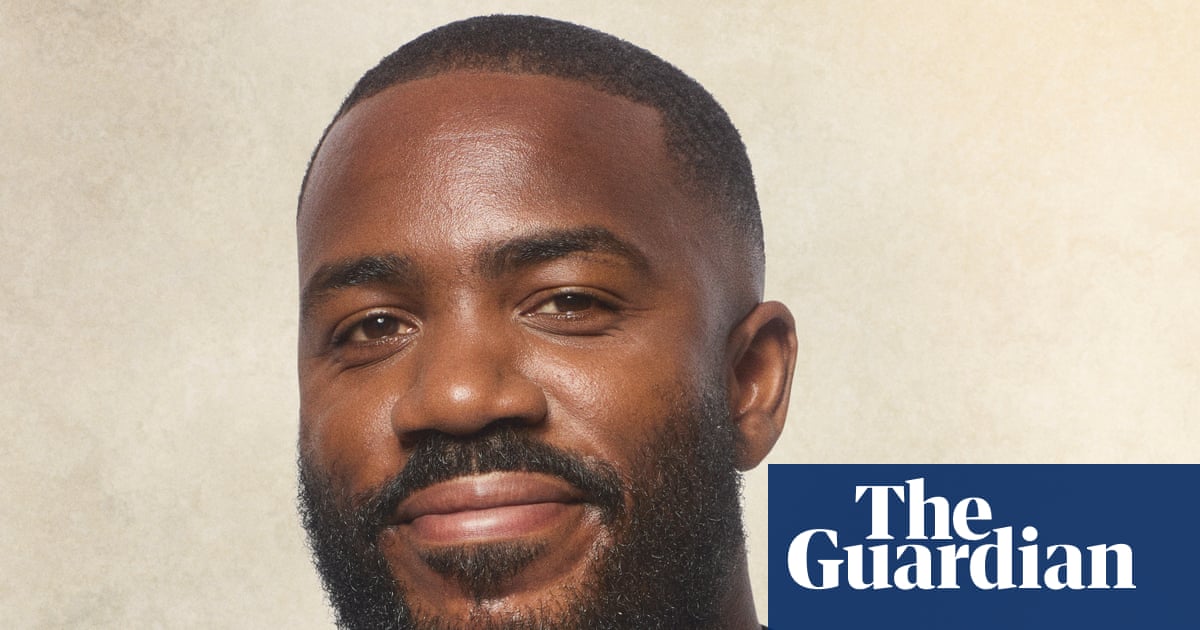
What we do have plenty of are inspirational stories. Take Adam Ramsay-Peaty, who has said ADHD contributes both to his “relentless drive” and more self-destructive impulses. This week the three-time Olympic champion made a sensational return to the pool in the British Swimming Championships, winning the 100m breaststroke with the second-best time in the world this year, and following it up with the 50m title the next day, in his first steps towards the LA Olympics. Extraordinary comebacks are nothing new for the man who stepped away from the sport entirely in 2023 to take a mental health break.
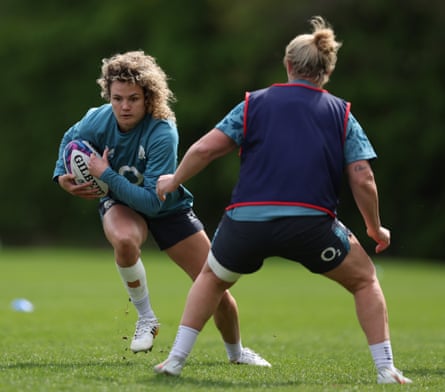
Meanwhile, the Red Roses full-back Ellie Kildunne has been speaking about her own ADHD in the wake of England’s Six Nations win over Ireland. In her recently published book, Game Changer, she celebrates the understanding last year’s diagnosis has given her (“I like chaos; that’s just the way I’m wired”). But she also spoke, this week, of the eating disorder she developed during Covid, and how it was probably linked to her condition.
It’s important to recognise both sides of the coin, because the more we hear elite athletes speak about their ADHD, the greater our inclination to regard it as some sort of shared characteristic for success. Some athletes, Kildunne included, have dubbed it a superpower, because of the “hyperfocus” their condition can give them – the ability to lose themselves entirely, whether in training or competition, to the exclusion of all else.
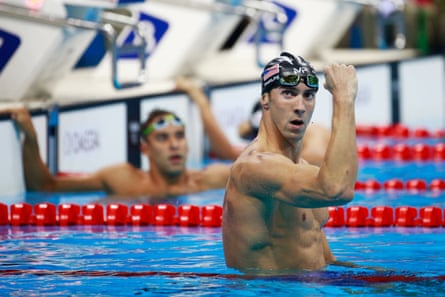
Those who have notably harnessed that power include the most decorated Olympian of all time, Michael Phelps, and the current fastest man in the world, Noah Lyles. Meanwhile, a 2019 study in the British Medical Journal suggested that ADHD may be over-indexed in elite sport after data from Major League Baseball players and college athletes suggest that about 8% had ADHD compared with 5% across all US adults. “The symptoms and characteristics of ADHD play a role in athletes’ choice of a sport career and further achieving elite status,” concluded the authors.
Which is an exciting perspective, but also a narrow one. For many the condition (combined with the more general lack of understanding of it) will remain an obstacle. The developmental psychologist Dr Kasia Kostyrka-Allchorne, whose research includes sports participation and ADHD, points to a paradox between the possible overrepresentation with ADHD in elite sport alongside underrepresentation recreationally. “It can give people that drive and hyperfocus,” says Kostyrka-Allchorne. “But it’s also about having the right environment, which is something Adam Peaty talked about, how his coach would take him to sessions.”
Neurodivergence of all kinds can make it hard to fit into more traditional coaching structures. Benny Howell, a cricketer who has built a career in the Twenty20 franchise leagues, has spoken about how his ADHD took him down creative paths that meant he didn’t fit into the usual playing roles. His differences elicited “constant pushback” and ridicule in cricketing environments. And it doesn’t help that one of the more crippling elements of ADHD can be a sensitivity to perceived rejection, making dressing rooms – naturally hierarchical, cliquey, laden with the possibility of failure – especially off-putting. Brown – who grew up playing cricket for her county, and now plays county golf – is well aware of how the condition affects not just herself but how she’s seen. Her brain processes information quickly, meaning she moves fast around the course and doesn’t approach it with the familiar, methodical routines of checking distances and lining up shots. “It does look like I’m not concentrating,” she says. Masking behaviours – such as copying social cues to fit in – are especially common in women with ADHD. Now Brown finds herself on the greens too, crouching down before she takes a putt and resting her chin on her golf club “because it makes me look like I’m trying harder”.
She and her fellow experts are heartened to see big-name sportspeople providing aspirational role models for those with ADHD. But they also note that it’s often only when athletes have already made it to the top that they feel comfortable talking about that part of their life. A mainstream framing of the condition as a superpower can be invalidating for those who are struggling with their own difference. “It’s like, ‘You don’t know how much effort it took me to get out the door,’” says Brown. “We know there’s a massive link between neurodiversity and mental illness, so we want to be making sports safer rather than exacerbating that risk.”
At this year’s Winter Olympics, two of the gold-winning US women’s skating team spoke about how their ADHD had affected them at the Games. Alysa Liu (who also took the singles title) said it helped her to think on her feet; Amber Glenn said it plagued her with impulsive thoughts before she competed. It’s that breadth of experience which makes it so important for the condition to be better understood, whether by researchers, coaches or teammates. “People want to know how prevalent ADHD is in athletes, but that’s not really the point,” says Brown. “The main question for me is, how do we support them?”