2 months ago
89
2 months ago
89
The peace of the graveyard has descended upon Afghanistan.
“Afghanistan might seem safe now, there are not a lot of explosions, but it is a graveyard kind of security. The most peaceful place is the grave: there nobody protests,” says Dr Sima Samar.
Samar has spent a lifetime working for the ideals of a country that no longer exists.
The Hazara human rights advocate and medical doctor served as vice-president of Afghanistan, and as its minister for women, shortly after the US-led invasion began. For nearly 20 years, she led the country’s Independent Human Rights Commission (IHRC).
Now in exile, she tells the Guardian she fears her country is being forgotten while the oppressive rule of the Taliban is normalised and solidified.
Conflicts around the world jostle for global attention: the genocide in Darfur; bombardment and starvation in Gaza; ceaseless, grinding conflict in Ukraine; terrorism in Bondi.
“The international community has lost interest, has stopped paying attention,” Samar says. “There are conflicts all around the world, some very bad conflicts, but Afghanistan is also important … there is a moral responsibility to defend human rights everywhere.
“What is security when a woman is not safe to walk in the street? What is security if a girl cannot go to school? What is security if families have food for lunch but no food for dinner. There’s no human security.”
A long memory for conflict
Afghanistan has a long memory – especially for conflict. Where the world might see the tumult of unprecedented events, Afghans see history repeating.
Samar says the world’s current neglect of Afghanistan is akin to the indifference after the collapse of the Soviet-backed government in 1992. The country fell into brutal civil war, ended only by the first rise to power of the Taliban, providing a safe harbour from where Osama bin Laden plotted the 9/11 attacks.
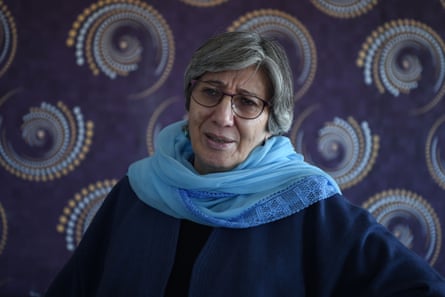
“We have seen the consequences of forgetting, of isolating Afghanistan in the past,” she says. “We know what happens, not only for Afghanistan, but for the world.”
Visiting Australia, Samar spoke at Canberra’s parliament house on 14 December, reflecting on taking carriage of a shell of a country in the aftermath of the ouster of the Taliban in 2001. She says a small band of democrats paled before the immensity of the task before them.
Sign up: AU Breaking News email
“We had to start from scratch: draft a new constitution, create ministries, and rebuild institutions. I remember walking through Kabul’s shattered streets thinking that if we could keep girls in school and women in the workplace, Afghanistan would never again fall to darkness.
“Over the next 20 years, we tried.”
There were wins. Samar’s foundation, the Shuhada Organisation, opened schools and hospitals in remote places that had never known either. The foundation trained midwives (Afghanistan has one of the highest infant and maternal mortality rates in the world), teachers, and administrators to run rural provinces.
As chair of the Afghanistan Independent Human Rights Commission, Samar spent nearly two decades documenting violations and beseeching those in authority not to look away, as she puts it: “urging … the world to remember that justice must never be sacrificed for convenience”.
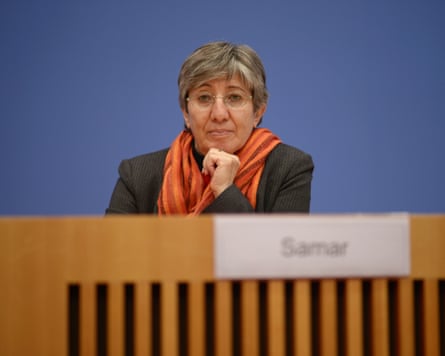
“There were moments of genuine progress,” Samar said in her speech. “Millions of girls returned to school. Women sat in parliament, ran ministries, and held prominent positions in civil society.”
The gains were fragile always, and regression common, but, in individual lives, there was real change.
And then, it was gone.
Samar tells the Guardian it was devastating to see the collapse of an idea of a country to which so many had given so much.
“We sacrificed a lot, all of us, but at the end we gave the country back to the same group which was removed in 2001.”
For all its idealism and the billions in international support, that government was always brittle, riven by corruption and mismanagement, undermined by continued insurgent violence. Progress was always piecemeal, often compromised.
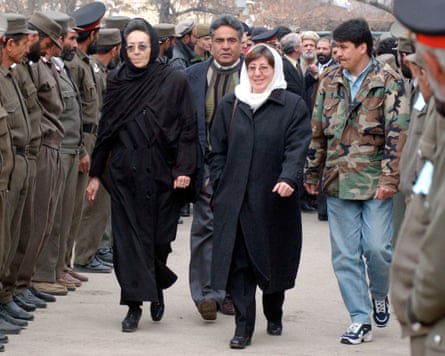
In August 2021, in the face of US withdrawal (a deal negotiated between a first-term Donald Trump and the Taliban – without the elected government of Afghanistan in the room), the country changed with terrifying swiftness – Kabul fell in a single morning.
The Taliban, which retook control, promised a reformed administration. In an attempt to court international legitimacy and recognition, it vowed there would be no discrimination against women, no persecution of religious or ethnic minorities, no retribution against those who had served the former government, or international forces. But always with the caveat of “within the frameworks that we have”.
The reality has been, instead, a more sophisticated oppression, but conscious of presenting a more benign face in pursuit of international credibility.
“Two decades later, we are again speaking of Afghanistan in the language of absence and erasure,” Samar told her parliament house audience. “Erasure of women from the public; absence of protection for persecuted groups; and absence of justice.
“Today, girls in Afghanistan are banned from secondary school. Universities are closed to women. Women cannot work for NGOs, visit parks, or travel without a male guardian. Women cannot even be heard in public. The word ‘apartheid’ is not an exaggeration; it is the lived reality for women and girls in Afghanistan.”
Taliban arguments about modesty and protection, about governing “in accordance with our values” are self-serving falsehoods, Samar says, born of a narrow, suffocating vision of a country that has always known a breathtaking diversity of ethnicity, language and culture.
Samar says tragedy lies, too, in international obeisance.
“This is not about culture or religion; it is about power and control,” she says.
“And it thrives in silence, including the silence of the international community, the fatigue of donors, and the complacency of governments who speak of human rights in press releases or places like Geneva and New York but whisper them away in negotiations.”
Small acts of defiance
Samar praises Australia for its acceptance, over decades, of Afghan refugees, particularly from the persecuted Hazara minority. She says the country can take more. And she says Australia’s efforts under the Convention on the Elimination of All Forms of Discrimination Against Women (CEDAW), are vital in attempting to hold the Taliban accountable for its abuses.
Samar urges Australia’s to maintain diplomatic recognition of the Afghanistan embassy in Canberra, which was credentialled by the former government, rather than handing diplomatic recognition to representatives of the Taliban. The foreign minister, Penny Wong, has warned the current ambassador (serving in exile) will not have his credential renewed in February.
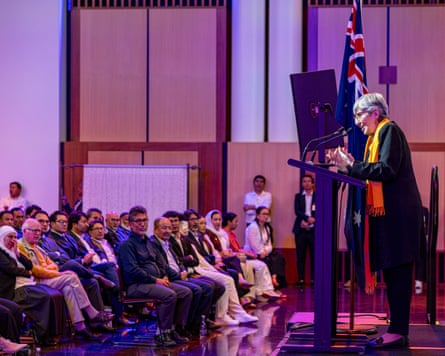
Dozens of countries, including Germany and Norway, have credentialled Taliban diplomats, even without formally recognising its government. But retaining recognition of the former government’s envoys would carry a powerful message, Samar argues, not just for the Taliban, but the broader international community.
In Afghanistan, Samar sees slivers of hope still. Small acts of defiance take on a disproportionate significance.
“A teacher who continues to teach five or 10 girls in secret is a resistance against ignorance, a woman who comes out into the street, whose voice is heard, is a resistance against erasure,” she says.
Homes destroyed, dreams survive
Samar has already rebuilt a country once. She knows a future rebuilding of Afghanistan will be the work of younger generations, but she hopes to glimpse the beginnings of that brighter, peaceful future.
Exiled since the fall of Kabul on that chaotic, fearful morning in August 2021, she would like, one day, to return.
Like the country she worked for decades to build, the house where she was born in Ghazni, has been destroyed.
“But I really do dream of it still. It is strange, because it is not there any more, but I dream of it,” she says.
Still standing is Samar’s house in the capital Kabul, a place she knows she may never see again. But to those who ask, she answers her home is in Afghanistan.
“I am still very much an Afghan. I would love to return one day. I keep saying that I would like to die in my country.”