3 months ago
73
3 months ago
73
Israel has carried out a wave of airstrikes on Iranian security targets and Hezbollah in Beirut as Tehran threatened the “complete destruction of the region’s military and economic infrastructure” as the rapidly escalating war entered its fifth day and reached as far as the Indian Ocean off Sri Lanka.
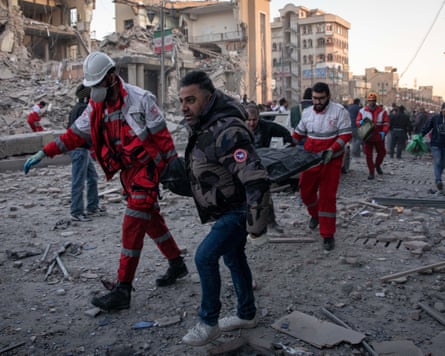
The Israeli military said it had hit buildings in Iran belonging to the Basij, the volunteer police arm of the Iranian Revolutionary Guards Corps (IRGC), and buildings belonging to internal security forces. Police stations and IRGC headquarters in the Kurdish regions of north-western Iran were also razed by strikes, Kurdish media reported.
Iran’s security structures have been instrumental in putting down protest movements in the past, and the US has urged Iranians to overthrow the country’s government. Washington has also reportedly been exploring the possibility of using Kurdish separatist groups to invade parts of Iran and establish a safe zone in the predominantly Kurdish groups in the north-west.
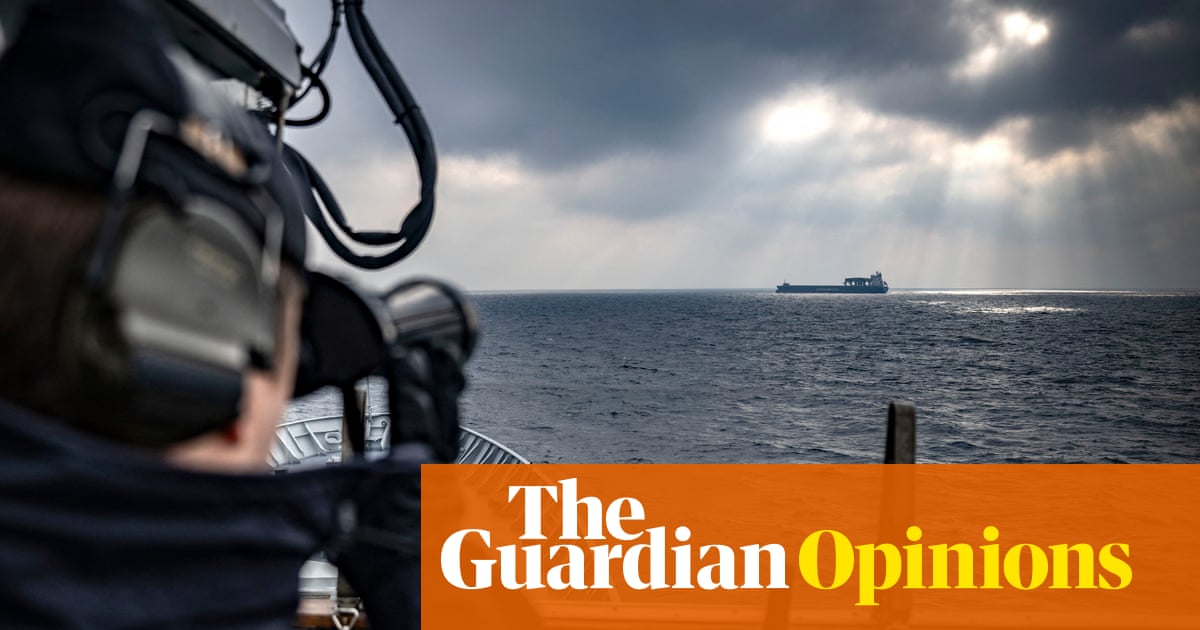
The regional dimension of the conflict continued to expand, as Iranstruck Gulf states and Hezbollah fired on Israel and Cyprus. Turkey said Nato air defences had intercepted a ballistic missile heading towards its airspace, and the US said it had sunk an Iranian warship in the Indian Ocean. Sri Lankan authorities said at least 80 people had been killed and 23 rescued. There were thought have been 180 people on board.
The death toll in Iran has soared, as estimates of those killed by strikes in the five days of war rose to between 1,045 and 1,500 people.
The IRGC said on Wednesday that it would continue to hit US allies across the region in a statement to state media.
“The continued mischief and deception by the United States in the region will come at the cost of the complete destruction of the region’s military and economic infrastructure,” it said.
Iran also threatened to target Israeli embassies worldwide if Israel struck its embassy in Beirut. Israel’s military gave 24 hours on Tuesday for any “representatives of the Iranian terror ministry” to leave Lebanon before they were targeted. It was unclear if it was referring to Iranian diplomats or other Iranian personnel.
Israel issued an evacuation order for all of Lebanon south of the Litani river, which constitutes roughly a quarter of the country. The order was unprecedented and larger in scope than any Israel had previously given, even at the height of its 13-month war with Hezbollah in 2024.
Despite the regional escalation, US and Israeli officials said the war was so far going better than they expected, but it was unclear what the end goal of their campaign was as they had offered contradictory aims. The Trump administration has said at various times that its goal was regime change, destroying Iran’s ballistic missile capacity and its navy, preventing it from getting a nuclear weapon, and putting a stop to its support for proxies across the region.
The US president, Donald Trump, said that some of the individuals he was considering as possible postwar leaders of Iran were killed in the opening days of the war. On Reza Pahlavi, the exiled son of the late shah of Iran, Trump said he preferred “someone from within” Iran.
In Iran, funeral proceedings for the late supreme leader Ayatollah Ali Khamenei, were delayed as a result of the bombing. The ceremony, which had been scheduled to start in Tehran on Wednesday morning, was delayed indefinitely.
The postponement came as Iran’s senior clerics met to appoint a new supreme leader, a position that functions as both head of state and commander in chief of its vast military apparatus. The reported favoured candidate of clerics was Mojtaba Khamenei, the 56-year-old son of Ali Khamenei and preferred choice of Iran’s Islamic Revolutionary Guard Corps (IRGC).
Analysts have said that Mojtaba Khamenei is a hardliner and his choice as successor would signal an increasing role for the IRGC in Iran. His appointment would signify a doubling down on the Iranian regime’s authoritarian response to domestic calls for reform. Frustration with the government had exploded into weeks-long protests earlier in the year, put down by a brutal government crackdown that left at least 7,000 dead.
Israel said that whoever became the next supreme leader would be a potential target.
“Every leader appointed by the Iranian terror regime to continue and lead the plan to destroy Israel, to threaten the United States and the free world and the countries of the region, and to suppress the Iranian people – will be a target for elimination,” the Israeli defence minister, Israel Katz, wrote on X.
Israeli authorities said Iran launched missile barrages overnight and into the early morning at Israel, though most missiles were intercepted and no casualties were recorded.
Hezbollah also continued targeting Israel, shooting salvoes of rockets and suicide drones at military bases and gatherings of troops in northern Israel. Hezbollah media also said it had struck three Israeli Merkava tanks that entered southern Lebanon, and downed an Israeli drone in Lebanese airspace.
In response, Israel carried out wide-ranging airstrikes across Lebanon, particularly in the southern suburbs of Beirut, with explosions rattling the capital into Wednesday morning. Israel also struck a hotel without warning in Hazmieh, south-east of Beirut, about 700 metres from the presidential palace.
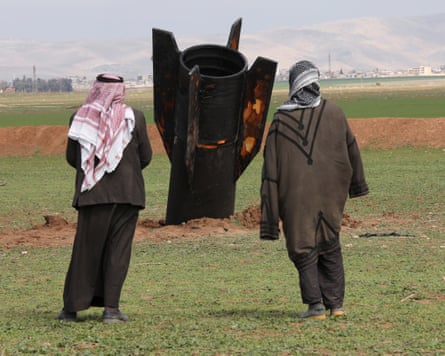
Lebanon’s health ministry announced that six people were killed in the strikes, bringing the total death toll since Monday to more than 50. At least 58,000 people were displaced around the country by the strikes, and a state of panic descended on the country, where rumours of evacuation orders resulted in people fleeing from certain areas and buildings en masse, mostly erroneously.
The US and Israel provided an optimistic assessment of their war so far, with Adm Brad Cooper, the head of US central command, saying the US has struck about 2,000 targets in the last few days. Cooper said the US has “severely degraded Iran’s air defences” and destroyed large weapons caches and ballistic missile launchers.
The Israeli military spokesperson Brig Gen Effie Defrin said it had struck a building in the Iranian city of Qom, where religious authorities had been meeting to elect a new supreme leader. Iranian media claimed the building was empty when it was struck and Defrin said Israel was checking for casualties.
The Israeli military also said it struck sites in Iran that were being used to store ballistic missiles and that it had destroyed a secret underground facility used to develop “key components” for nuclear weapons. Iran has long maintained that it does not want a nuclear weapon and that its nuclear programme is for civilian use.