3 months ago
125
3 months ago
125
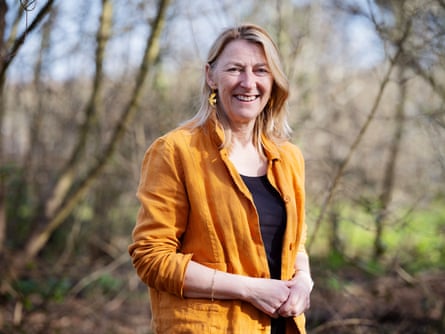
“What you’ve got there from the sun on your face is a massive boost of serotonin!” says Alison Greenwood, founder of Dose of Nature, the charity successfully prescribing time outside as a treatment for mental health.
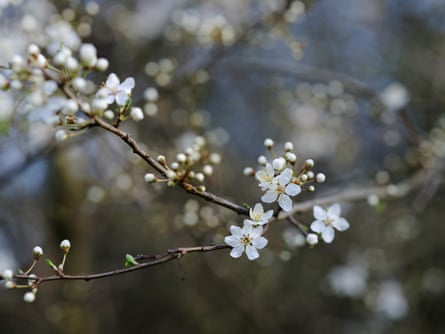
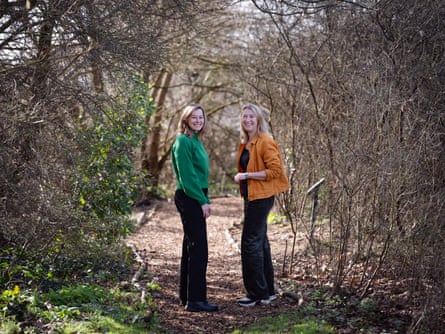
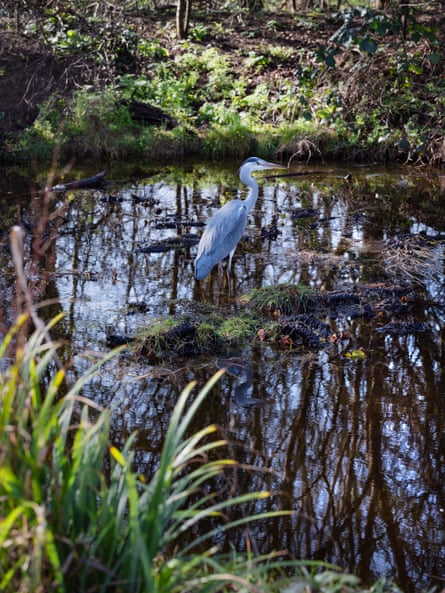
Greenwood is striding round Pensford Field, a tiny patch of wildness tucked behind houses in south-west London. The bright day is illuminating the early blackthorn blossom, gleaming off the pond where a heron watches tiny froglets and shadows of birch trees on a wood-chip path. “All these trees and plants are giving off phytoncides, and they’re good for your immune system too,” the former NHS psychologist says.
Dose of Nature has already delivered 1,500 one-to-one courses and is outperforming standard NHS talking therapies, boasting a recovery rate of 64% compared with the health service’s 50%, and a reliable improvement rate of 86% compared with 69%. Unlike most green social prescribing schemes, clients are referred directly by their GPs. “Our nature prescriptions are a genuine alternative to medication and more traditional psychological therapies,” Greenwood says.
The key, she says, is the rediscovery of something very old: “The idea that nature is good for our mental health and wellbeing has been around for millennia. We evolved outside, under the sky, [and so] we are animals that are caged most of our time, in schools or cars or offices or homes. As soon as we get outside, we’re free.”
“It’s only relatively recently that we’ve forgotten this – I would say this is an unfortunate blip in our history,” she says.
There are two key parts to the Dose of Nature prescription: helping people get outside and, once there, to start noticing nature to calm their minds and bodies. It does not need to be a hike through beautiful countryside, Greenwood emphasises. Sitting on a local park bench is just as good.
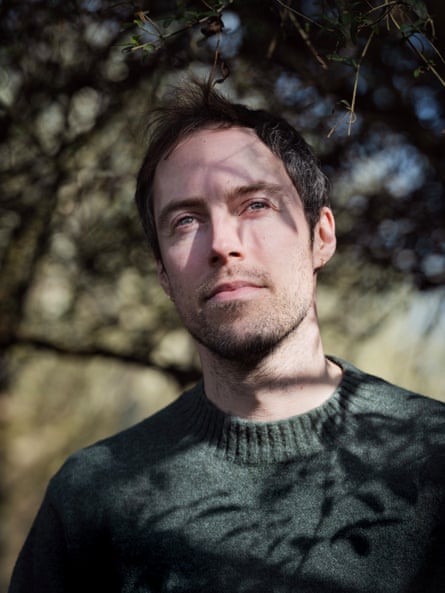
For some people, the effect has been profound. “It has changed my life,” says Tom Krumins, a softly spoken man who arrived as a client three years ago and who now works for Dose of Nature as an operations assistant.
“I came feeling very vulnerable and hopeless,” he says. He was diagnosed with bipolar disorder in his early 20s and endured a turbulent cycle of highs and lows, including several periods in hospital. “But every single time I’d have a session with my guide, I’d come away feeling so much better.”
“We would go on riverside walks,” he says. “The focus was to slow down, so we’d sit on a bench and we’d look out to the river, really admiring all the little details, trying to appreciate all of the shapes, the way the light hits the river, the rhythm and the flow.”
Krumins says bipolar can feel like a “life sentence” and severely limit your opportunities: “I had never experienced any sort of continued stability but I haven’t had an episode of mania for three years now. I have never felt more enabled and more optimistic about the future.”
Explaining the science that underlies the benefits of time in nature is a core part of the Dose of Nature approach. The fundamental theory is that as we evolved in nature, it soothes by being a natural and relaxing focus for our attention, switching away from the stresses of the artificial world in which we spend most of our time.
There are many specific benefits. As well as the serotonin-boosting sun and the phytoncides that can decrease stress hormones, studies have shown that natural sounds such as water, wind and birdsong improve mood. The fractal patterns of nature have been shown to aid recovery from stress and boost alpha waves in the brain, which bring a pleasant relaxed wakefulness, while exposure to soil microorganisms can also boost moods.
Sal, a client of Dose of Nature, says: “It was a real source of help to understand the science behind why nature is so positive for you – it’s not flim-flam and it’s not all lefty tree huggers.” She was diagnosed with a life-limiting illness last year and was also made redundant from her banking job.
She says Dose of Nature has been transformative for her wellbeing, and she now has a daily routine of getting out. “You have more space in nature, time seems to slow,” she says. “But even if you are not feeling up to going out, you can still benefit just by looking at pictures of nature or opening the windows and getting sunlight on your face.”
The Dose of Nature course is prescribed by GPs and begins with 90-minute assessment and discussion with a psychologist. Clients are then paired with a trained volunteer guide and do eight weekly sessions outside, one-to-one and usually local to them, or at Pensford Field.
The goal is finding the best way for the client to connect to nature. The course ends with another psychologist assessment, but the client can then join Dose of Nature groups for as long as they like. These range from walking and tennis to art, singing and yoga – all outside. Everything is free to the clients and GP practices.
Emily May Alford became a volunteer guide five years ago, while training as a psychotherapist. “I did expect people to be sceptical, but people naturally notice that they feel good in nature, although they might not understand why. It’s also not that kind of cold turkey ending you might have in therapy, where you never see a therapist again. We’re leaving them with nature and, of course, the groups.”
Another volunteer guide, Kevin Beck, says: “We evolved, over millions of years, to be surrounded by trees and grass and birds and frogs. That’s what de-stresses us without even having to try – it just happens, which I think is magic.”
As a plane heading for Heathrow roars overhead, airline pilot Beck jokes: “I make all this noise. So this is a way of me giving something back, to apologise for damaging everybody’s mental health.”
Having volunteer guides is a benefit, says psychologist Georgina Gould, clinical lead for Dose of Nature, and who previously worked in an NHS child and adolescent mental health services team.
“Some people have had negative experiences of mental health services for various reasons,” she says. “Here they are sat outside listening to the birds and talking to someone, it just feels very human and very real, and that automatically creates a different experience for that person.”
The programme works and is cost-effective, according to an independent assessment by researchers from the London School of Economics. They conducted a randomised controlled trial, following 375 people over two-and-a-half years. They found “clinically meaningful benefits” and concluded that the Dose of Nature prescription treated mental illness. Both increased nature and social connection were found to be important factors and the researchers estimated that the social welfare benefits were worth eight times the cost of the prescription.
Dr Faisal Islam, a GP at Cross Deep Surgery in Twickenham, is one of the scores of doctors now referring patients to Dose of Nature. He has seen it make a real difference in their symptoms and how often they need to contact the practice. “A lot of these patients have been in and out of psychiatric services or tried counselling, or tried to self fund [other treatments]. Some of our more complex patients, who had been sort of ‘written off’, felt they were getting a new chance.”
Islam says medication is an important treatment option but does not work for everyone, while there are very long waiting lists for NHS talking therapies, like cognitive behavioural therapy (CBT): “Now we have got an alternative – it’s immediately in my thoughts when I assess a patient, along with medication and CBT. I honestly think it will save lives and improve patients’ mental health.”
Dose of Nature started in 2019 and now has 11 staff, funded by the NHS, local authorities and charitable foundations. “In terms of our demographics, whilst we are in a wealthy borough [Richmond], we do have a lot of people who are on lower incomes and from diverse communities, more so than other services,” says Gould.
There is also now a Dose of Nature hub in North Guildford, and plans for projects in Hounslow, a much less leafy London borough, and potentially Lincolnshire. The aim, says Greenwood, is to prove the effectiveness of the approach in different settings and help other groups provide nature prescriptions.
“We’d love to spread it to as many people as possible,” she says. “This is for everybody. It’s not just for one section of society. What we are trying to show is that it will not only work best for you now, if you do it in a particular way, but will be there for you for the rest of your life. You don’t need to make an appointment with nature.”