3 months ago
123
3 months ago
123
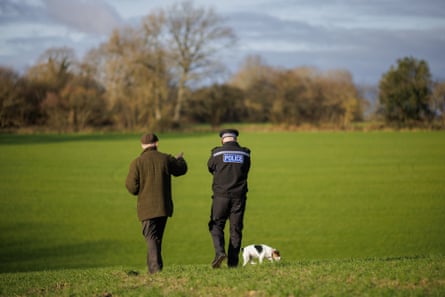
A cold, bright afternoon in the Vale of Pewsey and a couple of brown hares were nibbling away in a field of winter barley. It was a tranquil scene in this tucked-away corner of the English West Country but tyre tracks cutting through the crop were a sign of the violence that takes place when night falls.
This is one of the hotspots in Wiltshire for hare coursing, in which criminal gangs set dogs – usually greyhounds or lurchers – on the mammals.
Typically, bets are placed on how many “turns” it will take for the hound to catch and kill a hare, with some chases livestreamed so that gamblers across the world can take part.
Wiltshire police, one of the UK police forces leading the fight against the coursers, say hare coursing gangs are terrorising the countryside. “I fear it’s only a matter of time before a farmer or landowner here is seriously injured defending their property,” said Insp Andy Lemon, the tactical lead for rural crime in Wiltshire.

He cautioned against farmers “taking matters into their own hands and hitting back”, saying: “We tell them: please don’t – call us. But the concern is that a farmer will lose it.”
Over the past year, hare coursing and poaching offences rose by more than 20% in Wiltshire. Since January 2025, 30 people have been arrested over the offences – a 500% increase compared with 2024.
But many more are not caught. Gang members travel from across the UK to Wiltshire, which offers particularly good country for the crime as once the autumn harvest is complete, expanses of open fields are exposed, leaving the hares little cover.
“This is their playground,” said Lemon, who took the Guardian out to see some of the spots favoured by the coursers. “We think hare coursing is probably taking place somewhere in the county every day.”
The areas the coursers like tend to be crisscrossed by paths, bridleways and byways, making good spots accessible to determined criminals with four-wheel drive vehicles.
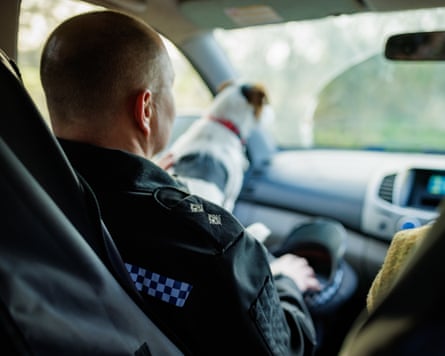
If they can get there in time, the force sends armed officers, drone operators and road traffic teams, but the offenders are good at slipping away. “When they go off road, it can be like looking for a needle in a haystack,” said Lemon.
He suggested that while forces such as Wiltshire and Lincolnshire were actively tackling the coursers, the crime was taking place wherever there were hares. “Some police forces say they don’t have a problem. I think they do – they just don’t know about it.”
One Vale of Pewsey farmer showed the Guardian the defences landowners were putting in place to try to keep the coursers away, including troughs filled with concrete and fallen trees placed across field gates. “But they find their way in,” he said.
“They smash through gates and fences. They don’t care and in fact I think they get a kick out of being chased and getting away. There’s big money involved. They bet thousands of pounds and the dogs are worth tens of thousands. This is a crisis for us.”
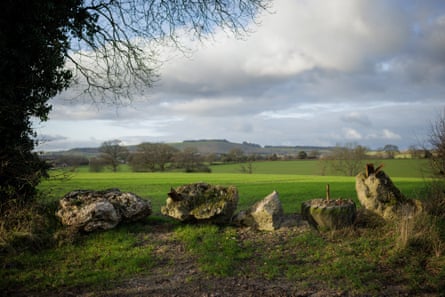
Another local farmer said his land was used for coursing 10 times in one month. “We’ve spent an absolute fortune on ditching and fencing, extra CCTV and lighting,” he said. “Every single night, I go out and drive the perimeter of the farm to make sure gates are still locked and fences are still up and there are no lights where there shouldn’t be lights. My wife has a bit of a moment every time I leave.”
There have been some nasty incidents. One Wiltshire farm worker suffered leg and hand injuries when he was knocked to the ground by a car after confronting suspected hare coursers.
A barn was set alight after one farmer chased off coursers and three cows were killed in a road accident after fencing was destroyed by suspected coursers as they accessed a field.
A video was circulated – by coursers, apparently as a warning shot – of a farmer being surrounded at night by vehicles in his field. They circled him and rammed his car.
Another Vale of Pewsey farmer said the success of conservation work to improve conditions for hares was one reason the crime was on the rise. “There’s been a rise in the number of hares – and with that has come an increase in hare coursing,” she said. “I’ve heard of some farmers thinking of shooting hares to stop hare coursing, which is so sad.”

Philip Wilkinson, the police and crime commissioner for Wiltshire and Swindon and a board member of the National Rural Crime Network, said: “We’re being hammered, terrorised.”
Wilkinson, who served in the British army for 32 years, is determined to clamp down on the coursers. “We will send out armed response teams, traffic [officers] – anybody. We’ll pile in to try and catch the buggers.”
He said hare coursers were enmeshed in international criminal networks. He had watched coursing being livestreamed into China and had seen intelligence that many involved in the activity were also responsible for the theft of farm equipment, from tools to expensive vehicles, some of which was smuggled to eastern Europe.
“What we’re seeing is the ends of the tentacles. If you swim upstream through those networks, if you go far enough, you get to China and eastern Europe. It’s all overlapped and linked.”
Frequently, those who defy coursers find animal corpses dumped close to their homes or businesses. “A line of dead hares was put across the end of my lane,” said Wilkinson. “They’re sticking two fingers up at us.”
But the impact is not just economic. It is a cruel sport to the hares and to some of the dogs. “You’re essentially testing the fitness of your dog against the fitness of a wild animal, the hare,” said David Bowles, the RSPCA’s head of public affairs. “And the end result is inevitably that the dog catches the hare and rips it to bits.”
Hare coursing was outlawed in the Hunting Act 2004 and the ban has been stiffened recently with stronger sentences and more powers to seize dogs.
Bowles said police forces such as in Wiltshire and Lincolnshire were working with organisations such as the RSPCA, the National Farmers’ Union and the Countryside Alliance. “I think you’re starting to see the first signs of the crackdown actually starting to work during 2025,” he said.
Wiltshire council said it had seen an increase in the number of dogs associated with hare coursing that were being abandoned. In a three-month period in 2025, it collected 20 lurcher-type dogs. Some were underweight and injured, while only three were claimed by owners.
Shortly after Lemon left the Vale of Pewsey on his way back to police headquarters in Devizes, his radio crackled. Dogs had been found in a car on Salisbury Plain. “Probably hare coursing,” he said. The daily hunt for the coursers was beginning again.