2 months ago
108
2 months ago
108
In May, 1,500 beagles were released from Ridglan Farms, a breeding and bioresearch facility near Madison, Wisconsin.
The event made headlines. Soon, a deluge of tear-jerking videos followed, showing the lab beagles experiencing the outside world for the first time. Millions of people watched the dogs touching grass and instinctively paddling their paws at the sight of water.
Immediately, the animal rescue organizations involved in the release were flooded with applications from people hoping to foster or adopt one of the dogs.
“These are famous beagles! Everyone wants one,” says Shannon Keith, president and founder of the Beagle Freedom Project, which is helping place hundreds of the rescued dogs. “But they have to understand that these are not ordinary dogs, nor are they ordinary beagles.”
The dogs were born and bred in the facility, says Keith. Many of them had never been outdoors, and “were quite frightened and shut down” when they were first brought out.
“They have been through a lot,” she says.
Allow Instagram content?
This article includes content provided by Instagram. We ask for your permission before anything is loaded, as they may be using cookies and other technologies. To view this content, click 'Allow and continue'.
Ridglan Farms breeds beagles specifically for the purpose of biomedical research; the breed is popular for animal testing because of its “small size and docile nature”, according to one veterinary journal.
In the fall of 2025, a special prosecutor found the facility had engaged in the mistreatment of animals, allowing certain eye procedures to be performed by non-veterinarians and without general anesthesia. Ridglan Farms had denied abusing animals, but agreed to shut down its breeding-for-sale operations on 1 July in order to avoid prosecution.
In March 2026, activists raided the farm and removed 13 dogs. The next month, more than 1,000 activists showed up, and when protesters tried to breach the facility in an attempt to remove more dogs, they were pushed back by police using pepper spray and rubber bullets.
Though no dogs were released in April, activists say footage of the event helped the campaign gain momentum. In May, two rescue groups bought 1,500 of the farm’s beagles and began the process of rehoming them.
Zoe Rosenberg, an animal rights activist, travelled from California to Wisconsin to help with a huge rescue operation. There, she met Chester.
Rosenberg was triaging animals – making sure each one was checked by a veterinarian and then taken in by its respective rescue. Outside one veterinary tent, the two-year-old beagle was being held by another volunteer. When Rosenberg walked up, Chester reached out his legs and placed his paws on her chest. That was it. “I flew him home to California and he is now living with my family,” Rosenberg says.
Taking in a lab beagle is rewarding, but no small task.
NYC Second Chance Rescue, a rescue organization in New York City, took in 15 of the Ridglan Farm beagles. When they posted about them on social media, they were overwhelmed with responses from people wanting to foster and/or adopt the dogs.
“We looked through so many applications,” says Jennifer Brooks, president and founder of the rescue.
They selected applicants who had experience with traumatized dogs. Some had already taken care of beagles removed from other testing centers.
Even with this prior experience, each family was warned that their journey with these dogs would not be straightforward.
“These dogs have not experienced anything,” Brooks says. “It might take three times the amount of time to reach certain milestones,” like walking on a leash or playing with a toy.
But the families were up to the challenge.
Katie Markovic, a social media manager based in Illinois, heard about the Ridglan Farms beagles on TikTok, and applied to the Chicago Rescue Authority to foster one.
When Elroy came home, “he would just shake and face the wall”, she recalls: “He was terrified of humans.”
Rosenberg says that Chester was so anxious when she brought him home that he did not drink water for the first 36 hours, and barely ate for five days.
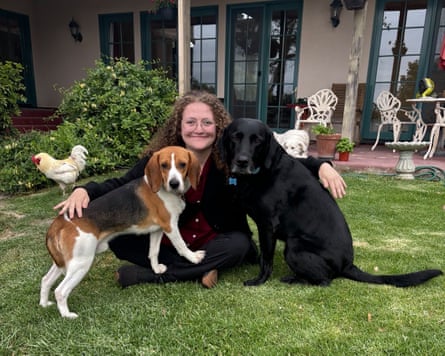
“He was scared of dogs who were not beagles, because he had never seen other types of dogs before,” she says.
Other dogs can be essential to help lab beagles adjust to the outside world.
“In general, a quieter home is better for these dogs, as well as another, well-adjusted dog to teach them how to be a dog,” says Keith.
Rosenberg credits her other dogs with helping Chester gain confidence. “Our labrador, Gimli, is his new best friend,” she says. Now, Chester loves to play with toys, chase tennis balls and steal shoes. He gets into hijinks and constantly begs for treats. On Instagram, Rosenberg posted a video of Chester and Gimli happily wrestling and racing around the backyard.
Allow Instagram content?
This article includes content provided by Instagram. We ask for your permission before anything is loaded, as they may be using cookies and other technologies. To view this content, click 'Allow and continue'.
Helping lab beagles adjust requires a great deal of patience. Rosenberg acknowledges that Chester is “not a normal dog” and will probably never be one. Meeting new people, riding in cars and walking on a leash are all stressful for him, she says, and it is possible he may never be fully house-trained.
“It is difficult for him to understand now what is expected of him,” she says.
As the dogs adapt to the world, it can be difficult to balance introducing them to new experiences and not pushing them too far past their comfort zones. Rosenberg consulted with dog trainer and behavior consultant Maryam Kamali, who emphasized the importance of giving dogs like Chester the space and respect to make their own decisions.
“The kindest thing to do is meet the dog where they are,” Kamali says. “Pay attention to what their body is telling you. When you allow them to approach you in their own time, you’re showing them something powerful: that they’re safe, they have agency and they’re finally free and loved.”
For all the patience required, adopters and foster parents say watching the beagles blossom is well worth the effort.
Markovic says it’s been “incredibly rewarding” to witness Elroy’s first tail wag, his first run through the grass and his first time playing with a toy.
While it will take time for them to fully open up, the beagles are doing well, Keith says.
“Sometimes I look at [Chester] and imagine the life he was once forced to endure, and it shatters my heart,” says Rosenberg. “I don’t understand how anyone could hurt such a gentle, loving creature.”