2 months ago
121
2 months ago
121
The police force accused of anti-white racism after officers’ response to the murder of Henry Nowak is over five times more likely to subject black people to a stop and search than white people, according to the latest figures.
The racial disparity in the Hampshire force is higher than the average for England and Wales, and has worsened in recent years.
Hampshire police have been subjected to claims of anti-white bias after the murder of Nowak last December in Southampton by Vickrum Digwa, who falsely told officers he had been racially abused.
Digwa had stabbed the 18-year-old repeatedly, but officers arriving at the scene treated the student slumped on the ground as a suspect. He was handcuffed and arrested, despite telling officers he had been stabbed and could not breathe.
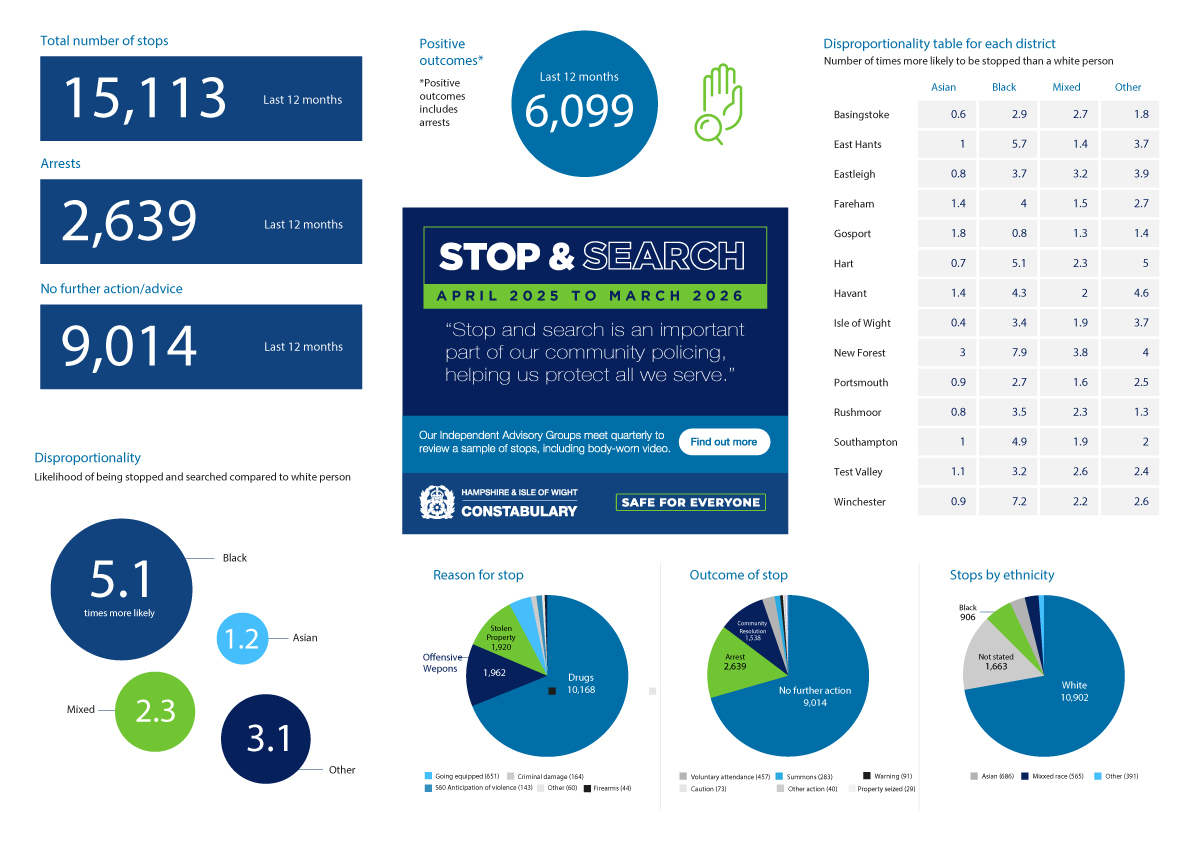
For the last year data was available, Hampshire’s officers were 5.1 times more likely to stop and search someone black than a white person. The average disproportionality rate in England and Wales was 3.8 times.
Stop and search is a controversial power, with most resulting in no detection of criminality. The fact officers are more likely to use the power against a black person has led to claims of racial bias.
In 2025-26, officers in the southern England force carried out 15,000 stops, with 60% leading to no further action or advice. The force claimed 6,000 of its stops led to a “positive outcome”, but did not define what that meant.
The racial disparity has increased in recent years in Hampshire, with black people 4.8 times more likely to be stopped than a white person in 2024-5, up from 4.1 times in 2023-4. The force has also increased its use of stop and search, up from 12,000 two years earlier.
In 2021-22, black people in Hampshire were almost eight times more likely to be stopped than white people.
Police nationally insist stop and search is a vital crimefighting tool, but have pledged to reduce the racial disparity. Hampshire police declined to comment. The force is also 96.4% white, compared with 90.6% of the population of the area it serves.
The Conservative leader, Kemi Badenoch, has compared police failings in the Nowak case to those in the 1993 stabbing of Stephen Lawrence by a racist gang who remained free because of police errors and institutional racism.
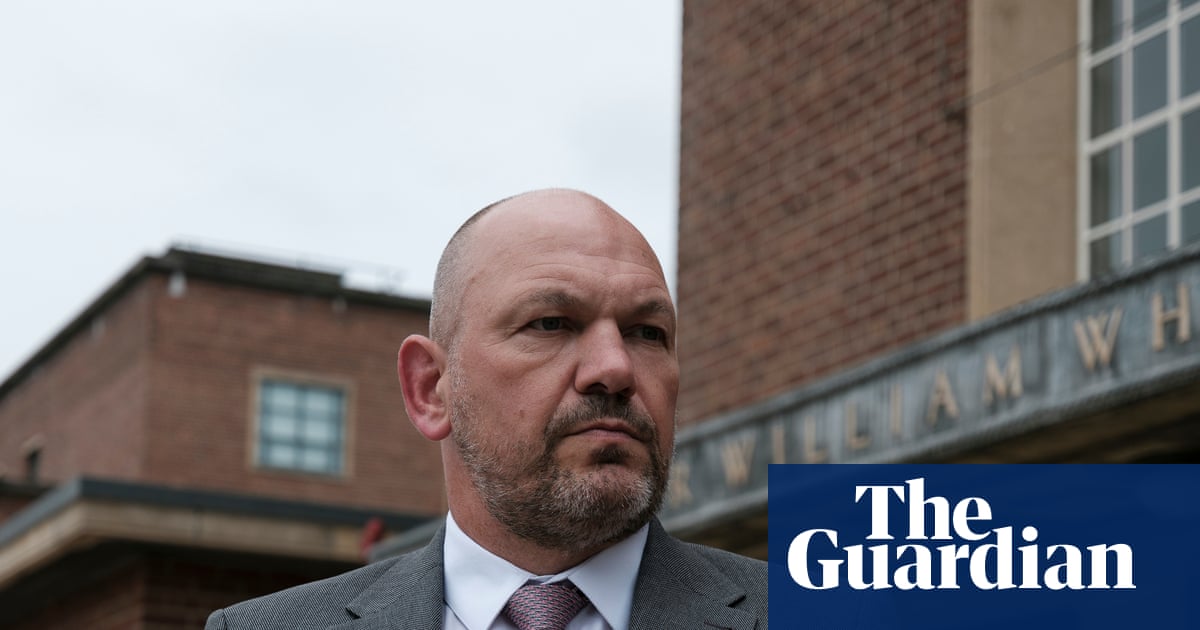
Duwayne Brooks, a friend of Lawrence who was with him when he was attacked, has said the treatment of Nowak was due to lazy policing, not anti-white racism. Brooks told the Guardian the wider public was now becoming aware of the deficient policing which black people, women, and disabled people had suffered for decades, and now was being experienced by white people.
Brooks, 52, told the Guardian: “We’ve always received lazy policing. Now it is more widespread and more people are experiencing it and a boy lost his life.
“Police have a blasé attitude. I have not seen or heard any evidence of anti-white bias in policing. The victim is white, the police officers are white and it is a predominantly white police force.”
Brooks was 18 when he escaped the gang that fatally stabbed Lawrence. Because the Metropolitan police initially treated him as a suspect, he said: “I know the pain that family is feeling.”
The Hampshire Police Federation, which represents rank-and-file officers, has suspended its social media platforms following “serious threats” against its members. It said: “We had a sudden surge in online trolls and AI going through all platforms trying to find any information they could about our members, with a view to threatening their safety.
“This is unacceptable. The safety and security of our members is our first priority. Misidentified officers have been forced to leave their homes and had serious threats made against their life.”
The Guardian has also learned that the final two candidates for one of the highest ranking posts in policing are both former chief constables of the Hampshire force.
The final two former police chiefs to be interviewed for the role of his majesty’s chief inspector of Constabulary are Andrew Marsh, who led Hampshire from 2013 to 2016 and his successor, Olivia Pinkney, who led the force until 2023, Whitehall sources confirmed.
Marsh leads the College of Policing, and Pinkney would be the first woman to essentially become the government’s chief adviser on policing and leader of the inspectorate, having advised Labour in opposition.
The Nowak case is being investigated by the Independent Office for Police Conduct, which later this month will meet the murdered teenager’s family to update them on their inquiry so far.
The police watchdog is treating officers involved in attending the scene as witnesses, including those who handcuffed Nowak and did not believe he had been stabbed for at least two minutes after he told them he was suffering.
The IOPC investigation has found no indication a disciplinary or criminal offence was committed, but says that is under constant review. Alleged police failings will also be examined by an inquest into Nowak’s death held next year with a jury, a coroner ruled on Thursday.