3 months ago
145
3 months ago
145
There was a streak of European exoticism in the voice and acting of Jane Lapotaire, who has died aged 81. Her poise and the lustrous sheen of her acting led her to the top of the Royal Shakespeare Company tree, where she was an honorary associate artist, and to leading roles at the National Theatre under Laurence Olivier.
On television she seemed perfect casting as, say, the Dowager Empress Dagmar of Russia in the Edward the Seventh (1975) miniseries starring Timothy West, or as an irresistible Cleopatra opposite Colin Blakely’s Antony in 1981, directed by Jonathan Miller, though, surprisingly, she never played that role on stage and was terrified of snakes (discovered when playing Charmian in the 1972 film version with Charlton Heston).
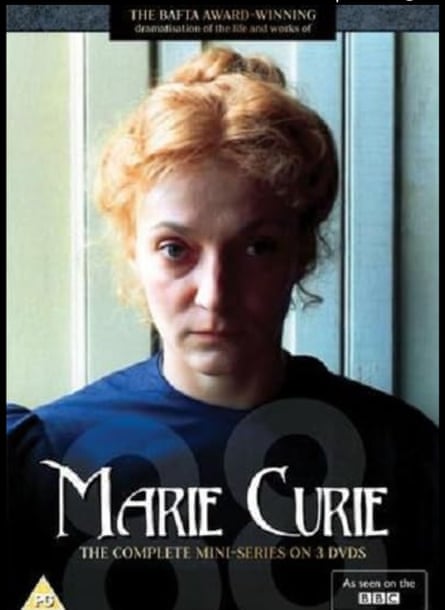
Her real breakthrough came in the late 1970s, when she played two very different heroines: the pioneer physicist Marie Curie in a 1977 BBC miniseries co-starring Nigel Hawthorne as her husband, and, in the next year, Edith Piaf in Pam Gems’s small-scale Piaf, which burst its bounds in the RSC studio theatres to play a long season in the West End, where she won the 1979 Olivier best actress award, and then on Broadway in 1981, where she won the Tony.
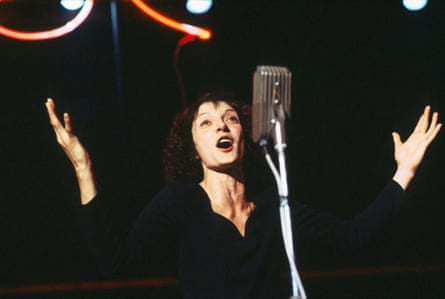
Sparely written and starkly, powerfully directed by Howard Davies, Piaf yielded a devastating performance of bright-eyed effervescence and forthright sexuality from Lapotaire, who had spent six months learning how to sing. She was playing another sort of stage diva, Maria Callas, on a British tour of Terrence McNally’s Master Class in 1999 when, on a short break to teach a Shakespeare master class in Paris in early 2000, she collapsed with a cerebral haemorrhage.
For four weeks she was in intensive care and underwent two major operations. She re-entered the world, terrified and alone, armed with a supply of painkillers and little medical advice or back-up, to discover that her personality had changed; she carried on, she said, like a combination of a helpless child and an obnoxious adult.
Her recovery was slow, and she used the time to write a compelling memoir, Time Out of Mind (2003), and reissue her first – 1989 – memoir as Everybody’s Daughter, Nobody’s Child (2007). She had always wanted to be a writer, and the circumstances of her birth and her illness gave her potent material. A planned stage comeback in 2009 was aborted before rehearsals began due to “artistic disagreements” with the director, her old friend Peter Gill.
But she rejoined the RSC in 2013, playing the Duchess of Gloucester in the David Tennant Richard II; she looked magnificent, even if the velvety richness of her voice was not fully reinstated. She then materialised in the Downton Abbey Christmas special of 2014 as Princess Irina Kuragin, long-lost wife of the Prince who had been busy trying to rekindle his unlikely romance with Maggie Smith’s tart dowager countess.
Lapotaire was born in Ipswich, Suffolk, to an orphaned French teenager, Louise Elise Burgess, who had been sent to England to be fostered. Burgess had become pregnant by a boyfriend – Lapotaire thinks probably he was an American GI – and she gave her baby to her own foster mother, Grace Chisnall, whom Lapotaire grew up loving almost unconditionally.
She met her birth mother for the first time when she was four and only understood the truth when she was in her teens. Jane took her name from Yves Lapotaire, a French Canadian who lived in Paris with Louise and worked in Libya in the oil industry.
As a teenager, Lapotaire was happy where she was, with “Mummy” Grace. She was educated at Northgate grammar school in Ipswich and found her true home, and identity, in the theatre, after training at the Bristol Old Vic school. She made her debut in 1965 at the Bristol Old Vic as Ruby Birtle, the cheeky maid in JB Priestley’s When We Are Married, and stayed with the company for two years.
In 1967 she joined Olivier’s National Theatre and, over the next four years, played his daughter twice (Judith in The Dance of Death, Jessica in Miller’s production of The Merchant of Venice) and his wife in The White Devil. Moving across to the Young Vic, then annexed to the Old Vic, she played the larger roles of Katherina in The Taming of the Shrew, Jocasta in Oedipus and Isabella in Measure For Measure.
She joined the RSC in 1974 to play Viola in Twelfth Night, directed by Gill, and Lady Macduff in the unhappy Nicol Williamson/Helen Mirren Macbeth, directed by Trevor Nunn. She was later to play Princess Mary in Nunn’s 1986 film Lady Jane, starring Helena Bonham Carter as the “nine-day queen” of England.
Either side of her second RSC stint with Piaf, she was Vera in A Month in the Country and Lucy Honeychurch in A Room With a View at the Albery (now the Noël Coward), in 1975-76, and Belvedira in Thomas Otway’s Restoration tragedy Venice Preserv’d back at the National, now on the South Bank, in 1984, forming a triumvirate of superb heroic acting with Ian McKellen and Michael Pennington in Gill’s production.
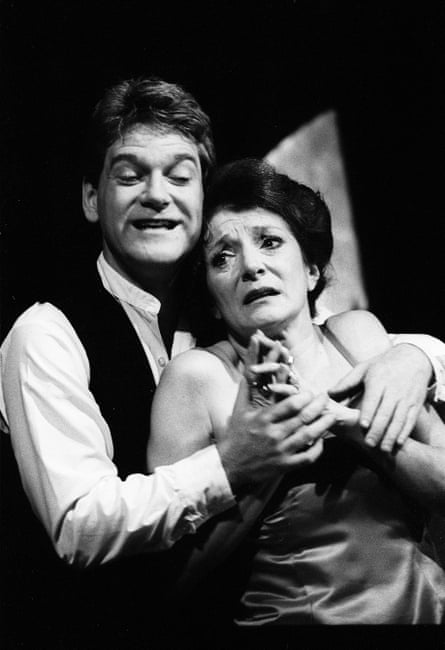
She was a compelling Saint Joan for Compass touring company (1985) and completed a memorable maternal double at the RSC in 1992-93 as Gertrude to Kenneth Branagh’s Hamlet and Mrs Alving to Simon Russell Beale’s Oswald in Ibsen’s Ghosts. Her last RSC performance before the unlucky setback of her haemorrhage was a heavily accented, isolated Queen Katherine in Henry VIII (Swan theatre, Stratford, 1996-97, and at the Young Vic, 1998), directed by Gregory Doran.
It was Doran, as the RSC’s artistic director, who brought her back to the company in 2013, and in 2015 she played Queen Isobel in his production of Henry V. Proceeding at her own more leisurely pace now, and returning to European royalty, she played Princess Alice of Greece in two episodes of the third season of The Crown on Netflix in 2019.
The following year she was Granny in a new film version of Daphne du Maurier’s Rebecca, co-starring Lily James as the second Mrs de Winter and Kristin Scott Thomas as Mrs Danvers, and in 2023 she appeared on the small screen in the six-part gothic thriller The Burning Girls.
Lapotaire was honorary president of the Bristol Old Vic theatre club and president of the Friends of Shakespeare’s Globe, and active in both capacities. She was appointed CBE in 2025 and attended the investiture ceremony at Windsor Castle in February 2026.
She was married first to Oliver Wood (1965-67) and secondly to the film director Roland Joffé (1974-80), both marriages ending in divorce. She is survived by her son, Rowan, a screenwriter and director, from her marriage to Joffé.