2 months ago
77
2 months ago
77
Senior planners involved in building the country’s postwar new towns have raised concerns about the government’s new towns programme, criticising a lack of ambition and insufficient commitment to social housing.
Lee Shostak, former director of planning at Milton Keynes Development Corporation (MKDC) in the 1970s and later chair of the Town and Country Planning Association (TCPA), said the current plan for the new towns may not help people who need homes the most.
He said that while Milton Keynes was designed specifically to ease the housing burden in London with a large stock of council housing, there was a real risk these new towns would do little to alleviate council house waiting lists in big cities.
“There’s talk about 40% of the homes as affordable housing, most of which will not be social housing and there’s no indication whatsoever those homes will be available for people moving from London or other urban areas,” said Shostak.
“So the very basic, simple premise that kickstarted the original new towns programme isn’t being followed through today. No one is addressing the question: if you can’t afford to buy, will you be able to move to a new town?”
In September, the government’s new towns taskforce published a list of 12 potential locations for the next generation of new towns, as part of the prime minister’s commitment to building 1.5m homes and solving the country’s housing crisis.
Keir Starmer said he wants to begin building at least three new towns this parliament, and commence work on more if possible.
Shostak said none of the proposed new towns were on the scale of Milton Keynes or other large new towns, and he was concerned whether there was the strength of leadership and resources behind the project for it to make a substantial difference.
“Many of the areas designated for the fourth generation of new towns are not actually standalone new towns at all – they’re modest expansions of existing communities, and some are regeneration projects within existing towns and cities,” he said. “So the challenge will be to bring the prosperity, the excitement and the vision.”
John Walker, who became planning director of MKDC in 1980 and went on to become chief executive of the Commission for the New Towns, said that while the new towns were an exciting prospect, there were worries about how it was being executed.
“I am concerned that it’s not ambitious enough. There’s nowhere that would compare with the later-stage new towns,” he said. “I don’t think it is going to be enough, and I’m ambivalent about whether it’s going to produce the sort of results that people want to see.”
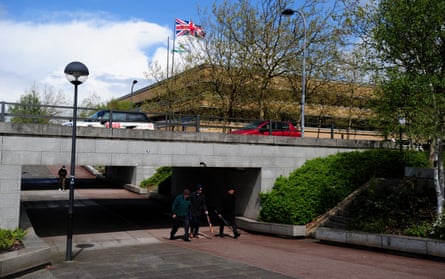
Both arrived in Milton Keynes when it was mainly mud and building sites – “it really was Frontierland”, Walker said – and watched its population swell as homes were built at a pace of about 3,000 a year.
They said the key to the new programme’s success would be the creation of government-backed new town corporations with land ownership and planning powers that could deliver homes and infrastructure at scale.
Without that, there are fears the project may lack momentum, and the private sector may be unwilling to take on risk.
“There’s very little point in talking about doing more new towns if all you’re going to do is draw a big blob on a plan and say one day that will be a new town – you’ve got to accelerate the pace,” he said.
Shostak added: “Milton Keynes didn’t just happen because it was a good location. We made it happen because we were given the powers and the resources to make it happen. That’s the opportunity England has today, to do it again.”
While some of the proposed new town locations have been welcomed, there has been a backlash in others.
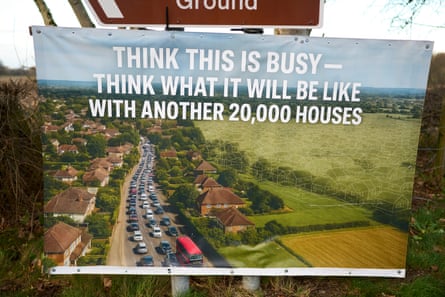
In the village of Adlington in Cheshire, there has been anger from local residents over proposals to build 20,000 new homes on their doorstep in a new standalone development.
It has been formally opposed by Cheshire East council, while the leader of neighbouring Stockport council, Mark Roberts, likened it to “someone in a boardroom in Westminster throwing a dart at a map”.
“It’s not an exaggeration to say the whole village is traumatised,” said Aysha Hawcutt, an Adlington resident campaigning to stop the new town going ahead.
“If we could see in our local area there was a need for the sort of housing that’s going to be built, then I think we would accept it more. But we know these plans don’t fix any problem, they just make money for a private company.”
Katy Lock, the director of communities at the TCPA, said “there was no strategic approach to identifying locations” for the new towns and there had not been enough public engagement in the process.
“There is such mistrust in planning in the public’s mind and there is an opportunity with this new towns programme to be more transparent and bring people along in the process – and I feel that opportunity has been missed,” she said.
She said new towns were a chance to create “exemplar high quality places that are genuinely affordable” and with the right environmental standards – “however, to make that happen there needs to be a real change”, she said.
A spokesperson for theMinistry of Housing, Communities and Local Government said: “We reject these claims. We welcome the Taskforce recommendation that 40% of the homes in our new towns should be affordable housing, and our New Towns programmes will restore the dream of homeownership for families across the country, helping fix the housing crisis we inherited.
“We continue to work closely with local leaders to ensure these towns will be in the right places and have the necessary infrastructure.”