2 hours ago
7
2 hours ago
7
Time for Tottenham to start panicking? This is, of course, a subtle trick question. Tottenham is one of those clubs that never actually stops panicking. They panic when they concede and they panic when they score. They panic when they have the ball and they panic when someone else does. They have a coach in Roberto De Zerbi whose face evokes a state of permanent alarm, the expression of a man perpetually having a toilet door opened on him. One year they even managed to panic their way to the Europa League. For the ever-rattled Spurs fan, this club is less a treasured devotion and more a lifelong haunting, broken up by occasional panic substitutions.
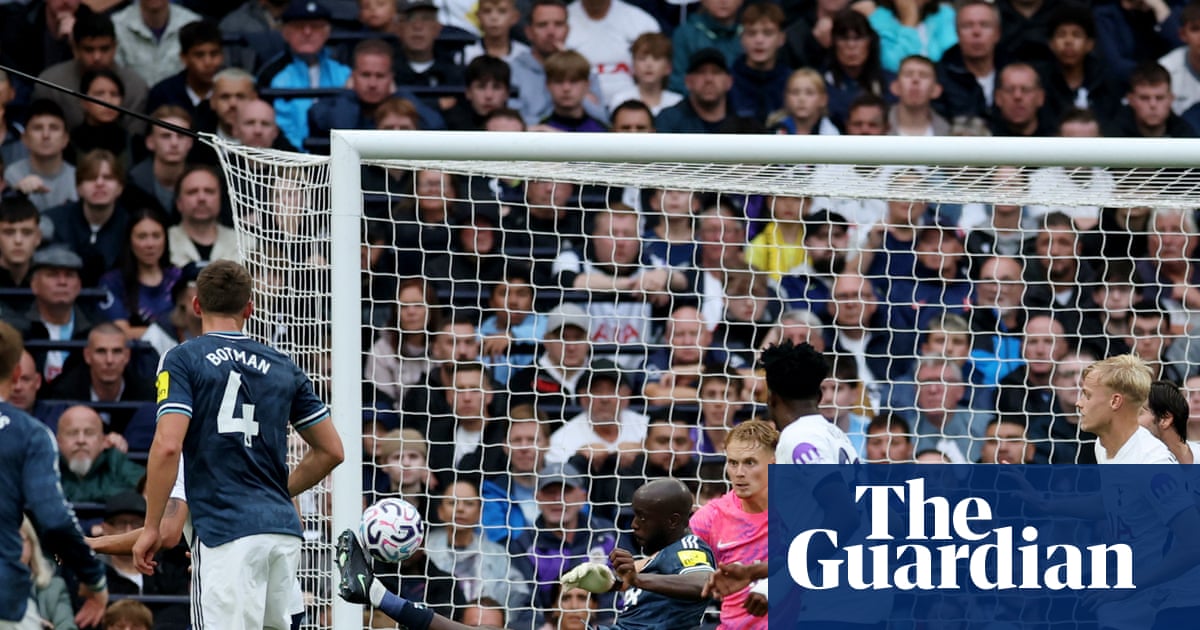
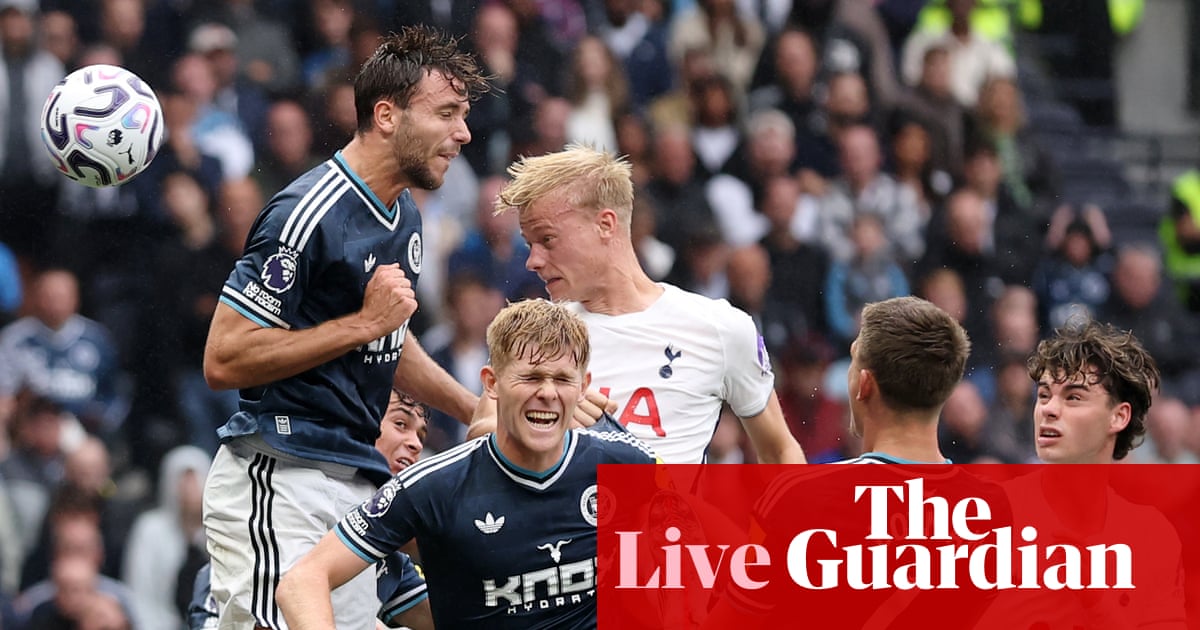
You could intuit that sense of encrusted resignation pretty much from the moment Anthony Elanga’s improvised shot kissed the post and trickled over the line to give Newcastle the lead. Since beating Aston Villa 4-1 in late 2024, Tottenham have gone behind 44 times in all competitions and come back to win precisely zero of them. There is something innate and endemic here, a chronic case of Long Tottenham for which – despite the new coach, the new leadership structure and more than a third of a billion pounds in transfer fees – there remains no proven cure. Yoane Wissa’s clincher was of zero surprise to anyone.
And so welcome back to the temple of pain, the Theatre of Everyone Else’s Dreams, a stadium that fittingly still has no naming rights because pretty much every visiting side gets to own the place. Over the past 12 months, Aston Villa have won the same number of domestic fixtures at Tottenham Hotspur Stadium (two) as Tottenham. Unai Emery’s men may well get the chance to retake their lead here in three weeks’ time. In the meantime it was Newcastle, with one clean sheet in their last 18 matches, who feasted on Tottenham’s neuroses, stayed tight and stayed patient, waited for the train that always arrives.
Perhaps as Matthias Jaissle’s team climbed all over the duels and the second balls there was also a certain reassuring symbolism here: a lesson in the enduring value of culture over commerce. Newcastle have lost half a team but kept their soul; Tottenham have bought half a team and are still searching for theirs. There were inevitable boos for Sandro Tonali, who was actually fine: one of those rare Tottenham players who actually treasures the ball and wants to do interesting things with it. Alongside him Mateus Fernandes was restless, classy, excellent. Omar Marmoush on his debut looked fit and sharp. But of course the individuals were never the problem here.
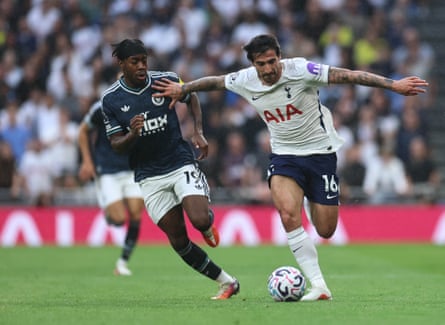
The problem was the little things: the lost headers, the fractional pauses on the ball that kill momentum, the rushed shots, the extra touches, the tackles not quite committed to, the barely perceptible signs of a deep-rooted softness. Take Elanga’s goal, which sprang from an unpressed Nico González long ball, a poorly challenged Amar Dedic header, a cool turn and finish. Three very simple things in a row, at least two of which should probably have been prevented. No screaming howler or smoking gun here. Just a run of lost battles, a sum of marginal flaws, a team that for all its moments of promise and competence has not yet been welded together into a coherent whole.
after newsletter promotion
How De Zerbi fixes this is anyone’s guess. It feels increasingly clear that for all the new blood there is still a kind of generational trauma here, perhaps dating back to the injury crisis of 2024-25, when a threadbare squad was pushed beyond the boundaries of wellness and sanity. For the veterans of that campaign, your Archie Grays and Micky van de Vens, your Destiny Udogies and Rodrigo Bentancurs, you occasionally glimpse that accumulated tension in the 50-50 tackles and big physical clashes, the sense of players still not quite trusting their bodies. And oppositions really do pick up on this stuff. Right now there is a clear blueprint for beating Tottenham: compete, do the simple things well, and eventually bully them into playing your game.
How much worse does this get before it gets better? Are Spurs fans ultimately in for another season of discontent and disgruntlement, of taking an unhealthy interest in the latest score from the Coventry Building Society Arena? The instinct here is still to be patient and wait for the required chemistry to develop. But what if two defeats become four, or six? What if it’s November and the top scorer is still somehow Richarlison with two? How does a club so medicinally addicted to panic possibly avoid it?
Quietly, there is now some ridiculous creative talent at this club. The signings of Marmoush and Sávio, the new-look midfield, the return of Mohammed Kudus and Dominic Solanke, the prospect of James Maddison and Dejan Kulusevski and Xavi Simons to come. A World Cup finalist in Marcos Senesi sitting unused on the bench. It feels inconceivable that Tottenham could be in relegation trouble again. But as with so many clubs before them, Tottenham are discovering that buying new footballers is the easy part. Growing a spine will take considerably longer.