2 months ago
107
2 months ago
107
Anna Kilpatrick doesn’t have a bedroom. Or even a bed. The a 52-year-old content creator from East Sussex sleeps on a wide shelf in her hallway so that her two children, 21 and 18, can have their own rooms. And yet, she says, she has “enough”. She doesn’t hanker after a bigger house or shinier car. “Having fewer things is freedom,” she says. Kilpatrick, who shares such ideas with her 104K Instagram followers (@not.needing.new), is part of a small but growing community of “enough-luencers”. The concept is similar to deinfluencing – where content creators discourage followers from buying into trends – but is also about celebrating already having enough, and, crucially, feeling happier for it.
In her new book, Not Needing New: A Practical Guide to Finding the Joy of Enough, Kilpatrick lists the benefits of living with less: “An increased sense of calm, less anxiety through clutter, free time away from maintaining the home, a healthier bank balance and reduced debt, children who are learning how to manage delayed gratification.”
Before her divorce more than 10 years ago, she lived more affluently: “We had a whole dining room – now I can’t even fit a proper table in my flat.” And yet, she writes, “I am probably the happiest I have ever been as a grownup. Life is considerably more enjoyable when it gets simplified down to only the things you need, the things that are enough to bring you real, solid contentment.”
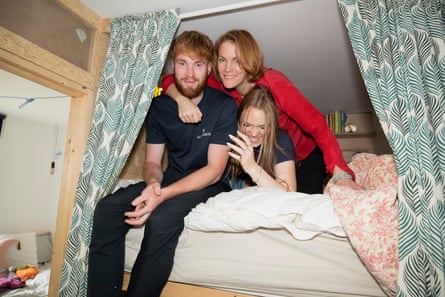
The rise of the enough-luencers feels timely. “Economically, we’re all feeling the squeeze,” says Kilpatrick. But also, she adds, many of us have reached a point “where you realise that ‘more is more’ consumerism hasn’t brought great happiness. People are looking for a different way to feel fulfilled.” But there’s nothing “hairshirty” about this, she promises. “It’s all very doable. No one is going to laugh at you for being unfashionable or different – nobody will notice.” They may spot that you’re happier, though. Here are some of the ways to find the joys of enough.
Be bolder about borrowing
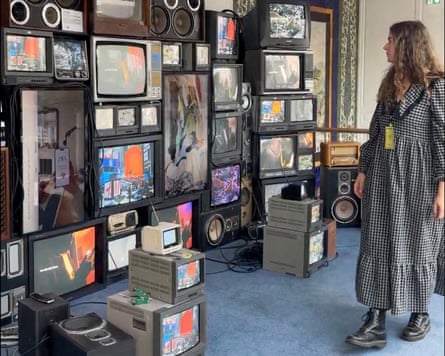
It’s terribly British to dread asking for help, yet to love giving it. We need to ditch this flawed logic, says the Manchester-based content creator Charlie Gill of @lifebeforeplastic, because we’re missing out on community cheer. “I’m a big advocate of borrowing from neighbours,” she says. Through asking to borrow all manner of things – disco lights, a heat gun, a carpet cleaner, gardening equipment – she’s befriended various neighbours.
“You have to push yourself out of your comfort zone, but the rewards are enormous. When you get to know the people you live around, they start looking out for you and everyone feels valued.” To avoid being all take and no give, Gill bakes cakes or buys small gifts for her lenders. Failing that, join your nearest Library of Things, where you get to borrow and belong, minus the possibility of British awkwardness.
Rewrite the rules around gifting
The perceived pressure to gift can undo the most minimalist of intentions. “We are so programmed to think that the more we spend, the better the occasion will be and the happier it will make us,” says Kilpatrick. Not so in her household, where the magic comes from shared family traditions and spontaneity. For a recent birthday, her family spent just £8 – to visit a secure field for their “recalcitrant” dog, where he got to run free, and the Kilpatricks got to do cartwheels and lie on the grass.
Instead of gifts, she asked for a letter from her children: “a precious, funny letter that I can keep for ever”, and the kids surprised her by decorating the flat overnight with bunting and tiny wildflowers. No unwanted stuff, no wasted money, just “a perfect day with less, but actually more”. Kilpatrick recommends making gift tokens: “Doing things for people – babysitting, baking a cake, mowing the lawn – is a brilliant way to show your love.”
Resist the comparison trap
Kilpatrick recalls attending a university reunion a few years ago: “I arrived in my 90s car with wind-up windows and a cassette player, to discover everyone else had ‘bigger, better’ cars. I cried – I felt like I’d done the worst out of everyone.” But she soon realised that her old friends were just delighted to see her. Falling into the comparison trap makes us “the principal drivers of our own malcontent”, she writes, but we can avoid it by training ourselves to recognise what “enough feels like”. She advises a practice of reflecting on “the simple things that make you feel safe, in routine and able to enjoy each phase of the day” – from bedding to comfy shoes, to exercise, food and your favourite coffee. Write it all down if necessary. “Knowing what makes you happy, not anyone else, will stop you from living in that state of comparison.”
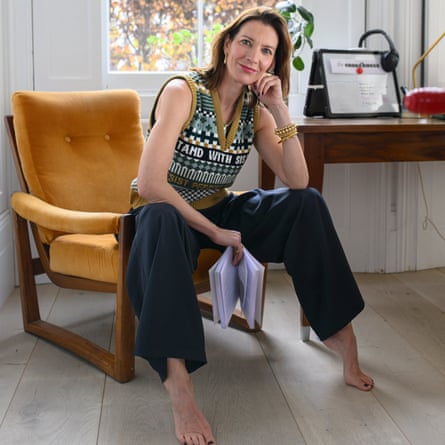
Once you’ve found those items, treasure them, says Melanie Rickey, the journalist behind the podcast and newsletter The Enoughness. As a former fashion editor, she knows what it is to feel covetous. Now, though, she has just her favourite objects – a cup, a chair, trainers, for example – and a strict one-in, one-out policy.
Of course, key to this is curbing how much time we spend on social media, envying others’ airbrushed lifestyles. From 9am to 5.30pm, Rickey blocks all distracting apps on her phone with Opal, a “very strict” digital management app: “The more you leave the distraction of social media, the more your own self comes back and the comparisons go away,” she says. Also try Brick (£54) – a physical app-blocking device that you tap against your phone to block temptations and then stash out of reach.
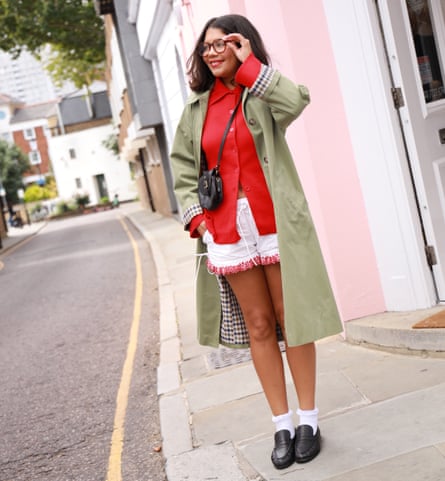
Shunning impulse-shopping will not only spare us buyer’s regret, it may also make us more content. When faced with temptation, upcycling influencer and author Annie Phillips (@madeby_annie_) runs through a mental checklist of questions. First she asks herself why she wants an item: “Is it just the price that’s making the decision for me?” Then, could she buy it secondhand or rent it? “That slows it down; some things fall off the list if you can’t find them secondhand.” When you do eventually come across it, she adds, “You think: ‘Well, do I actually want it now?’”
Patrick Grant, The Great British Sewing Bee judge and author of Less: Stop Buying So Much Rubbish – How Having Fewer, Better Things Can Make Us Happier, agrees: “The process of choosing something with real care – finding out where it came from, who made it – is satisfying and adds value to your purchase.” Plus, he adds, by buying fewer, genuinely useful clothes that are more regularly rotated, “you won’t get moths”.
Make it yourself
When we make something ourselves – be it clothing, furniture or, in Grant’s case, a flat lawn – not only does it have the potential to be exactly as we want it, it also delivers a deeper connection to that object. “Every time I think about the misery of digging out all the clods of earth and rocks, it makes me feel great,” says Grant. Instead of investing in power tools, he deployed picks, hoes, buckets and an unmotorised push mower – and gained “extraordinary” muscles. “We buy tools to save us labour, then we spend money going to a gym. You could do neither, and get all the physical and mental health benefits thrown in for free.”

The act of upskilling also brings joy, says Gill, who learned to sew last year. With her mother’s old sewing machine she made her own wedding dress out of a tablecloth off eBay and a beginner’s pattern from a designer in New Zealand, “The dopamine people get from buying, I get from learning,” she says.
Care and repair
“Being able to say that you’ve had something for 10 or 15 years is cool,” says Gill. “It shows you’re willing to care for things.” While Gill has put her new sewing skills to good use fixing her clothes, sometimes her repairs are more makeshift. After driving off with her dog lead on the roof of her car, she replaced the broken clip with two drawing pins hammered into a small bit of pencil. “This very basic fix has lasted more than a year,” she says. “Mending doesn’t have to be perfect.” Often all you need is a search engine, the spare parts and the will: Gill replaced the heating element of her oven (“no need to get a specialist for basic electronic fixes,” she says), and mended her phone by replacing the battery (“You can get specialist repair kits from iFixit”).
For repairs beyond your abilities, locate your nearest Repair Cafe (repaircafe.org/en) – volunteer-run pop-ups that mend most portable household items for a small donation.
Less having, more doing
Without the burden of stuff or hours lost to online envy, there’s plenty more time for less consumerist fun. Kilpatrick bought herself a small guitar and has taught herself enough chords for a campfire songbook: “Instead of scrolling through retail sites, I scroll for songs and add another one to my notebook,” she writes. Gill likes to spend her money on experiences: “My partner and I love doing random things, like coasteering, ziplining in caves, murder mystery games – we meet fun people and remember it much more than physical gifts.”
Finding non-material joy doesn’t have to be complicated, says Kilpatrick. “It could just be training yourself to notice good things – for example, that the days are getting longer, the blossom is coming, or thick warm socks on a grey day. It’s these tiny remedies that make the difference.