3 months ago
138
3 months ago
138
On my journey documenting environmental stories in Kenya, I attended the Africa Climate Summit in 2023. It ignited a deeper exploration into the lives of waste pickers, revealing a glaring omission in global recycling narratives: the invisibility of these essential workers.
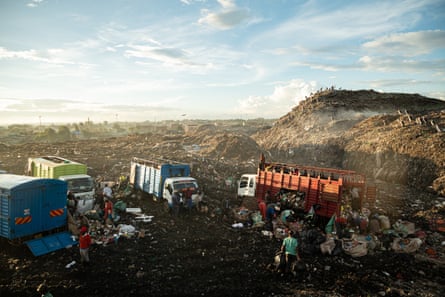
Living and working in Nairobi, I immersed myself in Dandora, the largest dump in Kenya, spanning more than 12 hectares (30 acres) near the Nairobi River and receiving an estimated 2,000 tonnes of industrial and domestic waste daily. For months I witnessed first-hand how waste is devastating local ecosystems and human lives. Kenya’s waste streams are now overwhelmed by single-use plastics from companies shifting the burden on to informal workers.
-
Pre-sorting has reduced the amount of recylables in the waste brought by truck to Dandora
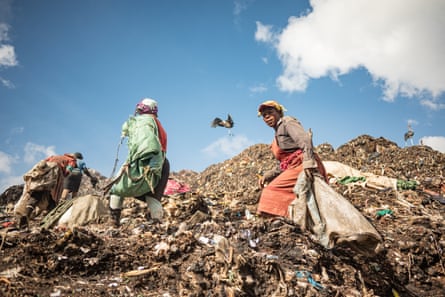
Each day, thousands of waste pickers, predominantly women, sift through tonnes of unsorted trash, recovering recyclables that feed global supply chains. They collect a range of materials: plastics, metals, textiles and more – selling to aggregators and farmers and earning just 300-500 Kenyan shillings (£1.75-£2.90) a day.


-
Waste pickers such as Esther Kavini, left, and Sammy Kamau, often work 12-hour days, seven days a week
-
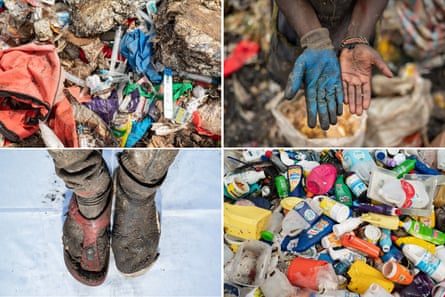
Above from top left: medical waste; a protective glove; collected plastic; improvised shoes
In recent years, the pre-sorting of waste has reduced the amount of profitable materials arriving at the dump, forcing pickers such as 34-year-old Esther Kavini, who has been there for most of her life, to work five times harder for the same meagre earnings. Trucks now deliver mostly unsellable rubbish. In a recent study by the Strategic Sector Cooperation on Circular Economy and Waste Management between Denmark and Kenya, in collaboration with Nairobi Recyclable Waste Association, 86 of 100 waste pickers interviewed at Dandora report that their economic situation has worsened due to increased competition, reduced recyclables from pre-sorting, fewer truck arrivals and rising living costs. Kenya’s National Sustainable Waste Management Policy of 2021 outlines efforts to formalise the sector, but implementation has lagged.

-
The rubbish that arrives at Dandora can give off toxic fumes
This crisis is rooted in colonial legacies and systemic inequities, say experts. Foreign industrialisation introduced unsustainable consumption patterns, burdening vulnerable groups with the fallout. Jobseekers migrate from rural to urban areas seeking a living, only to become waste pickers and face health hazards such as toxic fumes and sharp debris without protective gear. Health problems such as respiratory issues, joint pain, allergies and infections, affect 71%, and nearly all have suffered injuries, primarily cuts from glass and metal.

-
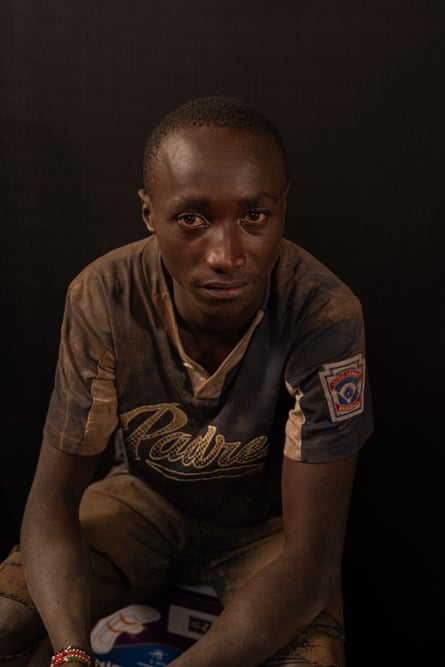
Pickers Jane Wangechi, left, and Joseph Mwangi Wambui, who says: ‘Waste pickers are not considered humans’
Many, such as 30-year-old Jane Wangechi, a single mother of two who started working as a teenager, endure 12-hour days, seven days a week, while their children help on weekends. Most pickers (88%) have children (averaging three or more) and 16% report school dropouts due to unpaid fees, perpetuating the cycle of poverty. Access to clean water, sanitation and healthcare remains limited.
Social disdain compounds their struggles. Terms such as “chokoraa” label them as homeless scavengers. Joseph Mwangi Wambui, 22, who travelled to Nairobi after failing to find work in his home village, says: “Waste pickers are not considered humans.”
-
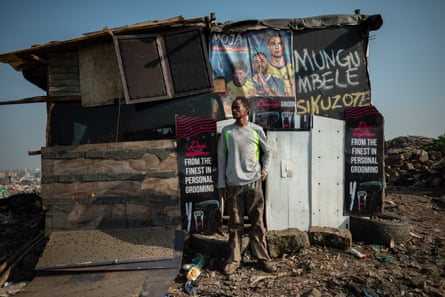
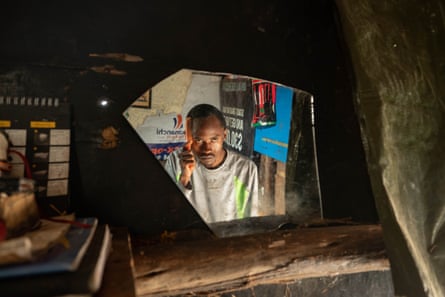
Njoroge Njoroge, left and right, has worked on the dump for six years and has built a makeshift house
Violence affects 53% of waste pickers, bullying 43%, and sexual harassment 13% (disproportionately affecting women). Beyond occasional donations of boots and gloves, which more than a third do not use, society offers little support: no health insurance, no fair pay.
Despite all this, resilience shines through, with pickers forming communities that innovate amid adversity, such as stitching discarded shoes into protective footwear.
-
Despite the risks and difficult conditions, pickers receive little support in terms of wages or healthcare
Organisations such as the Kenya National Waste Pickers Welfare Association and Nairobi Recyclable Waste Association advocate for formal integration, social protections and fair compensation, but face resistance from corporate and government entities. Only 30% of pickers are members of such groups, with others unaware or deterred by fees and distrust.
Agnes Adongo, 45, who has worked on dumpsites for a decade, expresses scepticism about their usefulness. “A lot of organisations just make noise and talk about how waste pickers are important, but there is no impact on the ground.”
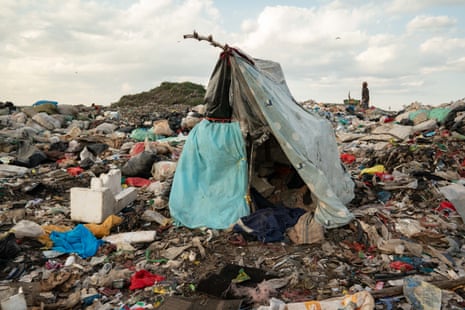
-
A makeshift tent shelters workers from sun and rain