2 months ago
61
2 months ago
61
On a cobbled street in Belfast’s Cathedral Quarter, next door to a hipster coffee shop and opposite an ice-cream parlour that has a near-constant queue since going viral on TikTok, the elegant Kindred of Ireland boutique is doing a surprisingly brisk trade in artfully oversized butter yellow linen blouses and exquisite Donegal mulberry tweed jackets finished with a length of rose pink linen tied in a bow at the nape of the neck.
Half a century after the Troubles, Belfast is finding a new identity through an industry that once defined it. Linen – the fibre that built its wealth and earned it the name Linenopolis – is being woven into a story of renewal. Almost a century after the postwar collapse of an industry that, at its peak, employed 40% of the working population of Northern Ireland, linen is returning as a marker of identity.
“Belfast has long been viewed through a very narrow lens, associated with division, trouble and violence,” says Amy Anderson, the 32-year-old designer of Kindred of Ireland, an independent brand that she runs with her husband, Joel. “But the city has changed enormously over the last two decades.”
Anderson’s grandmother Winnie was a “millie”, as mill-workers were known, in Moygashel linen mills. “Linen is meaningful in Belfast,” she says. “Most of my generation here have relatives who worked in the linen industry, so the connection still feels real.” This is more than a nostalgia trip, however. Anderson’s modern aesthetic leans towards Japanese-inspired avant garde volume and asymmetric shapes, and the soft structure of linen is ideal for anchoring her architectural pieces.
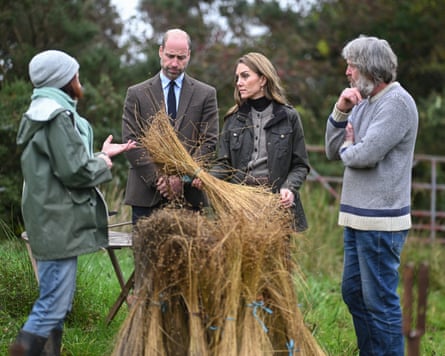
Reviving the virtually extinct linen industry is a near impossible task. But Belfast – the city that turned the world’s most famous maritime disaster into a tourist industry in the Titanic Quarter – has more affinity than most with struggle, and the linen cause has brought together an unlikely taskforce of cheerleaders, including the designer Sarah Burton, the Prince and Princess of Wales and the former blacksmith Charlie Mallon, who has repurposed his 150-year-old Magherafelt family farm for the regenerative growing and processing of flax, the fibre from which linen is made.
Mallon has bought and restored heritage machinery and hopes to be able to take flax all the way from field to fibre. Linen, prized for its beauty, durability and comfort, is “the original performance fabric”, he says. Mallon’s traditional machines are designed to preserve the long line structure of linen, so that the end fabric is less prone to creasing. Most modern linen is processed in China on “cottonising” machines that shorten the fibres and result in more creases.
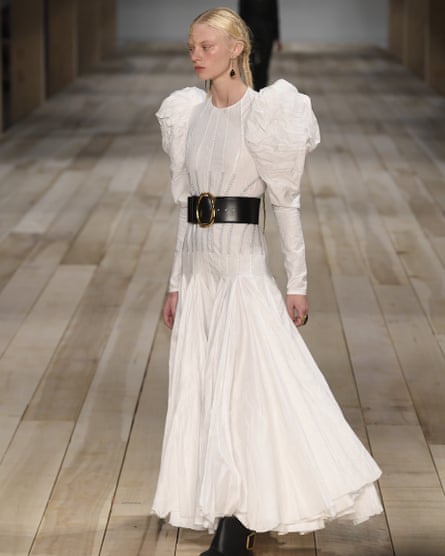
Burton, then at the helm of Alexander McQueen, took her design team on a two-day field trip to Northern Ireland, which became the inspiration for the spring 2020 collection. Burton was particularly bewitched by a visit to the thundering 150-year-old machines at William Clark, the last factory where linen is still “beetled”: hammered by wooden mallets to add strength and shine. A puff-sleeved ivory gown in beetled linen, with a distinctive pearlised lustre, made a star turn on the Paris catwalk.
Last autumn, Amy and Joel Anderson met the Prince and Princess of Wales, who visited Mallon Farm on a visit to Northern Ireland. The Princess of Wales has said she wants less media attention on her wardrobe, but made an exception to talk fashion with Mallon and with the Kindred of Ireland founders because of her interest in sustainable fashion and regenerative farming. Amy Anderson told the Belfast Telegraph the Princess was “deeply interested” and “asked very good questions”.
The theme of Belfast’s fashionable renewal also runs through Ashes to Fashion, an exhibition at the Ulster Museum which marks the 50th anniversary of a fire that followed an IRA bomb in 1976 and destroyed almost the entirety of a 10,000-piece fashion collection. A 1712 quilt, which escaped the fire because it was being exhibited elsewhere, is displayed along with a collection curated since the fire, ranging from 18th-century silk ballgowns to modern pieces by Irish designers, including Philip Treacy, the Dior designer Jonathan Anderson and Kindred of Ireland.
A temporary Kindred of Ireland boutique in central London is planned for this summer. A six-week pop-up in Mayfair in 2024 was “commercial rocket fuel” for the brand, says Joel Anderson, who notes that Northern Irish businesses have full access to the UK market while also remaining aligned with certain EU single-market rules under the Windsor framework. “This is a practical advantage for product businesses like ours, alongside being part of the broader story of what makes this place distinctive.”