2 months ago
93
2 months ago
93
In 1975, after more than two years of sifting through footage, Elaine May was still in the weeds editing her deeply personal gangster film, Mikey and Nicky, and Paramount Pictures and its CEO Barry Diller were losing patience. In a desperate move to retain control, the director sold the film out from under Paramount to Alyce Films, a phoney production company reportedly set up by May, the film’s star, Peter Falk, and a number of other co-conspirators. But the sale was halted, and May was ordered by a judge to deliver the film to Paramount, which she did, except for two essential reels which mysteriously went missing until the studio agreed to let her supervise the editing of the final cut.
Set in the flophouse hotel rooms and diners of Philadelphia, Mikey and Nicky is one long, panic-inducing hangout between two gangsters, one (Nicky, played by John Cassavetes) is on the run for robbing his boss, while the other (Mikey, played by Falk) is torn between hiding his best friend or handing him over. Nicky wants to evade the contract killer he knows is on his trail, but he also wants to drink beer, go to the movies and play hot hands with Mikey on the bus. Mikey wants to care for Nicky; you get the sense he’s been doing it for a long time. He wants to feed him antacids and milk to treat his ulcers, but he’s also got a family and has outgrown their dynamic. They go back a long way and their relationship, though full of love that is apparent in every look and gesture between the two, is also fraught with a history of small betrayals, the kinds of slights and indignities that only stay with you when you really know and love someone. Right at the heart of this unglamorous gangster film is one of the most beautiful and bleak portrayals of male friendship ever put on screen.
Even after getting to supervise the final cut, May didn’t think the film was ready. In the winter of 1976, Mikey and Nicky opened and was largely met with unfavorable reviews. Though her first two films, 1971’s A New Leaf and 1972’s Oscar-nominated The Heartbreak Kid, were macabre and nihilistic in their way, they were still undoubtedly comedies. Plus, so many still knew her as one half of Nichols and May, the improvisational comedy duo that became a cultural phenomenon in the early 1960s. So it’s no surprise people were perplexed and put off by Mikey and Nicky. “The audience came in looking for a comedy, and it had some funny moments, but it turned tough pretty quick,” says Julian Schlossberg, May’s close friend and collaborator who was vice-president of world wide acquisition at Paramount at the time. “They thought they’d been suckered. There were a lot of walkouts.”
But May knew what she was doing. She wasn’t content to repeat what had made her successful as a director; she was moving into new territory, and even voiced concern early in the production that the film was too funny. It was this same reflex, to reject comfort and stasis, and leap into the next big risk that had led her to leave Nichols and May at the height of their success, when they were on an unprecedented run of selling out Broadway shows. Mikey and Nicky also had deeply personal roots that went back to the neighborhood in Chicago where she grew up. “One of them was our neighbor, and the other one was his brother. And they were gangsters and so were we. So we all knew each other,” May said after a screening of the film in 2024 when asked about the inspiration behind the film’s characters. “I know these people. They’re real people.”
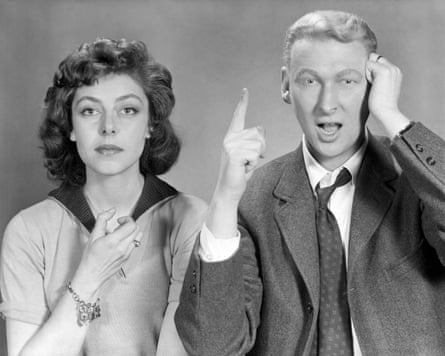
In 1978, May and Schlossberg brokered a deal with Paramount to buy back the rights. They released a revised cut, and Mikey and Nicky’s legendary status has just grown since. In celebration of its 50th anniversary, a theatrical run of the 2019 4K restoration of Mikey and Nicky will show at New York City’s Lincoln Center as part of a retrospective on May’s work before seeing a wider US release this summer. “I think her films were frequently undervalued at the time partly due to their fraught circumstances: the immense ambition of her vision and the experimental, improvisatory methods that interested her were predictably impossible for studio execs to stomach, and the resulting tension certainly didn’t help the films to be appreciated as they should have been at the time,” says Daniel Sullivan, one of the programmers responsible for the retrospective.
Though the pages of every New Hollywood hagiography are filled with the heroic exploits of directors who went over schedule and over budget (think Stanley Kubrick, Francis Ford Coppola and Michael Cimino), May, who has famously shirked the gender issue, paid a steeper price than most of her male counterparts. “Certainly, as a woman in the seventies, she was forging new streams,” says Schlossberg. “A guy can do what she does, and he’d be considered strong, and then she does it, and she’s considered difficult. It is quite a difference. She’s got strong opinions. She’s one of the few people to excel at acting, writing and directing. How many people can you name in the whole history of motion pictures that have been successful three ways?”
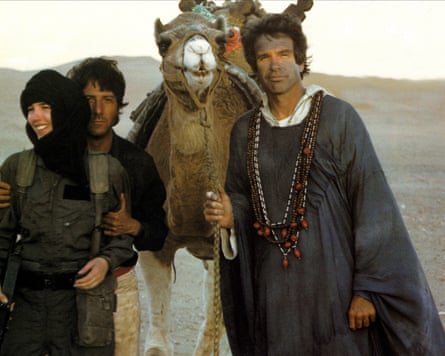
Eleven years later, May got the chance to direct again and somehow one-upped Mikey and Nicky with an even bigger flop, 1987’s Ishtar, a prescient but flawed buddy comedy partly about US meddling in the Middle East. During production, May feuded with producer and star Warren Beatty, his girlfriend and co-star Isabelle Adjani, as well as studio heads. The film lost an estimated $40m and seemed to put a definitive end to May’s directing career. (It has been reappraised by audiences in recent years, and will screen as part of the Lincoln Center event.)
Though her directorial career was defined by legal disputes, delayed schedules and bloated budgets, May continues to reach an ever-growing audience. Lena Dunham, Martin Scorsese, Greta Gerwig, and Josh and Benny Safdie all count themselves as major fans. “May is a major artist who, it seems to me, is becoming more appreciated as time goes on because her methods, her sensibility, the substance of her films, and even the trials and tribulations that she experienced across her career, all feel exceptionally modern and obviously relevant,” says Sullivan. While these battles with the machinations of Hollywood may have hurt her career, they also fueled a folkloric reputation for artistic credibility that endeared her to audiences in a very lasting way.
-
Film at Lincoln Center’s series on Elaine May runs from 26 June to 2 July