2 months ago
107
2 months ago
107
The Met Office has issued an amber extreme heat warning for much of southern England and south-east Wales over the coming days – the most extreme heat warning the weather forecaster has issued for four years.
Temperatures are expected to climb to about 30C (86F) over the weekend and peak on Monday and Tuesday at 34C, “though there remains a chance of this being exceeded in some spots”, the Met Office said.
The forecaster introduced amber extreme heat warnings in July 2021, and issued its most recent one in August 2022.
The warning differs from amber heat health alerts issued by the UK Health Security Agency. It issued a separate amber health alert on Thursday, warning health and care services that the expected high temperatures could significantly affect the health and wellbeing of people in London, the south-east, the south-west and the east of England.
The UKHSA’s warning means a rise in deaths is likely in these areas, particularly among those aged 65 or over or with health conditions, and there may also be a rise in “water-related incidents”, including “risks from cold-water shock and drowning”.
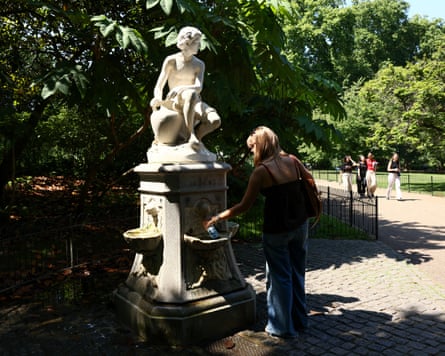
Ross MacLeod, the water safety manager for the Royal National Lifeboat Institution, said: “Cold water shock is a real danger, which we particularly want people to be aware of. The sea or open water may look inviting during hot weather, but it remains cold enough year-round to trigger cold water shock, which can cause uncontrollable gasping, increased heart rate, and can lead to panic and drowning very quickly. It’s best to enter the water slowly to gradually acclimatise.
“Anyone who finds themselves in danger in the water should fight the panic instinct and ‘float to live’: try to relax and float on their back, with head tilted back, gently moving their hands and legs to help them stay afloat. This buys valuable time to get your breathing back under control, before then calling for help or swimming to safety.”
He urged people not to enter the water when they see someone else in danger, but instead to contact emergency services, tell the struggling person to float and throw them something buoyant, such as a life ring. At least 15 people died after getting into trouble in open water during a hot spell in May.
Greg Wolverson, a deputy chief forecaster at the Met Office, said: “While heatwave criteria will be met for some in the south and south-east of England over the weekend, with temperatures into the low 30s [celsius] possible, the warmth will expand and intensify at the start of next week, which, coupled with high temperatures overnight, leads to potential impacts.
“Tropical nights – where the temperature doesn’t drop below 20C – are also likely for some.”
The warmth may bring some thundery downpours on Monday and Tuesday, though these should be “fairly isolated”, the Met Office said.
The climate crisis is increasing the likelihood of extreme heat. The UN climate chief described May’s heatwaves across Europe as a “brutal reminder of the spiralling impacts of the climate crisis”.
Car breakdown services have also warned of an “early summer surge in breakdowns” due to overheating engines and tyre blowouts caused by air expanding in the heat.
An RAC spokesperson said: “Demand from drivers for our help will climb by around 10% compared to what’s normal for mid-June.”
The AA advised drivers to avoid travelling in the hottest part of the day and to carry at least one litre of water per person, as well as extra water and a bowl for pets.
In Cambridge University botanic garden, Sally Petitt, the head of horticulture, has been giving her new plantings a “good dose of water” before the weekend heat. But she said some of the garden’s rare plants, such as ligularias, would flag in the heat – no matter how much water they have access to. “They’re not desperate for a drink, they just don’t like the heat,” she said. “It’s a bit like us when we flag and collapse in a chair in the living room.”
Petitt is also concerned about some of the mature trees in the garden, such as Scots pines, which come from cooler climates and are sensitive to intense heat. “They don’t die overnight, but they very quickly show signs they are in decline,” she said. “We’ve lost at least four in the last probably five or six years … mature specimens, more than 50 years old.”
She mourns every tree the garden loses. “They’re kind of like family. You get so familiar with them. They’re like friends.”
At Kew Gardens in London, staff will be making regular checks to ensure glasshouses remain fully ventilated, said spokesperson Tom Freeth. “The worst thing that could happen is for vents to fail and that not be noticed in one of the glasshouses, because temperatures would rise very, very quickly. You might be talking about 50C plus in a nursery glasshouse, if that were to happen and it wasn’t spotted for a few hours.”
Staff will be asked to water the plants as early as possible each day and damp down the floors of the nursery to keep the humidity levels up inside. It’s not just the high temperatures that the garden has to worry about, he says. “It’s the amount of moisture that it [the heat] draws out of the soil as well.”