3 months ago
141
3 months ago
141
Opening summary: Israeli troops capture strategic castle in Lebanon in deepest incursion into country in 26 years
Israeli troops have captured a mountain topped with a Crusader-built castle in southern Lebanon in their deepest incursion into the country in more than a quarter of a century.
The capture of Beaufort castle near the city of Nabatiyeh came after days of intense fighting and airstrikes in nearby villages where Israeli troops fought Hezbollah members in the rugged area.
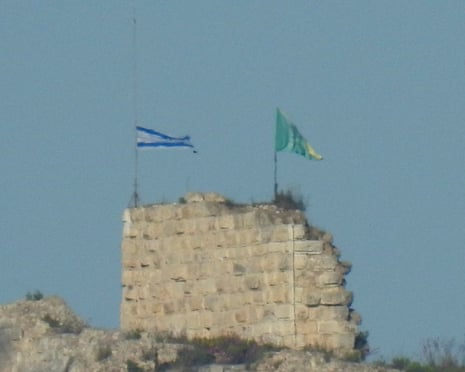
The Israeli army’s Arabic spokesperson Avichay Adraee posted a photograph on X showing Israeli troops walking outside the castle, and defense minister Israel Katz wrote that they had raised an Israeli flag over the castle. Israeli troops previously captured the castle in 1982 and held it until they withdrew from Lebanon in 2000.
“Forty-four years after the heroic Battle of Beaufort, and on this day commemorating the soldiers who fell in the First Lebanon War (1982), our troops have returned to the summit of Beaufort and once again raised the Israeli flag there,” Katz said on his Telegram channel.
The Israeli push came despite a nominal ceasefire that has been in place since April and just days before the next round of talks are set to be held at the US State Department on 2 and 3 June.
Here are the other recent developments from the crisis in the Middle East:
-
Israel has expanded the scope of its operations in Lebanon sending troops across the Litani River, which previously served as a de facto boundary. Israel has designated the area from the Litani up to the Zahrani River a combat zone. Some residents have already left the area due to the intense strikes in recent days, but people remain in many of the area’s towns.
-
Hezbollah overnight claimed two attacks targeting Israeli troops and a Merkava tank in the southwestern town of Bayada near the border. In recent days, the group has said it has clashed with Israeli troops in several towns just north of the river near Nabatiyeh and the castle.
-
The Lebanese Health Ministry said the death toll in the country since March was 3,371, including civilians and combatants. The Israeli army announced Sunday that one of its soldiers had been killed the previous day by a Hezbollah explosive drone in southern Lebanon, bringing to 25 the number of Israeli military deaths since early March.
-
US president Donald Trump said he had secured guarantees from Iran that it would not develop nuclear weapons, as reports emerged he had sent a tougher peace proposal back to Tehran. Trump has said his priorities for any deal include stopping Iran from any nuclear weapon development and re-opening the blockaded strait of Hormuz.
-
Benjamin Netanyahu said he has given orders to the Israeli army to seize control of 70% of the Gaza Strip in a move that threatens to torpedo an already fragile ceasefire and create catastrophic humanitarian conditions in the already devastated territory.
Key events Show key events only Please turn on JavaScript to use this feature
You can watch the Guardian’s latest documentary, on how conflict is widening divisions in Lebanon, below.
Supporters of Hezbollah call the group “the resistance” and see the conflict as existential. Israel insists Hezbollah must disarm for there to be peace – a view shared by many Lebanese. With communities split over Hezbollah’s future, the Guardian travelled across Lebanon to find out how the conflict is affecting life across the country.
Lebanon’s prime minister Nawaf Salam had accused Israel on Saturday of pursuing a “scorched-earth policy and collective punishment” in the south, urging a halt to the fighting and warning it was “destroying towns and villages, and forcing their inhabitants into exile”, AFP reports.
Military delegations from both Israel and Lebanon held security talks in Washington on Friday, with more US-brokered negotiations planned next week. Hezbollah vehemently opposes the direct talks.
Salam said the outcome of the negotiations was “not guaranteed”, but called them “the least costly path for our country and our people”.
A ceasefire between Israel and Hezbollah started on 17 April but has not been observed. Both sides accuse each other daily of violating the ceasefire and justify their attacks by the other’s alleged breaches.
A US statement issued after Friday’s Israel-Lebanon talks made no mention of the truce, but said the “productive military-to-military discussions” would inform next week’s political meeting.
Following the 2024 war between Israel and Hezbollah, Unesco put 34 cultural sites in Lebanon under enhanced protection, including Beaufort castle.
The press release at the time said the sites would now “benefit from the highest level of immunity against attack and use for military purposes”. Non-compliance with these clauses would constitute “serious violations” of the 1954 Hague Convention and would constitute potential grounds for prosecution.
Footage and images have showed military activity in and around the 900-year-old castle.
Israel has previously faced criticism for striking near Baalbek’s Unesco-designated Roman ruins, in the east of Lebanon, as well as close to ruins in Tyre, in the south.
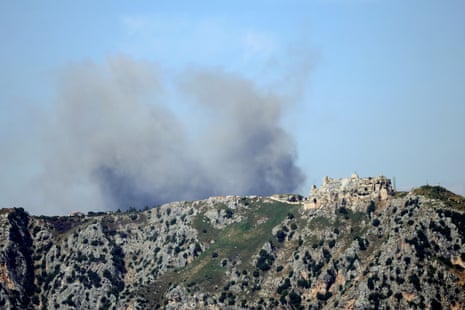
Israeli prime minister Benjamin Netanyahu visited troops along Israel’s northern border, accompanied by Israeli defence minister Israel Katz. Israel is escalating its offensive in southern Lebanon.
During the visit on Friday, Netanyahu and Katz received briefings on military activities in Lebanon and met with field brigade commanders.
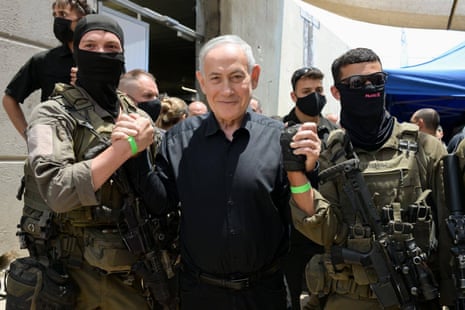
Israel’s capture of Beaufort Castle comes after one of the heaviest days of Hezbollah fire toward northern Israel since the April ceasefire, prompting school closures and restrictions on Saturday, Reuters reports.
The advance into Beaufort Castle has granted Israeli troops an overlook point over much of southern Lebanon and northern Israel, from which attacks have been launched towards Israeli residential areas.
Hezbollah “carried out numerous attacks,” from the ridge, the Israeli military said, adding that its troops were operating against launch infrastructure in the area, from which “hundreds of projectiles were launched toward Israeli civilians and IDF soldiers”.
Israeli troops were also operating near Nabatieh, a major Hezbollah stronghold in southern Lebanon, the military said.
Footage this morning showed the Israeli army flag raised above the Beaufort Castle citadel, with shelling audible and smoke rising from the surrounding area.
The fortress commands sweeping views of south Lebanon, making it a position of considerable strategic value. The crusader fortress dates back to the 1100s, it changed hands between the crusaders and Islamic forces, before Sultan Baibars captured it in 1268. It has played a role in past conflict between Israel and Lebanon, making it one of few medieval fortresses to have prove valuable in modern warfare.
Israeli forces captured the castle, also known as Qalaat al-Shakif, in 1982 and used it as a base during their previous occupation of southern Lebanon, which lasted nearly two decades before ending in 2000.
Opening summary: Israeli troops capture strategic castle in Lebanon in deepest incursion into country in 26 years
Israeli troops have captured a mountain topped with a Crusader-built castle in southern Lebanon in their deepest incursion into the country in more than a quarter of a century.
The capture of Beaufort castle near the city of Nabatiyeh came after days of intense fighting and airstrikes in nearby villages where Israeli troops fought Hezbollah members in the rugged area.
The Israeli army’s Arabic spokesperson Avichay Adraee posted a photograph on X showing Israeli troops walking outside the castle, and defense minister Israel Katz wrote that they had raised an Israeli flag over the castle. Israeli troops previously captured the castle in 1982 and held it until they withdrew from Lebanon in 2000.
“Forty-four years after the heroic Battle of Beaufort, and on this day commemorating the soldiers who fell in the First Lebanon War (1982), our troops have returned to the summit of Beaufort and once again raised the Israeli flag there,” Katz said on his Telegram channel.
The Israeli push came despite a nominal ceasefire that has been in place since April and just days before the next round of talks are set to be held at the US State Department on 2 and 3 June.
Here are the other recent developments from the crisis in the Middle East:
-
Israel has expanded the scope of its operations in Lebanon sending troops across the Litani River, which previously served as a de facto boundary. Israel has designated the area from the Litani up to the Zahrani River a combat zone. Some residents have already left the area due to the intense strikes in recent days, but people remain in many of the area’s towns.
-
Hezbollah overnight claimed two attacks targeting Israeli troops and a Merkava tank in the southwestern town of Bayada near the border. In recent days, the group has said it has clashed with Israeli troops in several towns just north of the river near Nabatiyeh and the castle.
-
The Lebanese Health Ministry said the death toll in the country since March was 3,371, including civilians and combatants. The Israeli army announced Sunday that one of its soldiers had been killed the previous day by a Hezbollah explosive drone in southern Lebanon, bringing to 25 the number of Israeli military deaths since early March.
-
US president Donald Trump said he had secured guarantees from Iran that it would not develop nuclear weapons, as reports emerged he had sent a tougher peace proposal back to Tehran. Trump has said his priorities for any deal include stopping Iran from any nuclear weapon development and re-opening the blockaded strait of Hormuz.
-
Benjamin Netanyahu said he has given orders to the Israeli army to seize control of 70% of the Gaza Strip in a move that threatens to torpedo an already fragile ceasefire and create catastrophic humanitarian conditions in the already devastated territory.