2 months ago
87
2 months ago
87
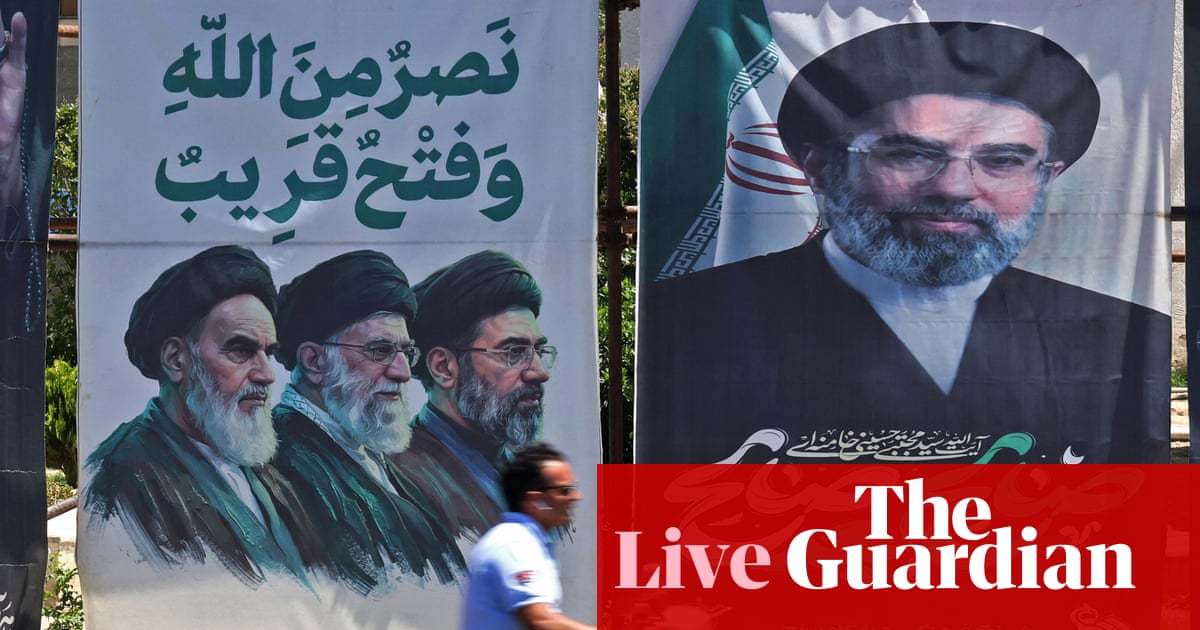
US secretly plotting ground attack despite message of diplomacy, Iran's parliament speaker says
Iranian state media have published a message from Iranian parliament speaker Mohammad Bagher Ghalibaf marking 30 days since the start of the US-Israeli war.
“The enemy openly sends a message of negotiation and secretly plans a ground attack,” Ghalibaf, who has served as speaker of the parliament since 2020, wrote in his message carried by the Tasnim news agency.
“The United States expresses its desires with a list of 15 points and pursues what it did not achieve in the war.”
“We are in a major world war, and we must prepare ourselves for the tortuous and difficult path ahead of us until we reach the summit,” he added.
Ghalibaf was previously an Islamic Revolutionary Guard Corps (IRGC) commander, police chief and mayor of Tehran. Washington reportedly has thought of him as a potential partner and he is reported to be Donald Trump’s preferred choice for leader.
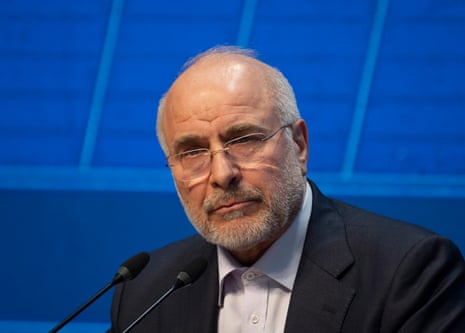
Photograph: Morteza Nikoubazl/NurPhoto/Getty Images
Key events Show key events only Please turn on JavaScript to use this feature
IDF says it has completed 'another wave' of airstrikes across Tehran
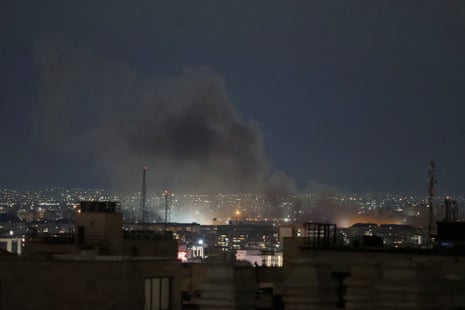
The IDF said this morning that it had completed “another wave” of airstrikes across the Iranian capital of Tehran.
Tehran was targeted with an intense wave of Israeli airstrikes yesterday that damaged residential neighbourhoods and reportedly struck a prestigious university.
US-Israeli airstrikes have repeatedly hit the densely populated city throughout the war. Many civilians have been killed in the attacks, despite them framed as only targeting the infrastructure of the Iranian state and targets linked to the regime.
Iran’s parliament speaker: the outsider seen by White House as possible partner

Patrick Wintour
Trying to appoint Mohammad Bagher Ghalibaf from Washington reveals either a misunderstanding of the Islamic Republic’s multilayered political system or a determination to upend it: power in Iran historically lies with the supreme leader, and Mojtaba Khamenei has been selected to that role by the Assembly of Experts.
While it is true that Khamenei has not been seen since his election and is believed to be seriously injured, Iran insists he is the functioning decision-maker…
As speaker of parliament, Ghalibaf has broadly followed the mainstream, supporting the 2015 nuclear deal but then, when Trump pulled out, arguing that Iran’s future lay in alliances with Russia and China. His critics claim that Ghalibaf supporters backed the attack on the Saudi embassy in Tehran in 2016 that led to the breaking off of diplomatic relations between the two countries.
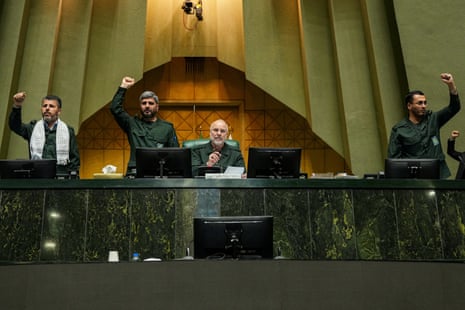
From Trump’s perspective, little of this matters if he feels, in negotiating with Ghalibaf, he is negotiating with Iran’s true power brokers. Ghalibaf does have lines to the commander-in-chief of the IRGC, Ahmad Vahidi, and the commander of the Khatam al-Anbiya central headquarters, Ali Abdollahi Aliabadi.
Soon after it became known that Washington thought he was reliable, Ghalibaf issued a tweet saying: “Our people demand the complete and humiliating punishment of the aggressors. All officials stand firmly behind their Leader and people until this goal is achieved. No negotiations with America have taken place. Fake news is intended to manipulate financial and oil markets and to escape the quagmire in which America and Israel are trapped.”
Trump’s anointment may at least send the message to Israel that Ghalibaf is not to be killed, but it also piles pressure on him to show he will not betray his country.
US secretly plotting ground attack despite message of diplomacy, Iran's parliament speaker says
Iranian state media have published a message from Iranian parliament speaker Mohammad Bagher Ghalibaf marking 30 days since the start of the US-Israeli war.
“The enemy openly sends a message of negotiation and secretly plans a ground attack,” Ghalibaf, who has served as speaker of the parliament since 2020, wrote in his message carried by the Tasnim news agency.
“The United States expresses its desires with a list of 15 points and pursues what it did not achieve in the war.”
“We are in a major world war, and we must prepare ourselves for the tortuous and difficult path ahead of us until we reach the summit,” he added.
Ghalibaf was previously an Islamic Revolutionary Guard Corps (IRGC) commander, police chief and mayor of Tehran. Washington reportedly has thought of him as a potential partner and he is reported to be Donald Trump’s preferred choice for leader.
Photograph: Morteza Nikoubazl/NurPhoto/Getty Images
How likely is it that Donald Trump will order a ground invasion of Iran?

Andrew Roth
Thousands of US marines aboard navy amphibious ships from the 31st and 11th expeditionary units have been deployed to the Middle East from Asia.
Another 2,000-odd paratroopers from the 82nd Airborne are also being sent to the theatre – they are tasked with deploying worldwide within 18 hours of notification and execute parachute assaults, including against a “defended airfield” to prepare for further ground operations.
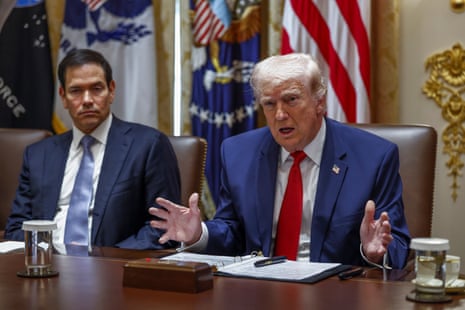
The secretary of state, Marco Rubio, repeated on Friday that the US believes it will be able to achieve its goals without boots on the ground, but when marines are in position next week, Trump could order an assault to either provide leverage to reopen the strait of Hormuz or to degrade Iran’s ability to keep the waterway closed by force.
The lack of heavy armoured units, logistical depth and other elements needed for a protracted military conflict will limit the White House’s ability to escalate the conflict, however, potentially extending a stalemate that could be devastating to the international economy. Read the full piece here:
Saudi Arabia’s defence ministry said in a statement shared to social media about three hours ago that the country had intercepted and destroyed 10 drones in the previous few hours.
Qatari news channel Al Araby has said in a post on X that an Israeli missile had hit the building housing its office in the Iranian capital of Tehran, causing “extensive damage and halting live broadcasts”.
Iran’s foreign minister, Abbas Araghchi, has condemned Israel’s killing of three journalists in Lebanon on Saturday.
On his Telegram, Araghchi said the killings amounted to “targeted assassination” and “flagrant violation of international law”. He said they were a way of silencing “the voices of those who tell the truth”.
Ali Shoeib, from the Hezbollah-owned al-Manar television station, Fatima Ftouni and her brother and cameraman Mohammed Ftouni from the channel al-Mayadeen were killed in the Israeli airstrike targeting their car yesterday.
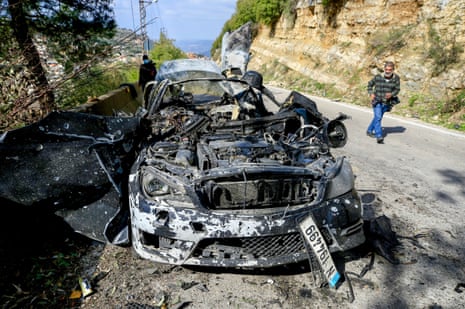
Israel claimed the attack shortly afterwards, saying the target was Shoeib, whom it accused of being a Hezbollah “terrorist”, without providing any evidence to support its claim. It did not comment on the killing of Fatima or Mohamed Ftouni.
Israel, which has killed more than 220 journalists since 2023, according to Reporters Without Borders, often claims the journalists it targets are linked to armed groups (like Hamas) without providing any evidence. International humanitarian law is meant to protect civilian journalists during armed conflict and Israel has been accused of clearly violating it, with effective impunity.
Kuwait has said its air defence systems intercepted four drones attacking the country this morning.
In a statement posted to social media earlier, the Kuwait army said that “any explosions that may be heard are the result of air defence systems intercepting hostile targets”, without specifying who was behind the attacks.
US base in Syria targeted by Iraq in repelled drone attack, assistant minister says
Syria’s assistant defence minister said Sunday that his country’s forces had repelled a drone attack from neighbouring Iraq targeting one of Syria’s last US military bases.
“Earlier today, the US base in Qasrak, located on our territory, was attacked by four drones launched from Iraqi territory,” Sipan Hamo said on X, adding that “the drones were shot down without casualties”.
“We hold Iraq responsible and call upon it to prevent the recurrence of attacks that threaten our stability.”
The attack came a day after Syria’s army said it repelled another drone attack from Iraq aimed at al-Tanf, a base in the southeast which used to house US forces.
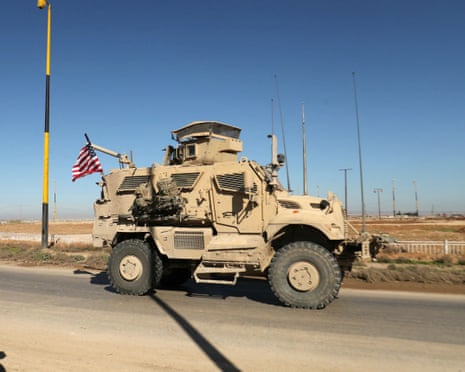
Earlier this week, the Syrian military said another base in the north-east was also targeted by a missile attack from Iraq, with an Iraqi official saying a local armed group was behind it. Iraq has arrested four people in connection with that attack.
Iraq has been pulled into the war since it was sparked by US and Israeli strikes against Iran, with the conflict engulfing much of the Middle East.
Pro-Tehran Iraqi groups have claimed responsibility for attacks on US interests in Iraq and across the region, while strikes have also targeted these groups.
In recent months, American forces have withdrawn from the al-Tanf base, as well as Shadadi in the northeastern province of Hasakeh, and had begun withdrawing from the Qasrak base, also located in Hasakeh.
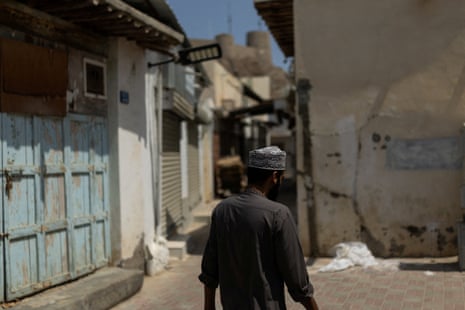
Oman’s foreign ministry condemns attacks on its territory
Oman’s foreign ministry said on Sunday that it condemns attacks on its territory, adding that no party has claimed responsibility.
It said authorities were investigating the attacks’ “sources and motives” without providing further details.
Oman said on Saturday that a worker was injured in a drone attack on the Gulf country’s Salalah port and Danish container shipping group Maersk said later that it temporarily halted its operations at the port after Saturday’s attack.
Five killed in US-Israeli strikes on Iran city near Hormuz strait, state media says
US-Israeli strikes hit a quay at an Iranian port city on Sunday near the strategic strait of Hormuz, killing five people, Iranian state media reported.
The official IRNA news agency reported the “enemy carried out a criminal attack at the quay of Bandar Khamir, killing five people and injuring four others”.
A series of loud explosions was also heard on Sunday across the Iranian capital, an AFP journalist said. The blasts were heard in northern Tehran and smoke was seen rising from impacted areas.
If you are just catching up on what it means that Yemen’s Houthi’s have joined the war, you can read a piece from the Guardian’s Julian Borger here.
IDF says it has hit Iranian command centres and weapons sites
The Israel Defense Forces (IDF) says it has temporary Iranian command centres and weapons production and storage sites in Terhan in a fresh wave of strikes.
In a post on X, the IDF said the sites targeted included “ballistic missile production and storage facilities, aerial defense systems, and observation posts of the Iranian regime”.
According to the IDF, Iran had moved some command centres to temporary sites. “Several temporary command centers were dismantled, including commanders who were operating within the HQ’s,” the IDF said in the post.
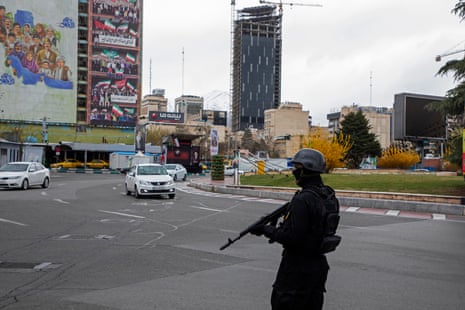
Iran Guards say strikes on Bahrain and UAE aluminium plants are retaliation for US-Israeli attacks
Iran’s Revolutionary Guards says it launched missile and drone strikes on aluminium plants in Bahrain and the UAE over the weekend in retaliation for a US-Israeli attack on Iranian industrial infrastructure launched from bases in Gulf states.
The IRGC said the strikes were targeting what they described as industries linked to the US military.
Since the Middle East war erupted at the end of February, Bahrain and other Gulf countries have regularly been targeted by Iranian missile and drone strikes in retaliation for the US-Israeli campaign.
In a statement carried by Iranian state broadcaster IRIB, the Guards said they hit an aluminium facility in the UAE and Aluminium Bahrain’s main plant, calling both sites “industries affiliated with and connected to the US military and aerospace sectors in the region”.
Aluminium Bahrain, one of the world’s largest aluminium producers, said two employees were wounded in an Iranian strike targeting its facility on Saturday.
The company, also known as Alba, said the workers suffered minor injuries.
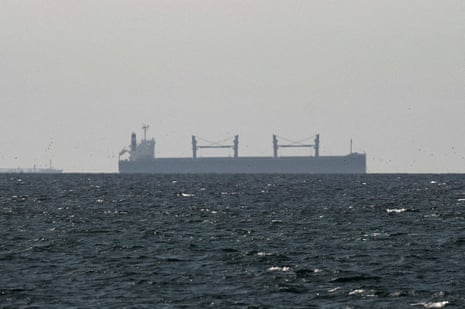
Shipping helplines ring with alerts from seafarers trapped amid war
Seafarers’ helplines say they are overwhelmed with messages from crews stuck in the Gulf by the Middle East war, desperately seeking repatriation, compensation and onboard supplies.
“Writing to urgently inform you that our vessel is currently facing a critical situation regarding provisions and one crew health conditions,” read an email from one seafarer on 24 March to the International Transport Workers’ Federation (ITF)’s Seafarer Support team.
“Immediate supply of food, drinking water, basic necessities is required to sustain the crew,” said the message to the team’s helpline.
The ITF said it had received more than 1,000 emails and messages from seafarers stuck around the strait of Hormuz and the wider region since the war erupted with US-Israeli strikes on Iran on 28 February.
Opening summary
Hello and welcome to our live coverage of events in the Middle East as the war enters its second month.
The war only continues to escalate as Yemen’s Iran-backed Houthis confirmed a second wave of attacks on Israel since joining the conflict on Saturday. They have vowed to continue strikes in the coming days, posing a threat not just to worsening regional security but also global trade.
In Iran, two powerful explosions shook northern Tehran early on Sunday, an AFP journalist reported. The blasts occurred in the Iranian capital about 7.20am as air defences operated, but it was not yet clear what was targeted.
Meanwhile, the US is reportedly preparing plans for ground operations in Iran. The Trump administration has already deployed US Marines to the Middle East.
Here’s a quick recap of the latest:
-
In a televised speech, Houthi military spokesperson, Yahya Saree, said the Iran-backed group had launched a “barrage of cruise missiles and drones” in a second attack on Israel, targeting key military sites. He vowed the Houthis would continue military operations in the coming days until Israel “ceases its attacks and aggression”.
-
The entry of the Houthis, poses a direct threat to the Bab al-Mandab strait at the southern end of the Red Sea, a second major choke point in the supply chain of energy supplies and other trade in and out of the Middle East. With Iran’s near total closure of the strait of Hormuz, a shutdown of the Bab al-Mandab, located between Yemen and the Horn of Africa, would amplify the already grave impact of the war on the global economy, and could also reignite a Saudi-Yemen conflict.
-
The Pentagon is preparing plans for weeks of ground operations in Iran – potentially including raids on Kharg Island and coastal sites near the strait of Hormuz – though President Donald Trump has not yet approved any deployment, the Washington Post is reporting. Any ground operation would stop short of a full-scale invasion, instead involving raids by special operations forces and conventional infantry troops, the Post said, citing unnamed officials.
-
Exiled Iranian Crown Prince Reza Pahlavi has told one of the US’s biggest annual gatherings of conservatives that he is ready to lead a new Iranian government and would call on the country’s citizens to rise up when the “right moment arrives”, AP reports. Pahlavi is the son of the shah, a monarch deposed in 1979 when the Islamic theocracy came to power.
-
Iran’s Revolutionary Guard threatened to target US universities in the Middle East after saying US-Israeli strikes had deliberately targeted two Iranian universities. “If the US government wants its universities in the region to be free from retaliation... it must condemn the bombing of the universities in an official statement by 12 noon on Monday, March 30, Tehran time,” said the statement published by Iranian media.
-
Pakistan has said it would host a meeting of Middle Eastern powers on Monday in an effort to find a regional approach to ending the conflict. But the talks, which bring together the foreign ministers of Saudi Arabia, Turkey and Egypt, did not appear to include any of the warring parties, casting further doubt on persistent US claims of diplomatic progress.
-
Israeli attacks killed three journalists in a targeted strike on their car in southern Lebanon, which the Lebanese president condemned as a “blatant war crime”. The strike killed Ali Shoeib, from Hezbollah-owned al-Manar TV, Fatima Ftouni and her brother and cameraman Mohammed Ftouni from pro-Hezbollah outlet al-Mayadeen.
-
Tedros Adhanom Ghebreyesus, the director general of the World Health Organisation, called for an end to attacks on medical staff after nine paramedics were killed in southern Lebanon on Saturday.
-
The Israeli military bombarded Tehran with a “wide-scale wave of strikes”, damaging residential areas, civilian infrastructure, and research and educational buildings. The IDF also said it had hit Iran’s headquarters for naval weaponry.
-
Iran has allowed 20 oil tankers from Pakistan to pass through the strait of Hormuz. Ishaq Dar, Pakistan’s deputy prime minister, said two ships would cross per day. The country has been playing a key mediatory role in the conflict.