2 months ago
68
2 months ago
68
During a science class, 12-year-old Renko Urushiba (Tomoko Tabata) is confronted by her classmates for befriending Tachibana (Nagiko Tono), a girl from Tokyo who is shunned for having divorced parents. Refusing to give up her friendship, Renko hurls a laboratory burner on to her desk, setting it ablaze and throwing the class into chaos. Unbeknown to most of her friends, Renko’s parents are separated, too.
Equal parts perceptive and mischievous, little Renko is the protagonist of 1993’s Moving, the acclaimed 10th feature by the Japanese auteur Shinji Sōmai. Attuned to the sensibilities of childhood, Moving delicately traces the uncertainties that line the thorny path towards adolescence. With Sōmai’s signature long takes and elaborate camera movements, the film tries to keep up with Renko’s hurried footsteps as she dashes between her discordant parents.
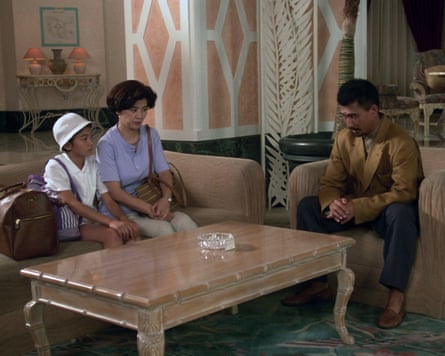
Renko’s father, Kenichi (Kiichi Nakai), is gentle but ineffectual. Although his moments with Renko are playful, Kenichi’s vacant gazes convey a deeper weariness. On the other hand, Renko’s mother, Nazuna (Junko Sakurada), is fiercely assertive. After her split from Kenichi, Nazuna throws herself into the task of reinventing life for her and her daughter. However, her fervent resolve to restore order makes her affection for Renko harden into impatience and control. Caught in the downpours of Kyoto’s summer, Renko stirs up a typhoon herself in hopes that her separated parents will reunite.
Renko runs, she lashes out and, at times, she quietly observes her sense of normalcy crumble away. In one scene, she locks herself in a bathroom at home and forces her parents to confront one another. When a heated argument erupts, Renko glimpses in them a tempest she has never known. As Kenichi and Nazuna sink into a wounded silence, Renko’s world of innocence shatters.
Nevertheless, she remains undeterred. Oscillating between sowing havoc in domestic spaces and speeding through urban landscapes, Renko keeps up her earnest yet painful attempts at reconnecting her parents. As the camera drifts across rooms and streets to follow Renko, the film’s 90s backdrop is brought to the fore. Referred to as Japan’s “lost decade”, the period saw the country’s economic bubble burst, plunging a previously forward-looking society into stagnation. In the breakup of Renko’s parents, you might sense the nation’s loss of faith in the nuclear family and the economic system that once sustained it.
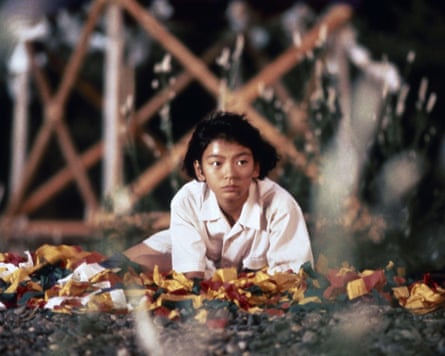
Kyoto’s summer festivals, too, are woven into the film. With this recurring motif, Sōmai elegantly links the growing tensions of the Urushiba household with a collective sense of spirituality, which adds a mythological dimension to the film’s domestic realism.
When Nazuna finds Renko missing from home, she hears the faint drums and bells of Japan’s famous Gion festival, whose festivities only weigh on her loneliness. Similarly, as Kenichi takes Renko home on his motorcycle, the Kanji character “大” (“great”) burns on a faraway mountainside: part of a bonfire rite to farewell ancestral spirits. Through long handheld shots, Sōmai tethers the fragility of the father-daughter bond and the melancholy of the flames.
As Renko attempts one final ploy to bring her parents together, she runs away and disappears into a local festival by Lake Biwa. Bundles of burning hay and blazing torches cast an amber glow into the night: hypnotic and meditative, carrying fleeting sparks that guide Renko on her personal rite of passage. Finding herself suspended between a past she can no longer hold on to and a future full of doubts, Renko gradually stops running. At last, the film slows down with her.
As dawn breaks, ripples glisten in the half-light, carrying Renko slowly away from her childhood, away from a world she has grown disillusioned with.
-
Moving is streaming on Mubi in Australia and the UK and Criterion Channel in the US. It is also available on SBS on Demand in Australia. For more recommendations of what to stream in Australia, click here