1 month ago
92
1 month ago
92
Growing up, Sean Hepburn Ferrer says he never felt like the son of a movie star – but he very much is. His mother was Audrey Hepburn, one of the biggest names in the golden age of Hollywood, an Oscar-winner, a screen star and a fashion icon. Hundreds of millions of people all over the world recognise her from classics such as Roman Holiday, Funny Face and My Fair Lady – besotted with the way she laughs, dances, or poses tastefully in Givenchy couture.
Audrey’s image is so ubiquitous in posters, art prints, magazines, on handbags, keyrings or T-shirts, that the family has made hunting for her likeness into a game. “I must have made this crack to my kids,” Sean says. “We were probably waiting for a train or a plane that had been delayed: ‘Three minutes to find Grandma.’ And it became a thing. Now the kids are grown-up, but they do it on their own. I do it by myself and send a snapshot to my wife and we giggle privately.”

In a new book, Intimate Audrey, Sean writes his own story of his mother’s life. It is, he tells me over coffee at a Tuscan vineyard near his hillside home, a “behind the scenes” take on the life of one of the 20th century’s most famous women. Fewer ballgowns, more family dinners.
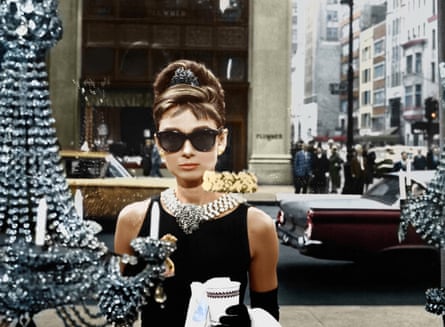
Sean, 65, had what he calls a “normal childhood” in Switzerland and Rome, very far from Hollywood. “She had normal priorities,” says Sean about his mother. “She realised that life is short and fickle and delicate – and you can’t want a family and then when it comes not put your elbow into it.” Even if that elbow is best known encased in a Givenchy evening glove and cradling a bag of doughnuts outside Tiffany’s on Fifth Avenue at dawn.
Audrey had made most of her famous films, including that one, Breakfast at Tiffany’s (directed by Blake Edwards, and released in 1961) before Sean was 10. Still, when he was 14, he realised that his mother was not just an actor, but an exceptionally famous one. One day, he took out his mother’s stash of 16mm copies of her films and hosted his own private Audrey Hepburn film festival in the attic. He had a Bell & Howell projector, a sheet pinned to the wall with a speaker behind it, a pile of cushions and, as he remembers, the moon shining romantically in through the window. “What a wonderful way to discover the films.” Audrey would pop in occasionally, to ask what he thought of the movies. Anything he liked, she modestly credited to the director, or her co-stars.
When Audrey died in 1993, her funeral near the family home a few miles from Geneva left Sean in no doubt about the extent of her fame. “Our little village of 400 or 500 inhabitants swelled up to 25,000,” he says. “It was like a rock concert: the cars parked as far as your eyes can see, kind of a Coachella in Switzerland.”
Shortly afterwards, he wrote what he calls a “spiritual biography”, Audrey Hepburn: An Elegant Spirit. “It started off as a letter to the children I hoped I’d have one day,” he says. “It told about who she was on the inside, what her emotional makeup was and her philosophies.” But he has long been asked to write something more complete, “the book that closes the chapter”, and so Intimate Audrey is his first full biography of the star, co-written with former war correspondent Wendy Holden. That qualification was important to Sean: “My mother’s life begins with war and ends with war.”
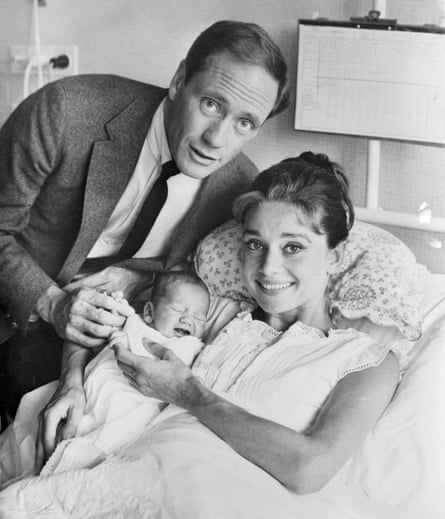
Ever since Audrey died, Sean has been in the business of preserving his mother’s legacy, which means distributing funds to charity, mostly via the Audrey Hepburn Children’s Fund, and a constant vigilance over her image, protecting it from opportunistic cash-ins and licensing it to the right people. “Audrey Hepburn is like that Ferrari that requires you to take a weekend driving course before we let you have it,” he says. “Because otherwise, you’re going to crash it, if you don’t understand how it works.”
The famous portraits of Audrey, publicity shots for her films or magazine shoots, are not throwaway snapshots. “She wouldn’t be snapped,” says Sean. “She was the queen of Instagram before Instagram existed. The amount of photography she generated, at a time when that involved film development, contact sheets, mail, approval, grease pen, touch up, prints, press kit, back to the four corners of the Earth … The cost of that one photograph is probably equal to a moderate smartphone today.”There are not many people, like Sean, in the legacy preservation business. The children of other stars often call him, after the funeral, asking for advice, but balk at the amount of work involved. “They go, ‘Oh my God, really? Can you do it for me?’ I say, ‘I really can’t.’” He is too discreet to name names, but does say that he was able to advise Humphrey Bogart’s children for a short time. Maintaining the Hepburn legacy is a full-time job, which he likens to curating a giant art exhibition.
He has, however, found the time to marry and have a family, tying the knot with Karin, his third wife, in 2014. They are the co-authors of a children’s picture book, Little Audrey’s Daydream, and have five children from previous marriages. Sean’s eldest child, Emma Hepburn Ferrer, is now 31: she is an artist and works as a spokesperson for Unicef.
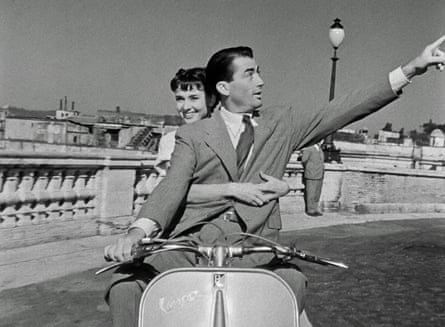
Sean has had decades to think about what made his mother’s fame so lasting, and he breaks down Audrey’s stardom into three categories. First, there is the freshness and naturalness of her performances. Her Hollywood breakthrough came playing a youthful princess frolicking with Gregory Peck in the romantic comedy Roman Holiday, (directed by William Wyler, 1953). “In a world of AI, she was the original analogue. There was nothing digital, prepared, studied,” he says.
Then there is her personal style, a youthful and chic mid-century modernity: the ballet flats and capri pants, cropped hair and giant sunglasses, but especially the exquisite designs made for her by Hubert de Givenchy, from the off-the-shoulder ballgown in Sabrina (Billy Wilder, 1954) onwards. Givenchy and Hepburn were “like brother and sister”, says Sean. “She always said, ‘If he hadn’t been gay, he could have very well been my husband.’” The French designer would make something beautiful for Audrey with the refined silhouette she loved and she would still find some kind of embellishment to remove.
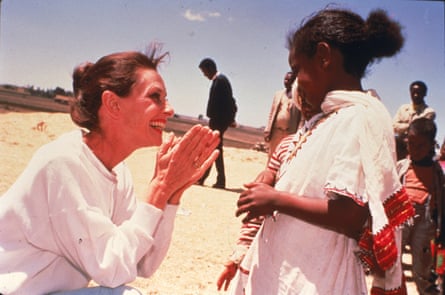
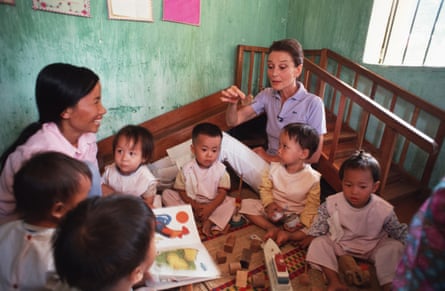
The third facet is Audrey’s humanitarian work as a Unicef goodwill ambassador in the 1980s and 90s: missions to Ethiopia, Venezuela and Vietnam. “She gave her life for the dream of an inclusive society,” says Sean. These three facets to the Audrey Hepburn persona give her a “stable legacy” he says, that transfers to a new generation of fans. “My mother becomes this kind of Pied Piper, almost replaces James Dean on that closet door in the teenager’s room.”
Each chapter of Intimate Audrey is prefaced with a scene written in screenplay form. Sean says he is writing a film about his mother’s life (“a meek attempt”), but he worries that the structure of her life is dramatically uneven. She used to tell him: “My life has been terribly boring” and refused to write her own memoir. Intimate Audrey backs up his statement that her life began and ended with war. It opens with her final, distressing Unicef mission to conflict-torn Somalia, surrounded by starving children, four months before her death, aged 63, from a rare form of cancer. “I started to see her strained and exhausted,” remembers Sean, “but in retrospect, the doctors told us the disease develops over time.” The book then flashes back to Audrey’s childhood and her own personal experiences of wartime and starvation.
Audrey was born in Belgium in 1929 to an aristocratic Dutch mother, Baroness Ella von Heemstra, and a British merchant, Joseph Ruston. Joseph walked out on Ella in 1935, devastating his daughter, and Audrey was sent to be educated in England, where it was hoped she might be able to see him occasionally. When war broke out, Ella called her daughter back to Arnhem in the Netherlands, assuming the country would be safe during the war.
She was wrong. Audrey and her family endured bombing raids and malnutrition. They subsisted on stale turnips and bread baked from tulip-bulb flour for long periods during the Nazi blockade; she witnessed endless acts of violence and saw Jews rounded up and taken away to the camps. While only a teenager, she performed dance recitals to raise funds for those in hiding, and carried messages for the resistance. Her famously upright posture is a result not only of the ballet lessons she took as a child, but of a piece of shrapnel that landed in her neck during an air raid and permanently restricted her movement.
It must have been grotesque for Audrey to realise that before the war her parents had been ardent supporters of fascism, and even had their photographs taken with Adolf Hitler. “I don’t think she reconciled it at all,” says Sean. “I think she accepted who they were. She took what she could, did what was right.”
After the war, although Audrey knew she would never fulfil her dream of being a prima ballerina, she worked as dancer in London and started to get small roles in British films. Stardom beckoned early. During one film shoot in Monte Carlo, the author Colette spotted her on the beach and hired her to star in the stage adaptation of her novella Gigi on Broadway.
Hepburn’s fairytale moment came when she was cast in Roman Holiday. She won the best actress Oscar for this, her first Hollywood film, and a few days later, the best leading actress Tony for a production of Ondine. A star was born, at the age of 24.
Audrey is one of very few people, and even fewer women, to achieve the coveted Egot status, which means winning an Emmy, a Grammy an Oscar and a Tony. She also received the Presidential Medal of Freedom for her charitable work. But she is best remembered for her films, including her son’s favourite, the fashion-world musical Funny Face (Stanley Donen, 1957), in which she danced with Fred Astaire, cast as her lover despite the 29-year age-gap, or Breakfast at Tiffany’s, where she brought a fragile vulnerability to an ambiguous role once destined for Marilyn Monroe.
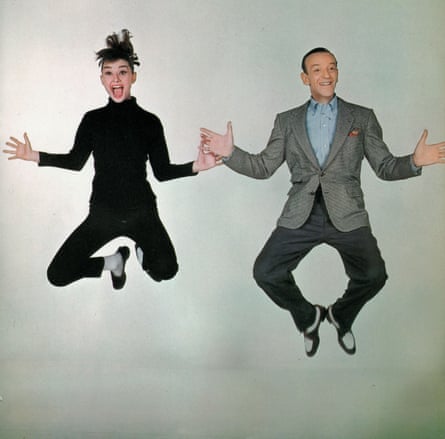
She exudes confidence in Charade, a 1963 action caper co-starring Cary Grant – she cheekily prods his dimple and asks: “How do you shave in there?” In the 1964 Oscar-winning musical My Fair Lady (George Cukor) her singing voice was dubbed by Marni Nixon (Sean’s dream is to show the film with his mother’s original vocals), but the charming rags-to-riches portrayal of the flower girl catapulted into high society was all hers. Sean says the film “is really my mother’s story, because she came from nobility and a certain amount of education, but she came out of the war with nothing, and she picked herself up”.
There were more challenging or offbeat roles: The Nun’s Story (Fred Zinnemann, 1959), based on the harrowing memoirs of nurse Marie Louise Habets, The Children’s Hour (William Wyler, 1961) in which she and Shirley MacLaine play schoolteachers accused of being secret lovers by one of their pupils, or Two for the Road, another Donen film from 1967, an edgy, non-linear take on a failing relationship, in which she swears and appears briefly nude, playing opposite Albert Finney. She had range.Sean credits her triumphs to a somewhat elusive “European polish and sensibility” that she brought to Hollywood. The book emphasises that most of Audrey’s creative collaborators, from her favourite makeup artist and hair stylist, husband and wife Alberto and Grazia de Rossi, to the cinematographer Franz Planer and several of her directors, were fellow Europeans. “She’s a European, but she also chose not to live in Hollywood,” says Sean, “because she knew how important it was to stay in touch with everyday life. Because where do you draw from if you’re not in touch with the common person?”
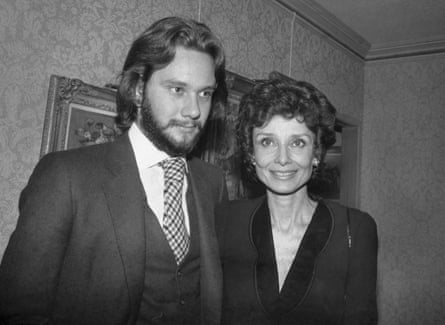
Indeed, at the end of the 1960s, Audrey gave up moviemaking to concentrate on her family. Sean, her eldest son, was born during her first marriage to the writer-producer Mel Ferrer in 1960, and Luca was born in 1970, during her second marriage, to Italian psychiatrist Andrea Dotti. In Intimate Audrey, Sean is very open about the failings of the men in her life, writing that “of all her romantic relationships, the one with my father had been the most valuable, but also the most difficult”. Dotti was “her most pleasant partner, though completely unreliable” and her partner later in life, the Dutch actor Robert Wolders, “adorable but a doormat”. Sean’s father called him “the door-opener”, he says, or “Robert wall-to-wall”, like a carpet.
However, Sean agonised over some details, in particular Dotti’s philandering: “I really did wring my hands, and talked about it a lot with Wendy, whether to talk about that or not. I feel, on one hand, that I’m betraying someone who would never have talked about it, and on the other hand, I’m standing on the side with women.” In the book, Sean recalls finding his mother knocked out in bed with an empty bottle of sleeping pills by her side – the collapse of her second marriage was more than she could take. “Let me tell you, if Audrey Hepburn can suffer infidelity, then anyone can.”
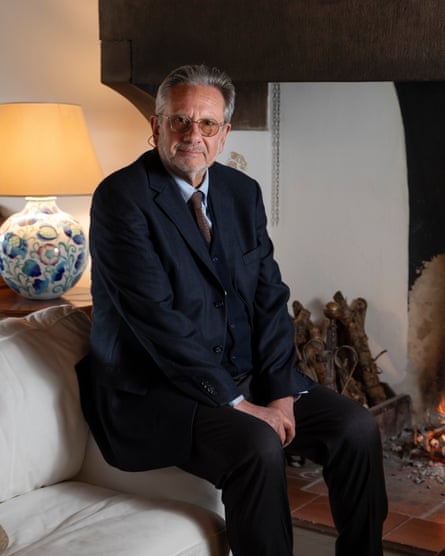
He would love people to realise that there was more to his mother than the films and the endlessly reproduced images in gift shops and cinema foyers. “A legacy that turns into a legend has this lofty quality of raising you and raising you. You become like a balloon,” he says. “I’m trying to bring her down to earth. I can never shatter the creative work, the elegance, the humanitarian work. That’s there to stay. I think it’s important to give depth to a memory, because it means that you can have a measured amount of success and still be a real person. She was a normal, real person. That’s really why I did this.”