2 months ago
47
2 months ago
47
I am an only child. My father was killed in a car accident when I was 14 and my mother was 47. We were really tightly bonded after that. She worked at a university and was an artist: she painted and carved birds. She was a wonderful person, who lit up a room and was someone everyone wanted to be around. She was very giving.
Later in life, she developed dementia. I left my teaching position to stay home and look after her. She was very active – she would go outside and rip up bulbs, put the horses in the wrong stalls. It was very stressful to come home – I would enter the driveway and think: “Oh my word!”
I didn’t have any previous experience of dementia, and I was thinking it wouldn’t be for long – but of course it was. The first year was slow. She would say she was losing her mind, and it made her sad. I got depressed too and stopped making pictures. To photograph my mother felt like sacrilege. I thought it would be voyeuristic. Then a friend, Joni, who also knew her, set me a challenge to take my mother’s picture. I turned to my mother on the couch and said: “We’re going to make a picture for Joni.” Then she did a remarkable thing: she turned to face the window and fluffed up her hair. That shocked me. She said: “Why not – what else are we doing?” That changed everything.
She used to love being outside and we would go out whenever possible to make pictures. This image is of our dog – whom my mother wasn’t very fond of – a jack russell. Skipper loved the hose. My mother came out and they were dancing together, two beings in the sunlight of the afternoon, having their own conversation. Beautiful things like that just kept unfolding. It made the sadness and depression lessen for me.
As the dementia developed, my mother would say she wanted to die, and ask me to take her there, as though it was a place we could travel to. We had a surreal life together for a few years. I couldn’t think about losing her; it never occurred to her she was also losing me. I remember her dancing to a Dolly Parton song, swaying her hips, and she was so beautiful it stopped me in my tracks. I was crying, watching and remembering her as my mother. She came over and gave me a big hug and said: “What are you crying about?”
If I feel sadness, I feel there’s an equal amount of love – that’s been a helpful form of self-preservation. I couldn’t make pictures of the stained bedsheets and dark closets. This, with sunlight and happiness, is a very curated point of view – a lot has been omitted deliberately. The title of the book, Calling the Birds Home, comes from a day when I felt I couldn’t take on another thing: I got up in the middle of the night and she had moved the refrigerator to the middle of the room and stacked the chairs on the couch, and was walking around nude. I was so overwhelmed, I had to just throw my hands up, acknowledge our place within the universe and ask for support.
Once she passed, five years ago, I discovered how much I missed nurturing and taking care of someone. The mother-daughter roles had been reversed. She was such a great mother, she made our life together as beautiful as possible throughout my childhood and beyond.
When I started to share the pictures, it shifted to a universal experience – yes, it’s dire, but what I did with her was a new way to have a conversation when we were losing our ability to express our love. It helped us through a dark time. The pictures were secondary to that. She blossomed all the time for these pictures, she was up for it – that was part of her nature, and it didn’t change with dementia. I wish we could look at hard topics and also think about how to get through them. I hope this work helps motivate someone to break through the sadness and go and do something with someone they love.
Calling the Birds Home is published by L’Artiere
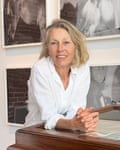
Cheryle St Onge’s CV
Born: Worcester, Massachusetts
High point: “The day I bought my first 8x10 view camera. I was in grad school at the time and spent too much money on it – though it was worth every penny. I was young, enthusiastic and had far too much energy. But once I started to work with this old Deardorff, the process forced me to slow down, I allowed myself time to think and imagine – my work shifted and I never looked back.”
Top tip: “Be organised, keep a sketch book, find a posse of fellow artists to share and discuss work. Be kind and patient with yourself – nothing happens as quickly as we hope it might.”