3 months ago
134
3 months ago
134
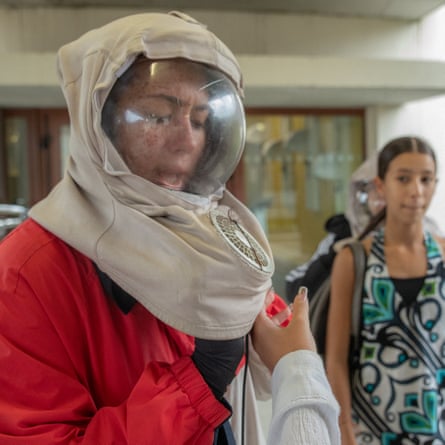
Nihal walks into the large building that is the HQ the French national television network. She pulls a small black monitor from her pocket and points it toward the large glass windows covering the broadcast office lobby.
The readout tells her the ultraviolet levels have dropped to zero, which means it is safe to lift off her helmet. Minutes later, she steps forward to tell her story before millions.
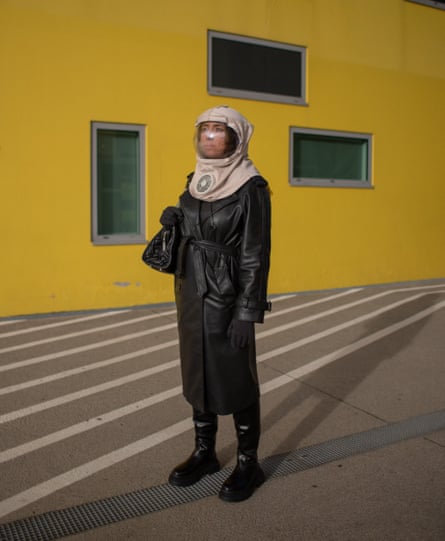
Rare Disease Day, on 28 February, highlights the more than 6,100 conditions identified worldwide, including xeroderma pigmentosum (XP), a rare genetic disorder that affects just over 100 people in France.
Those affected are often referred to as “Children of the Moon”, a name that reflects their extreme sensitivity to ultraviolet light.
-
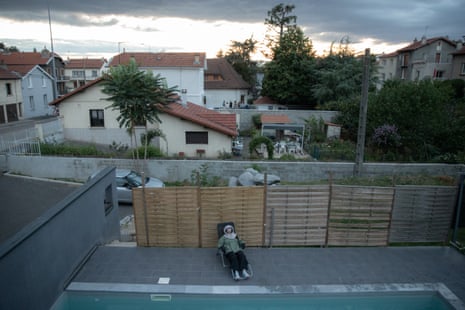
It is only a matter of minutes before Nihal can remove her helmet and gloves. As soon as night falls, UV levels drop to zero and there is no longer any danger.
-
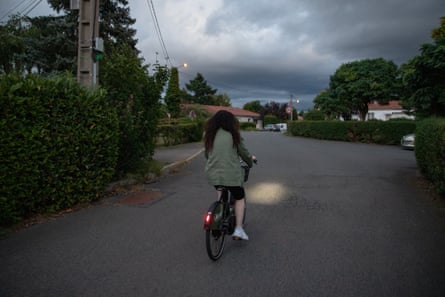
Her ritual: escaping on her bike as soon as her dosimeter reads 0. She heads for the hills to be alone and take in the view.
-
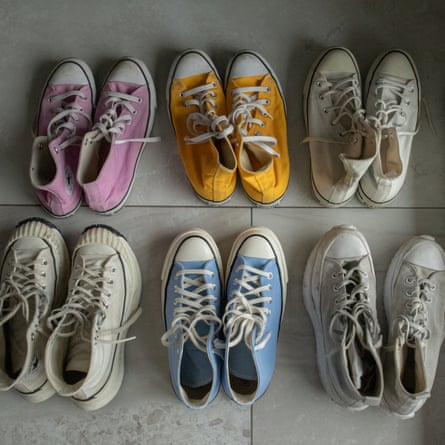
Protection from head to toe: no detail can be overlooked. High-top shoes are essential for Nihal. Since early childhood, she has worn only Converse shoes. The helmet has its limits, and she regularly has to remove hair that gets caught in the ventilation system.
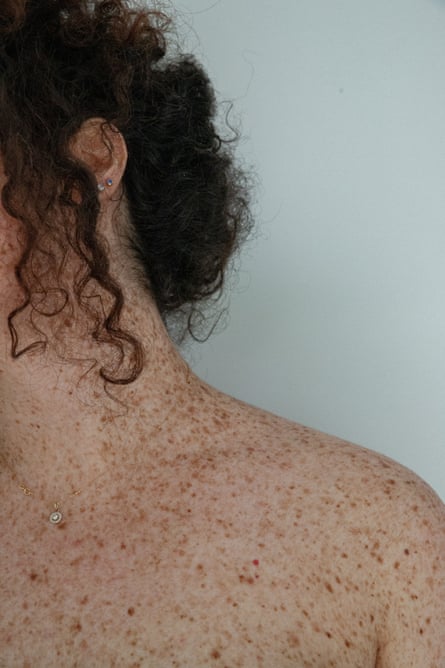
Nihal is one of them. Her skin is marked with heavy pigmentation which is a result of an extreme allergy to ultraviolet light.
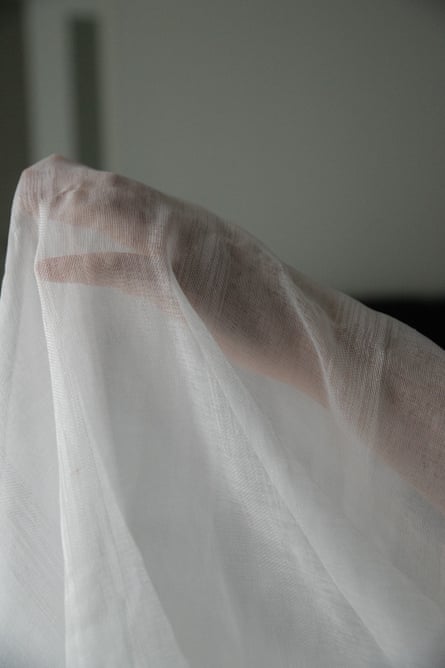
She wears a helmet, a long leather coat and gloves to protect herself. An outfit straight out of a science fiction movie, but essential, as Nihal’s risk of developing skin cancer is about 4,000 times higher than the general population.
-
Because her skin is extremely fragile, medical checkups are part of her routine. She must be regularly examined to ensure that no melanoma is developing. Even the slightest exposure to sunlight can have serious consequences.
-
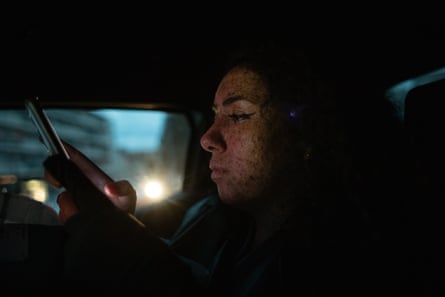
It is not only the sun Nihal must protect herself from: ‘Some artificial lights can emit UV rays, but I can usually see them with the naked eye. Today, almost all new cars are equipped with very thick windows, which helps block UV rays.’
Nihal was diagnosed at the age of two and a half. Her mother, Nassima, remembers that time well, when the family was living in Algeria. “We lived by the sea and often went to the beach with Nihal. Very quickly, I noticed that she would hide from the sun.
-
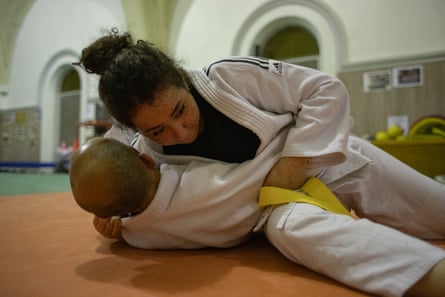
Nihal practises judo and boxing. She prefers indoor sports, which are better suited to her needs.
“And in her bedroom, she wanted me to turn off the light so she could be in the dark.” Nassima decided to visit a doctor, who delivered the bad news.
“He explained to me that, in those extreme climate conditions, her life expectancy might not exceed five years. I started to feel dizzy.” No cure exists for Nihal and only total protection can keep her safe. The family was forced to leave Algeria for France.
The first years in France were difficult for Nihal, but her parents managed to find a school willing to equip the entire building with UV filters, a measure that is essential to guarantee her an almost normal education.
Nihal recalls the stares of her classmates: “When I look back at the photos, it’s crazy to think that I showed up dressed like that in a French school. They all thought I was an alien.
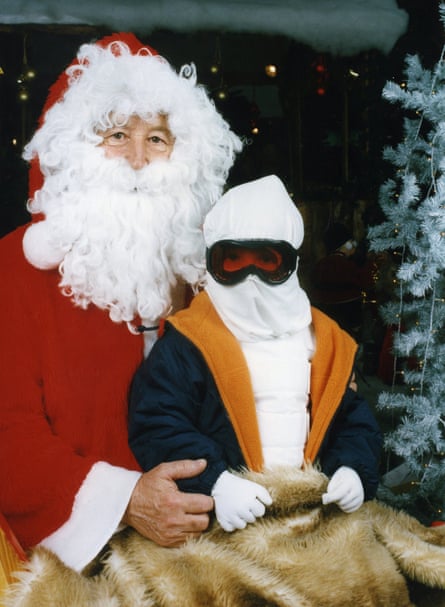
“Before I turned 15, I didn’t have a helmet, so I had to wear a balaclava with ski goggles. It wasn’t exactly stylish, and on top of that, people couldn’t recognise me. It made communication difficult.”
-
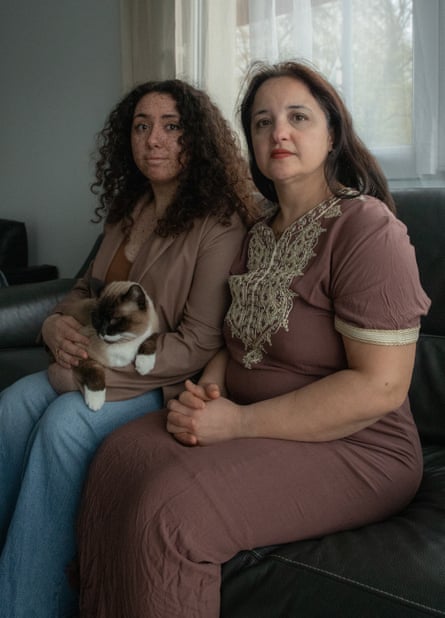
At the time of Nihal’s diagnosis, her mother, Nassima, was pregnant with triplets. ‘The gynaecologist told us it was very likely that the triplets would have the same illness as their sister. I was devastated. In my mind, it was certain: I was going to give birth to three sick children. I wanted to kill myself; I had lost the will to live.’
Since June 2014, XP patients have been wearing a helmet entirely developed and funded by the French organisation “Enfants de la Lune” (Children of the Moon).
This helmet provides relative comfort thanks to a built-in internal ventilation system that prevents fogging, as well as a transparent plastic shield that offers better visibility.
-
Nihal has just completed her studies in fashion and communication. She is now starting her career as a freelancer.
Today, Nihal lives in Saint-Étienne in south-eastern France. “As soon as I have financial stability and a stable professional situation, I would like to start a family. I’m already writing down the things I want to pass on to my children. I already have the names, and I know I want two.”
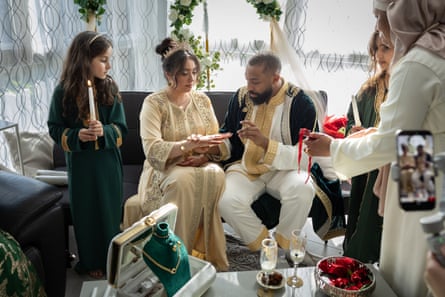
Nihal knows where she is going – and who she is going with. Last May, she got married at home, surrounded by her family. Her grandmother came from Algiers for the occasion. It was a victory for Nihal and her entire family, as everyone believed she would not survive childhood.
-
Nihal met Ayoub in 2024 on social media and things moved very quickly. It was the first time Nihal had trusted someone so fast. Their budding relationship soon led to marriage. She is convinced she has found a new ally in her fight against the disease. The religious ceremony took place at her home in Saint-Étienne on 10 May 2025.
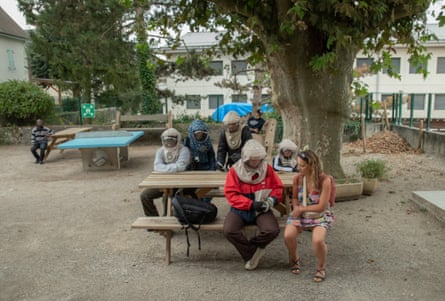
Once a year, during a weekend organised by the French organisation, Nihal meets other Children of the Moon, who do not all experience the disability in the same way.
Between difficult integration at school and medical complications, she has faced many challenges. Despite this, Nihal considers herself lucky to have come this far.
-
There are just over 100 Children of the Moon in France. Each year, the association organises a gathering dedicated to the children affected: a time to talk about their daily lives and the challenges they face, but also to try to forget their hardships for a weekend.
-
Since her diagnosis at the age of two and a half, protection from the sun has been part of Nihal’s daily life. Before the helmet, she had to wear a balaclava and ski goggles (archive photo from 2003).
While her helmet sometimes draws awkward glances from people passing by, she prefers to use it as a distinctive sign: “My helmet is a bit like my signature!” The reactions have become a familiar part of daily life, sometimes amusing.
“Since 2019, many people think I’m protecting myself from Covid or that I’ve been in contact with someone who has it. Sometimes people even ask me for the brand of my helmet.”
-
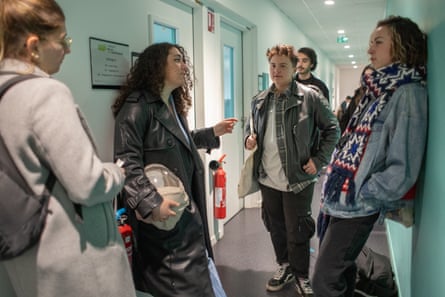
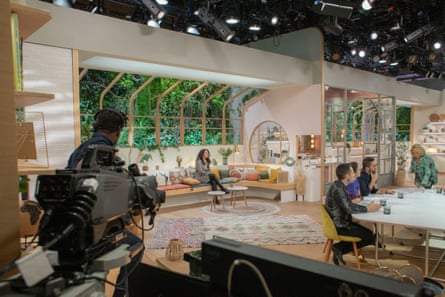
Nihal is invited on French TV to speak about her condition.
As Nihal leaves the TV studio. She replays the interview in her head to make sure she has not forgotten anything important.
She looks at the dressing room clock, which shows 6.30pm. The sun has set over the capital which means she no longer needs to put her helmet back on. She tucks her gear under her arm and steps outside.
-
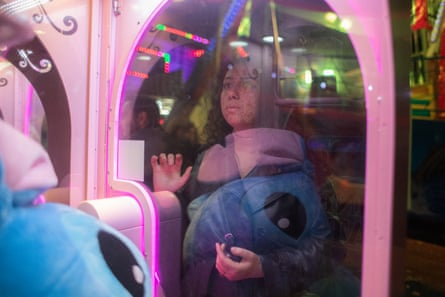
Despite the challenges, Nihal remains determined. She wants to live an (almost) normal life. And she is determined to make up for lost time and do everything she was forbidden to do in her youth.