3 months ago
160
3 months ago
160
LIVE Updated 20m ago
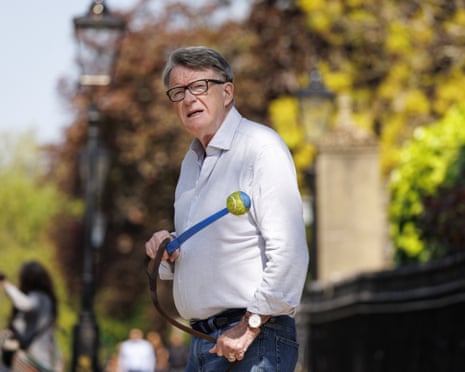
Peter Mandelson, pictured in April Photograph: Tolga Akmen/EPA/Shutterstock
Show key events only Please turn on JavaScript to use this feature
No 10 braced for 'excruciating' revelations as private messages between Mandelson and ministers to be released
Good morning. Many people despair at the quality of governance in Britain at the moment, but in one respect we are living through a golden age; if you are interested in contemporary history, and learning about what actually happens at the heart of government, then you can now – sometimes – access the sort of information never available before.
Today the government is publishing a mass of information – apparently running to three volumes, and more than 1,000 pages – containing the private messages Peter Mandelson exchanged with government ministers and officials when he was ambassador to the US, and before his appointment. Last month a minister compared this to the evidence released as part of the Chilcot inquiry into the Iraq war. But the Chilcot inquiry took place in the era before WhatsApp, and it was publishing secret memos – intended for circulation within Whitehall. WhatsApp messages are a lot more personal; reading them is like being able to eavesdrop on a private conversation. Mandelson is a man with spiky, controversial views, who loves gossip and plotting, and whose private views don’t always accord with what he has said in public. It should be fascinating.
These documents are being published because the government has to comply with a humble address – a Commons vote mandating ministers to release information – tabled by the Conservative party. Several humble addresses have been passed in recent years (since this ancient parliamentary mechanism, which had been forgotten about for decades, was revived during the Brexit wars by the Labour Brexit spokesperson, a certain Keir Starmer) but none of them have been as far-reaching as this one.
The Conservatives tabled the humble address because they wanted to learn more about how Mandelson came to be appointed ambassador to the US despite the fact that it was known at the time that he had maintained a friendship with Jeffrey Epstein even after he was first convicted for child sex offences. As Kiran Stacey, Henry Dyer and Pippa Crerar report, the documents out today will imply that the Foreign Office did not seem particulary bothered about ensuring that the supposed “mitigations” in place to manage the risks associated with Mandelson being appointed amounted to very much.
But, on the broader question of why Mandelson was appointed, we are unlikely to learn much because it is already obvious why he got the job: he wanted it, he was close to Morgan McSweeney, the PM’s chief of staff who had more influence over what Starmer did than anyone else, and McSweeney and Starmer were both persuaded that Mandelson’s fondness for dodgy billionaires would enable him to form a good relationship with Donald Trump (even though this argument was inherently flawed, because the Trump administration did not want him).
Instead, the main revelations this afternoon are likely to focus on what members of the government have been saying about each other in private. On the Today programme Chris Mason, the BBC’s political editor, said some of the messages would be “excruciating”. Financial Times says: “The messages are expected to include frontbenchers and Mandelson trading humiliating remarks about Starmer.” Politico’s London Playbook says: “One person familiar with the content of the files told Playbook it will be ‘toe-curling’.”
Government sources have been saying they don’t expect any of the revelations to lead to resignations. That’s not much of a bonus; for the Conservative party, today will probably feel like Christmas has come early.
Ironically, one person not likely to be embarrassed about any of this is Trump. Government ministers are always diplomatic and polite about the US president in public. It is fair to assume that, in private, their views are a bit more aligned with the views of normal people, like you and me. But parliament agreed that material deemed “prejudicial to UK national security or international relations” would be withheld, so any juicy anti-Trump stuff will remain secret.
James Murray, the new health secretary, has been giving interviews this morning. Speaking about the release of the Mandelson files, he told Sky News:
I think the level of transparency is going to be unprecedented. The volume of information that’s going to be put out is unprecedented.
It’s right we do that. We have been very clear that the appointment of Mandelson was wrong.
Parliament then decided that this information will be made public. The government is fully complying with that, and it’s important that we honour that commitment to transparency.
Here is the agenda for the day.
11.30am: Downing Street holds a lobby briefing.
2.30pm: John Healey, the defence secretary, takes questions in the Commons.
Afternoon: The government is publishing the rest of the Mandelson files. Darren Jones, the chief seceretary to the PM, will make a statement to MPs to mark their publication after 3.30pm. The documents should be published when he gives his statement at the latest, but may come a bit earlier.
If you want to contact me, please post a message below the line when comments are open (between 10am and 3pm), or message me on social media. I can’t read all the messages BTL, but if you put “Andrew” in a message aimed at me, I am more likely to see it because I search for posts containing that word.
If you want to flag something up urgently, it is best to use social media. You can reach me on Bluesky at @andrewsparrowgdn.bsky.social. The Guardian has given up posting from its official accounts on X, but individual Guardian journalists are there, I still have my account, and if you message me there at @AndrewSparrow, I will see it and respond if necessary.
I find it very helpful when readers point out mistakes, even minor typos. No error is too small to correct. And I find your questions very interesting too. I can’t promise to reply to them all, but I will try to reply to as many as I can, either BTL or sometimes in the blog.
Key events Show key events only Please turn on JavaScript to use this feature
Rwanda loses legal case against UK demanding compensation over axed deportation scheme
The UK will not have to pay Rwanda millions of pounds over the failed migrant deportation deal after winning a case at The Hague’s permanent court of arbitration in the Netherlands, the Press Association reports.
I will post more on the story when I get it.
Former Labour Scottish first minister Jack McConnnell calls for joint Westminster/Holyrood inquiry into SNP embezzlement scandal
Jack McConnell, a former Labour Scottish first minister, has called for a joint inquiry between Holyrood and Westminster into Peter Murrell’s embezzlement of SNP funds.
McConnell said the Commons public accounts committee should hold a probe with the equivalent Scottish parliament committee.
In an interview with the Scotsman, McConnell said:
This is about the fact that the SNP were the third largest party at Westminster for the best part of 10 years. They received over that time millions of pounds of public money to organise their party affairs.
Obviously there are also issues about signing off accounts, and how seriously that was all taken, and I think on all these areas there are issues to be looked at, and recommendations that must be made. So I think this should be a joint public inquiry.
I think it should probably be led by the public accounts committee of the House of Commons but it should be done equally and jointly with the equivalent committee at Holyrood so it’s not seen to be the UK Parliament poking its nose into Scottish politics, but the issues about political party funding, about public money, and about the way in which the transparency of political parties’ use of small donations, the protection for small donors.
These are issues that are UK-wide. They’re issues for the Electoral Commission and for the UK parliament.
Two prominent US political commentators who were due to speak at events in the UK this week have said they have been banned from entering the country, Kevin Rawlinson reports.
What humble address says what government must release in Mandelson files
Here is the text of the humble address passed by the Commons about the Peter Mandelson files in February. It specifies exactly what the government should be publishing.
That an humble address be presented to His Majesty, that he will be graciously pleased to give directions to require the government to lay before this house all papers relating to Lord Mandelson’s appointment as His Majesty’s ambassador to the United States of America, including but not confined to the Cabinet Office due diligence which was passed to Number 10, the Conflict of Interest Form Lord Mandelson provided to the Foreign, Commonwealth and Development Office (FCDO), material the FCDO and the Cabinet Office provided to UK Security Vetting about Lord Mandelson’s interests in relation to Global Counsel, including his work in relation to Russia and China, and his links to Jeffrey Epstein, papers for, and minutes of, meetings relating to the decision to appoint Lord Mandelson, electronic communications between the prime minister’s chief of staff [Morgan McSweeney] and Lord Mandelson, and between ministers and Lord Mandelson, in the six months prior to his appointment, minutes of meetings between Lord Mandelson and ministers in the six months prior to his appointment, all information on Lord Mandelson provided to the prime minister prior to his assurance to this House on 10 September 2025 that ‘full due process was followed during this appointment’, electronic communications and minutes of all meetings between Lord Mandelson and ministers, government officials and special advisers during his time as ambassador, and the details of any payments made to Lord Mandelson on his departure as ambassador and from the civil service except papers prejudicial to UK national security or international relations which shall instead be referred to the intelligence and security committee of parliament.
The key clause is the one demanding the release of "electronic communications and minutes of all meetings between Lord Mandelson and ministers, government officials and special advisers during his time as ambassador”. This is very far-reaching. The Tories have may expected Labour to object, but at the time (early February) the most recent revelations about Mandelson’s links with Epstein were so shocking Labour was not in a position to object.
Embarrassing WhatsApps, but no vetting report: what will be in the new release of Mandelson files?
Here is Pippa Crerar and Henry Dyer’s explainer about what will be in the Mandelson files.
No 10 braced for 'excruciating' revelations as private messages between Mandelson and ministers to be released
Good morning. Many people despair at the quality of governance in Britain at the moment, but in one respect we are living through a golden age; if you are interested in contemporary history, and learning about what actually happens at the heart of government, then you can now – sometimes – access the sort of information never available before.
Today the government is publishing a mass of information – apparently running to three volumes, and more than 1,000 pages – containing the private messages Peter Mandelson exchanged with government ministers and officials when he was ambassador to the US, and before his appointment. Last month a minister compared this to the evidence released as part of the Chilcot inquiry into the Iraq war. But the Chilcot inquiry took place in the era before WhatsApp, and it was publishing secret memos – intended for circulation within Whitehall. WhatsApp messages are a lot more personal; reading them is like being able to eavesdrop on a private conversation. Mandelson is a man with spiky, controversial views, who loves gossip and plotting, and whose private views don’t always accord with what he has said in public. It should be fascinating.
These documents are being published because the government has to comply with a humble address – a Commons vote mandating ministers to release information – tabled by the Conservative party. Several humble addresses have been passed in recent years (since this ancient parliamentary mechanism, which had been forgotten about for decades, was revived during the Brexit wars by the Labour Brexit spokesperson, a certain Keir Starmer) but none of them have been as far-reaching as this one.
The Conservatives tabled the humble address because they wanted to learn more about how Mandelson came to be appointed ambassador to the US despite the fact that it was known at the time that he had maintained a friendship with Jeffrey Epstein even after he was first convicted for child sex offences. As Kiran Stacey, Henry Dyer and Pippa Crerar report, the documents out today will imply that the Foreign Office did not seem particulary bothered about ensuring that the supposed “mitigations” in place to manage the risks associated with Mandelson being appointed amounted to very much.
But, on the broader question of why Mandelson was appointed, we are unlikely to learn much because it is already obvious why he got the job: he wanted it, he was close to Morgan McSweeney, the PM’s chief of staff who had more influence over what Starmer did than anyone else, and McSweeney and Starmer were both persuaded that Mandelson’s fondness for dodgy billionaires would enable him to form a good relationship with Donald Trump (even though this argument was inherently flawed, because the Trump administration did not want him).
Instead, the main revelations this afternoon are likely to focus on what members of the government have been saying about each other in private. On the Today programme Chris Mason, the BBC’s political editor, said some of the messages would be “excruciating”. Financial Times says: “The messages are expected to include frontbenchers and Mandelson trading humiliating remarks about Starmer.” Politico’s London Playbook says: “One person familiar with the content of the files told Playbook it will be ‘toe-curling’.”
Government sources have been saying they don’t expect any of the revelations to lead to resignations. That’s not much of a bonus; for the Conservative party, today will probably feel like Christmas has come early.
Ironically, one person not likely to be embarrassed about any of this is Trump. Government ministers are always diplomatic and polite about the US president in public. It is fair to assume that, in private, their views are a bit more aligned with the views of normal people, like you and me. But parliament agreed that material deemed “prejudicial to UK national security or international relations” would be withheld, so any juicy anti-Trump stuff will remain secret.
James Murray, the new health secretary, has been giving interviews this morning. Speaking about the release of the Mandelson files, he told Sky News:
I think the level of transparency is going to be unprecedented. The volume of information that’s going to be put out is unprecedented.
It’s right we do that. We have been very clear that the appointment of Mandelson was wrong.
Parliament then decided that this information will be made public. The government is fully complying with that, and it’s important that we honour that commitment to transparency.
Here is the agenda for the day.
11.30am: Downing Street holds a lobby briefing.
2.30pm: John Healey, the defence secretary, takes questions in the Commons.
Afternoon: The government is publishing the rest of the Mandelson files. Darren Jones, the chief seceretary to the PM, will make a statement to MPs to mark their publication after 3.30pm. The documents should be published when he gives his statement at the latest, but may come a bit earlier.
If you want to contact me, please post a message below the line when comments are open (between 10am and 3pm), or message me on social media. I can’t read all the messages BTL, but if you put “Andrew” in a message aimed at me, I am more likely to see it because I search for posts containing that word.
If you want to flag something up urgently, it is best to use social media. You can reach me on Bluesky at @andrewsparrowgdn.bsky.social. The Guardian has given up posting from its official accounts on X, but individual Guardian journalists are there, I still have my account, and if you message me there at @AndrewSparrow, I will see it and respond if necessary.
I find it very helpful when readers point out mistakes, even minor typos. No error is too small to correct. And I find your questions very interesting too. I can’t promise to reply to them all, but I will try to reply to as many as I can, either BTL or sometimes in the blog.
Explore more on these topics