1 month ago
113
1 month ago
113
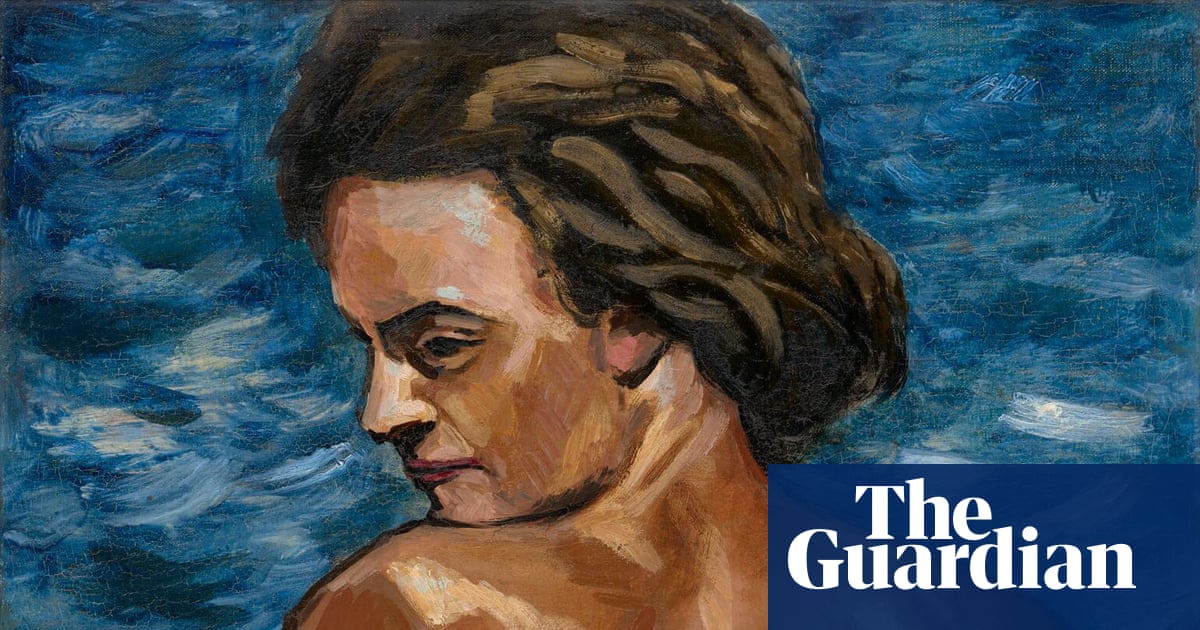
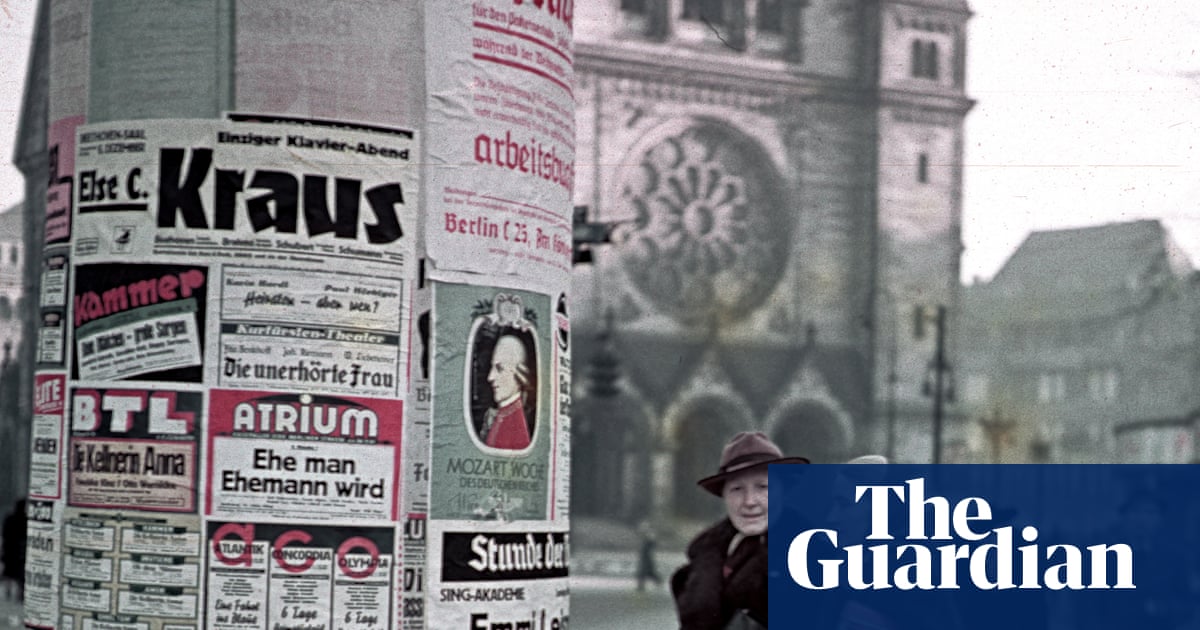
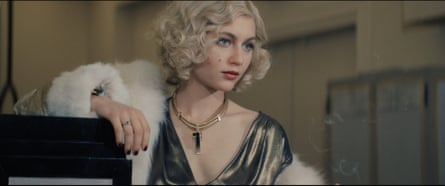
Xavier Giannoli’s new film Les Rayons et les Ombres (Rays and Shadows) is told from the postwar perspective of Corinne Luchaire, a French actor who was once hailed as “the new Garbo” but grew too close to the Nazis during the German occupation years. As Luchaire records her thoughts on a borrowed tape recorder, she struggles to reconcile her unfaltering devotion to her father, the once-powerful press baron Jean, with his 1946 execution for treason.
Her wilful blindness collapses as the Jewish director who helped launch her career visits her cramped flat. When Corinne, played by newcomer Nastya Golubeva Carax, enquires after his sister, he reveals that she died in a concentration camp. “I didn’t know,” murmurs Corinne, only to be met with the devastating reply: “Did you even try to find out?”
Despite its daunting three-hour-plus running time, Rays and Shadows has already drawn more 300,000 spectators to French cinemas in its mid-March opening week alone. But it has also sparked a heated debate over the Vichy period. While many centre and right-of-centre critics have hailed it as a masterpiece of historical nuance, left-leaning outlets such as Libération and L’Humanité have criticised it for relativising people who willingly served the Nazi killing machine until the bitter end.
Controversially, the film portrays the elder Luchaire not so much as a diehard ideologue of the last hour, who emphatically embraced his role as commissioner for information and propaganda for the French government-in-exile, but as a disillusioned spendthrift whose fecklessness hastens his downfall.
“I wanted to make this film to show all the traps that a human being can fall into,” says Giannoli, who spent five years developing the script with screenwriters Jacques Fieschi and Yves Stavrides. “How suddenly your own little fears and cowardice can make history.”
Himself the child of a prominent French journalist who died in 2022, Giannoli has long been fascinated by how the media and “a certain class of money people” can be corrupted into promoting a deleterious agenda. His previous film, an acclaimed adaptation of Honoré de Balzac’s Lost Illusions, charted the 19th-century transformation of journalism in Paris from a tool of enlightenment into a profit-driven engine of “fake news”. In Rays and Shadows, he pushes that examination further, tracing the moral slide of a once-pacifist journalist into antisemitism and active complicity with an extremist regime.
In the film, Jean Luchaire is played by Oscar-winner Jean Dujardin (The Artist), and Giannoli says casting a popular actor in the role was essential to his vision of a “seductive” betrayal. “Luchaire embodied a certain Parisianism that can be found in Jean Renoir’s La Règle du Jeu,” says Fieschi, who became fascinated by the collaboration after studying the period’s literature at university. “He had a lot of mistresses and was part of this amoral fringe of society. If he had been played by someone with an ugly face and no charm it would not have corresponded to the reality of the character.”
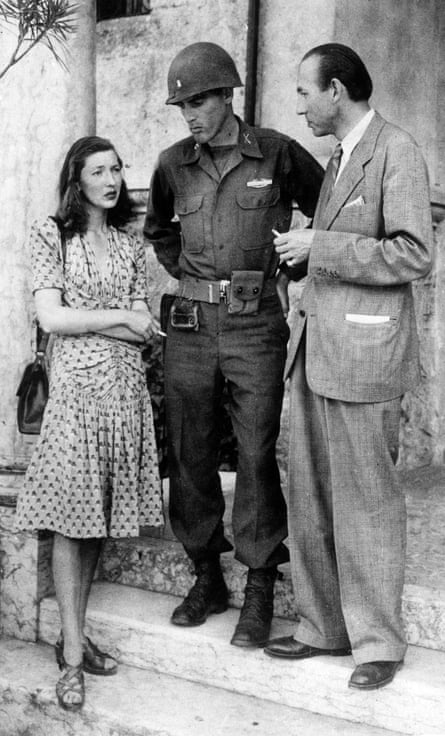
The film’s dark heart lies in Luchaire’s longstanding friendship with Otto Abetz (August Diehl), a Francophile former art teacher who leverages his diplomatic connections in Paris to become German ambassador to France. The film starts in the Black Forest in the early 1930s, where Luchaire and Abetz – united by a shared leftwing pacifism born out of the horrors of the first world war – found the Sohlberg Congress, a Franco-German forum for young people that would later provide the scaffolding for their lethal propaganda alliance.
“There is no Jean Luchaire without Otto Abetz,” notes Giannoli. It was Abetz who appointed Luchaire as the “press tsar” of occupied France and provided him with financial backing to launch the collaborationist daily newspaper Les Nouveaux Temps. One of Giannoli’s most important sources for this period was the memoir of Rudolf Rahn, a high-ranking Nazi diplomat who stressed Abetz’s deep love of French culture and the “bohemian” atmosphere he cultivated at the German embassy in Paris, the better to seduce French elites into the idea of a Franco-German collaboration.
Giannoli does not stint on showing the most sensational aspects of this collaboration into which Jean and his daughter become inexorably drawn. There are scenes of black-market millionaires rubbing shoulders with Nazi higher-ups, embassy parties where the champagne never ends, drug-fuelled orgies and spectacular meals at Maxim’s and Fouquet’s. “We spent a lot of money with the food designer to find just the right caviar,” Giannoli said. “There was no food at this time in France and it felt necessary to show how immoral and corrupt these elites – these beautiful people – had become.”
French film-makers used to be reluctant to tackle the collaboration head on. Part of this stems from the enduring grip of the “résistancialisme” myth fostered by Charles de Gaulle to unite a divided France after the war, which made collaborators a taboo subject. When film-maker Louis Malle eventually dared to explore the moral compromises and everyday betrayals of occupied France in 1974’s Lacombe, Lucien, the critical backlash was such it forced him to relocate to the United States for several years. Giannoli himself admits to having had sleepless nights while he was making Rays and Shadows. “Sometimes at night I was thinking, ‘Oh my God, what am I doing? What’s happening?’”
While commending Giannoli’s film for its “blur” and “ambiguity,” Laurent Joly, a leading French historian of the Vichy regime and state antisemitism, is dubitative about its depiction of Jean Luchaire. “It was not pacifism that pushed Luchaire over [into collaboration], but his fundamental amorality and venality,” Joly says. “From a very young age, when his father, a university professor, directed the French Institute in Florence, he had problems with theft?. He was always a conman. That is the key to his path. Very early, Jean Luchaire was corrupted by Nazi Germany and by 1935 he was already an outcast among most of his former pacifist-left friends.”
Joly also suggests that Giannoli’s depiction of Corinne Luchaire – cast as the victim of relentless postwar purges – is exaggerated. In the film, we encounter the actor in tattered clothes; her physical appearance ravaged by tuberculosis. While that was indeed Corinne Luchaire’s appearance during her 1946 trial, Joly says she was no longer in such a pitiful state by 1948. A year later, she would publish her memoirs, entitled Ma Drôle de Vie (My Funny Life), which have been regularly reissued by far-right publishers since. “She was not the wretched victim shown on screen. Though her early death in 1950 is of course tragic.”
The hardest thing, Giannoli says, was to strike “a balance between fascination and indignation.” When he consulted the historian of fascism, Pascal Ory, he recalls, “I told him I wanted to ask him a lot of questions because nobody would forgive me if I told just one lie.” Ory agreed but had a word of advice, Giannoli adds: “Neither would anybody forgive me if I told the truth.”