3 months ago
174
3 months ago
174
A year ago, the supreme court made its landmark judgment on single-sex spaces. In a long-running case against the Scottish government brought by gender-critical campaigners For Women Scotland (FWS), the court ruled that, for the purposes of the Equality Act, the legal definition of a woman was based on biological sex.
The judgment has significant ramifications for who can now access women-only services and spaces, such as refuges or toilets. But most service providers are still awaiting practical guidance on how to apply the ruling.
Guidance exists – contained in an updated code of practice from the Equality and Human Rights Commission (EHRC) – and on Tuesday it emerged that the commission has resubmitted this guidance for government approval.
This follows fierce criticism by women’s groups supportive of the supreme court ruling over the length of time taken by equalities minister Bridget Phillipson to consider the guidance, which was originally submitted last September.
But a leaked draft – which suggested an effective ban on transgender people from using facilities according to their lived gender – was also met with strong opposition from organisations that opposed the ruling, and believed the guidance to be unfair and legally unworkable.
Those who championed the judgment are frustrated at the slow pace of change, while those impacted by it are still trying to make sense of what it really means for their day-to-day lives.
‘I have a fear but it only lasts a few seconds’ | Janey, a trans woman working in the mental health sector
Janey, 70, who is based in London, has been living “happily and independently” as a woman for nearly half a century. Soon after the supreme court ruling, she described a new and visceral anxiety about using women’s facilities.
A year on, she still nips into a McDonald’s ladies’ loo. “I just have to get on with my life,” she says. “I have a fear but it only lasts a few seconds. Some people are enjoying the fact it’s more acceptable to say ‘you can’t go in there’ but I’ve not had that myself.”
She had one unpleasant incident when a service user challenged her – she was worried about her manager, who didn’t know she was transgender, but they were supportive. “She said: ‘I’ve known you for 15 years as Janey.’ I felt very protected.”
She is more concerned about younger generations: “There is a chipping away of rights happening in the US as well as here.”
‘Women’s hands are strengthened’ | Susan Smith, For Women Scotland
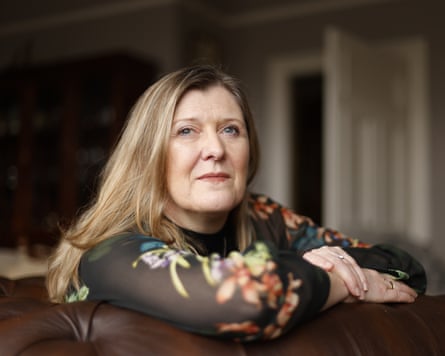
On the day of the ruling, Smith described the emotion of walking out of court to cheers, as well as “massive relief”.
That feeling remains: “The bottom line is women have this protection under law and women’s hands are strengthened whether they are going to court or within the workplace or in social settings, they have this behind them.”
Some women now feel more confident, says Smith. “It was very scary to advocate for your own rights in the time before, and people were very swift to call women names if they had objections to not having female-only spaces.
“One of the things that’s been really wonderful, especially in Scotland, is seeing organisations [like some rape crisis and women’s aid centres] take back control of their mission and say ‘no, we are single sex and there’s a reason for that because we deal with this very sex-specific trauma that women have endured’.”
A year ago, Smith says, “we were a little bit naive” in assuming For Women Scotland could dial down its campaigning. She has found the UK government’s delay in approving the EHRC guidance “frustrating”, but argues it shouldn’t make a material difference to organisations “because the law is still the law”.
‘We knew many members would be devastated’ | Melissa Green, Women’s Institute
“The day the ruling came through, we knew we’d have to take significant legal advice,” says Melissa Green, chief executive of the National Federation of Women’s Institutes. The WI had been trans-inclusive for 40 years, “long before it was a matter of public debate”.
But last December, the WI announced in the Guardian it would no longer accept transgender women as members from April 2026.
“It became increasingly clear that as a single-sex organisation there was no other interpretation for sex under the Equality Act other than a biological one,” Green says.
“It was really hard. We had a clear mandate for our representative council to remain trans-inclusive if the law allowed. We knew many members would be devastated by it, not just those who were transgender, but just those who really value the inclusivity that is part of the fabric of the WI.
“And we also knew there would be members who felt it was the right decision, and that’s challenging as well, because there are strong views on both sides of the debate and our role is to find a way that all members feel comfortable being able to express their views.”
There are now more than 60 groups taking part in the Sisterhood Initiative, trans-inclusive meetings created outside formal WI membership.
‘That clarification was exactly what I’d been saying’ | Fiona Macdonald, lifelong trade union activist and retired civil servant
Lifelong trade union activist Macdonald felt galvanised by last April’s ruling. She is currently taking her own union, the PCS, to tribunal for allegedly discriminating against her gender-critical beliefs. “I was very pleased when the ruling came out,” she says. “That clarification was exactly what I’d been saying”.
Macdonald was concerned women-only spaces in her union were diminishing. “The opportunity to speak about sensitive issues that pertain only to women because their sexed bodies, like menopause or pregnancy loss, could no longer take place.”
She believes trade unions should embrace open debate. “I would like to see much more effort into balancing the rights between trans people, who should never be discriminated against, but I would like to see that in equal measure to women as a sex class.”
With her case proceeding, Macdonald is “disappointed” that the UK government has yet to ratify the EHRC’s new guidance. “It seems a strange place to be that you’ve got the EHRC clarifying and reiterating a lot of points that the supreme court have made and yet our parliament isn’t reflecting that.”
‘It worries me when staff feel nervous about asking medically relevant questions’ | Jamie Hale, a trans man and theatre-maker
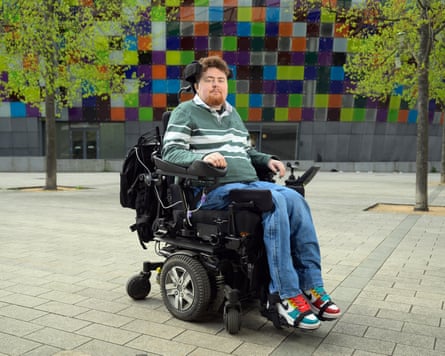
“I’m a wheelchair user, and a lot of places are repurposing adapted toilets to be gender neutral, which puts pressure on that toilet when you only have one per venue,” says Hale.
Since the ruling, he’s experienced “palpable uncertainty” among hospital staff who don’t feel they have clear guidance on whether he should be on a male or female ward, or a single side room.
“Usually I’ll have a casual conversation to make sure they are aware I was assigned female at birth, but it worries me when staff feel nervous about asking medically relevant questions,” he says.
He worries some trans people may hesitate over seeking medical help. “Gendered spaces are such a core part of the hospital system, I worry that trans people won’t want to risk putting themselves in that position.”
‘A lot of people are now self-excluding’ | Jess O’Thomson, trans rights lead, the Good Law Project
The Good Law Project has spearheaded a number of legal challenges since the ruling. O’Thomson, who uses the pronoun they, makes a distinction between “a narrow decision in law, that the court itself emphasised wasn’t taking away anyone’s rights” and how it has been “misrepresented to be a vindication of the exclusion of trans people from society”.
They argue it should be possible for the EHRC to produce a revised code.
“It could say: here’s all the ways you can be trans-inclusive if you want to be. Here’s all the ways you can exclude trans people where it’s proportionate and necessary to do so.”
O’Thomson is still receiving “so many emails, every single day, from people who are experiencing discrimination, or people who want to be inclusive but don’t know if they can be, and want help.” They say that some people now feel emboldened to police single-sex spaces, meaning “a lot of people are now self-excluding”.
‘We don’t have the money to do anything else’ | Bryony Jones, manager of the Grange pub, Cardiff
The Grange, a community pub, opened in 1910 but its building is even older, meaning that structural changes to update toilet facilities would be expensive.
Last September, Jones said she was concerned that some visitors would “police the toilets themselves”.
But this hasn’t come to pass. Jones has hit on a temporary fix, labelling their one accessible toilet “for everyone”. “It’s our personal solution for the space we’ve got. There’s been a lot of noise about it but we’ve not actually had any issues with customers.
“We don’t have the money to do anything else. They’re expecting small businesses to fall into line with no support.”