3 months ago
140
3 months ago
140
Forget blossom and bluebells, for many of us, the changing season means one thing: time for a spring clean. While you may have tackled the clothes you no longer want without sending them to landfill (if not, have a read of our guide to clearing out your clothes sustainably), other items in our homes are not always as straightforward.
According to the circular living organisation Wrap, 22m items of furniture are thrown away each year in the UK, and worldwide, we discard 2.6m tonnes of e-waste (electronic waste) annually. Many of these items could be resold, upcycled or recycled. The British Heart Foundation reports that 62% of us throw away homeware items that are in good enough condition to be donated to charity. Here are some of the best ways to reuse, recycle and upcycle your unwanted stuff.
How to get rid of household clutter
Furniture
Donate it
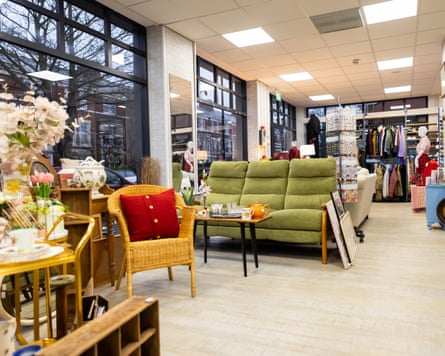
Sometimes you just need to get rid of your old furniture in a hurry to make space for the new furniture you’ve ordered. I’ve had great success using Freecycle – giving something away for free is rewarding, and putting the onus on the new owner to collect it takes the stress off you. The British Heart Foundation, Sue Ryder and Emmaus will collect furniture in good enough condition to resell, and it’s worth finding out if you have a local charity that does the same (I bought a 1960s G Plan sideboard for £50 from one such establishment).
Sell it
The secondhand furniture market is booming, with many people opting for preloved because of its affordability, sustainability and individuality. “Storage always sells quickly and easily, as do useful, stylish items like sideboards,” says Alexandra Stedman, who documents her own house renovations on her Substack, the RUE.
Stedman favours Facebook Marketplace for larger items and Vinted for smaller ones, such as lights. She says to always include measurements: “It’s crazy how many people don’t!” Also, give an idea of weight: “How many people might you need to move it?” And photograph flatpack items such as shelving put together so buyers can see what it looks like, but dismantle it so it’s ready to go when bought. Don’t overprice: see what others are selling similar items for. “We listed our sofa bed for £100, and it sold the same day,” she says.
Repaint it
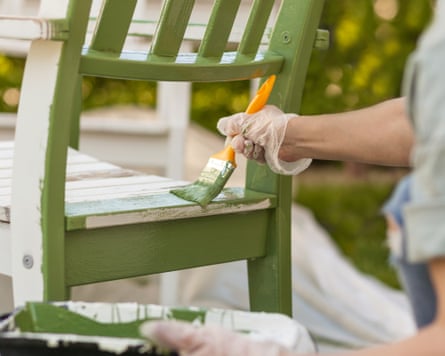
Perhaps all your old furniture needs is a refresh. Kerry Willetts, who showcases her furniture upcycling on Facebook, suggests starting with smaller items that don’t have too much detail. “A chest, or drawers, or a blanket box would be an ideal first project,” she says. “I get a more modern feel by using a paint wash technique to lighten the wood.” She advises using varnish stripper for veneer because sanding can ruin the wood, a taupe shade of water-based furniture paint (30% mixed with 70% water), and rollers for a streak-free finish.
If you would prefer a professional to update your furniture, try Facebook pages such as Furniture Painters Unite UK. Alternatively, donate an item of furniture to a charity like Habitat for Humanity, which upcycles wooden items to furnish new homes for young people leaving care or who have experienced homelessness.
Reupholster it
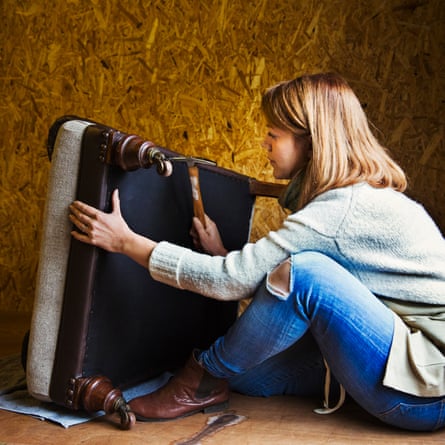
If the frame is still in good condition, you may simply want to replace the tired fabric. Interior designer and author of Modern Upholstery, Micaela Sharp, advises giving it a go yourself. “Often people start with dining chairs, especially if they have a drop-in section that’s upholstered,” she says, but for something with more impact, she recommends starting with a headboard. “It’s the same technique, but you have a greater reward. With a good staple gun, anyone can do it.”
The same technique can be applied for banquette seating, and Sharp’s top tips include picking a bold fabric – “if you’re going to make something bespoke, you want it to stand out” – and keeping the old fabric you’ve removed until the reupholstering is finished so that you can refer to it during the process.
Recycle it
If your furniture has bitten the dust, you still don’t need to take it to the tip. Find out whether the company you are buying from will also recycle your old furniture. John Lewis collects mattresses and sofas and disposes of them responsibly when it delivers your new one, while Ikea has a buy-back scheme whereby items in good condition are resold via its Re-shop and Re-use section, and unsuitable ones are recycled according to its zero-waste-to-landfill policy.
Duvets, pillows and curtains
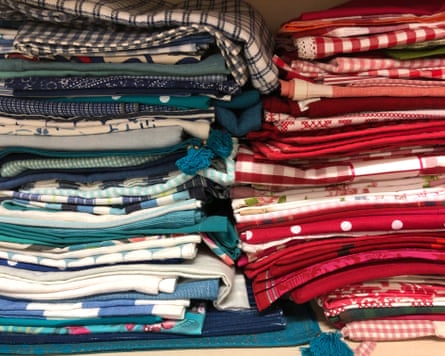
A great place to start with worn-out bedding and towels that are too far gone to be donated to charity or sold is your local vet or animal shelter. Dunelm has a great textile recycling scheme, too: drop off your bagged textiles in store, and they will be reused or repurposed.
Duvet sets and tablecloths in good condition are always a welcome donation to charity shops, and not just to be bought for their original use. Georgie Carter, founder of the upcycled fashion brand Keep Collective, sources much of her fabric in charity shops. “I rummage around to find the labels as I will only use natural fibres, such as 100% cotton or linen,” she says. “Duvet covers are the gold standard for me because you get so much fabric for your money! But my favourite ever make is a pair of lace trousers I made from a vintage cotton crocheted tablecloth.”
Electrical goods

Recycle it
We’ve all heard of fast fashion, but its digital counterpart – fast tech – also has significant environmental consequences, especially since a third of Britons see items such as mini fans, charging cables and electric toothbrushes as disposable. However, anything with a plug, battery or cable contains valuable materials that can easily be reused. Recycle Your Electricals has a wealth of information on its website, with advice on donating unwanted electricals at a drop-off point, locating your nearest recycling centre and preparing your old tech before selling or donating it.
Repair or refurbish it
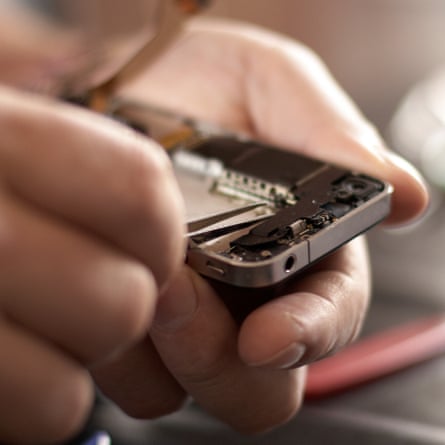
When electrical goods no longer work as they should, we’re often tempted to upgrade, but getting help to repair and refurbish is a more sustainable (and often cheaper) option. Many towns now have a local repair cafe, where you can bring your old items such as radios, lamps and kettles to be fixed. Find your nearest one by using the Community Repair Network.
For anyone who has a drawer full of every mobile phone they have ever owned (me), device refurbishment is an attractive proposition. According to Back Market, keeping an iPhone 13 for five years instead of two and a half, with a battery replacement, reduces annual carbon emissions by 49%, equivalent to preventing 15.6m tons of CO2 per year. “The future of technology isn’t about producing more devices,” says Katy Medlock, UK general manager at Back Market. “It’s about making products that last, empowering consumers to choose better, and proving that circularity in electronics is not only possible, but necessary.”
Customers can donate a wide range of devices, from the ubiquitous smartphones and tablets to retro audio goods such as CD players and record players. Even kitchen appliances get a look in: there’s been a recent surge in interest in refurbished coffee machines, with sales up 146% in 2025, according to Back Market. “Be upfront about the condition,” says Medlock. “Include any accessories, back up and erase personal data, and package it securely. It makes the process smoother and helps you get the best value for your device.”
Books, records and CDs
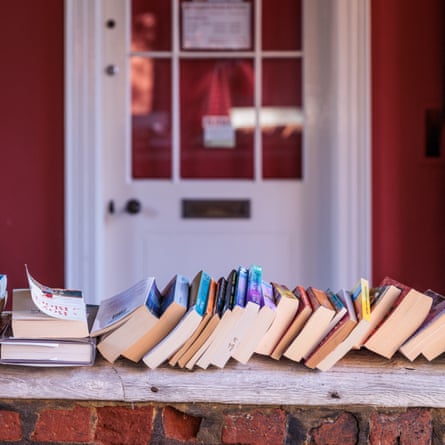
Hands up who’s got a drawer full of CDs as well as a CD player on which to listen to them? If so, finding a responsible home for all that plastic may be high on your spring clean list. If your local charity shop doesn’t accept them, you could try selling them, along with any DVDs, Blu-rays and video games on Music Magpie.
Books are usually easier to clear out. Natasha Poliszczuk, whose Substack Book(ish) explores the joys of reading, is a dab hand at rehoming books when she’s turned the final page – including pressing them into the hands of visitors to her home, and donating them to charity shops and local libraries. You can also donate preloved children’s books to schools.
And while you won’t make a fortune, says Poliszczuk, it’s possible to sell your books online. “World of Books and We Buy Books have schemes by which you simply scan, box and send (via free courier), and there’s a thriving market for books on Vinted.”
Clever storage for the things you keep
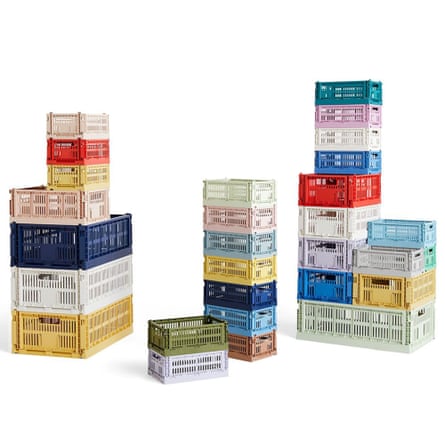
If, after your spring clean, you simply want to be more organised, there are some great storage solutions. I love Hay’s range of recycled plastic foldable, stackable crates – you can add wheels and a lid and turn your storage into a movable table. These drawer organisers from Argos will keep the tech drawer tidy, and multipurpose storage – such as this Cornish-made customisable peg board – is always a winner in my book.
For more, read how to have a guilt-free wardrobe clearout and the best clothes and accessories to buy secondhand
Hannah Rochell is a journalist who specialises in writing about – and experiencing – a slower, more sustainable lifestyle, which she documents on her Substack Slowette. This involves everything from switching to eco-friendly cleaning products and advocating for dehumidifiers instead of tumble dryers, to shopping exclusively at responsible fashion brands and learning to sew